







Introduction to WebRTC Softphones for SMEs
Small and medium-sized enterprises (SMEs) often face constraints in communication budgets and infrastructure complexity. WebRTC softphones have emerged as a powerful, cost-effective alternative that enhances business communication through real-time voice, video, and messaging directly via web browsers or mobile apps without the need for traditional hardware.
This post explores the benefits, cost-saving advantages, and practical applications of WebRTC softphone solutions for SMEs, enabling them to compete and collaborate efficiently in today’s fast-paced business environment.
What Are WebRTC Softphones?
WebRTC (Web Real-Time Communication) Softphones are software-based communication tools that use browser-native technology to deliver voice, video, and messaging services over the internet. Unlike traditional softphones tied to specific hardware or legacy PBX systems, WebRTC softphones function on any device with a modern web browser—no downloads or plugins required. This native browser support simplifies deployment and expands accessibility.
Cost-Effectiveness of WebRTC Softphones for SMEs
Traditional phone systems involve significant upfront capital expenditure on hardware, wiring, and PBX installation, alongside ongoing maintenance costs. WebRTC softphones eliminate these expenses by leveraging existing internet infrastructure, reducing hardware dependencies, and delivering affordable international and long-distance calling rates.
- Minimal initial setup costs.
- Reduced operational and maintenance expenses.
- No need for specialized hardware or upgrades.
- Lower software licensing and support requirements.
This cost efficiency is particularly advantageous for SMEs managing tight budgets but requiring modern, reliable communication solutions.
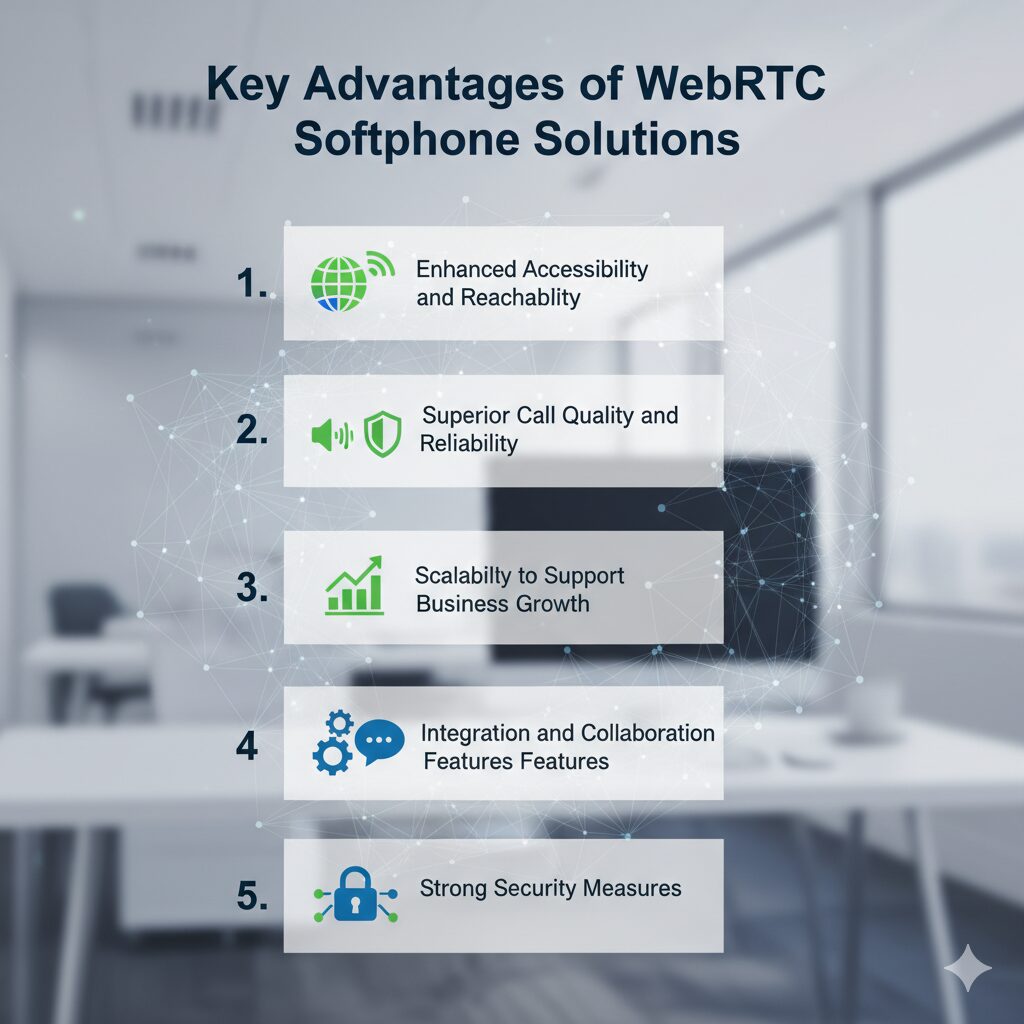
1. Enhanced Accessibility and Reachability
WebRTC softphones are inherently cross-platform, making it possible to stay connected via desktops, laptops, smartphones, or tablets. Employees can maintain communication seamlessly across locations, remote work setups, or travel, which is vital for SMEs with distributed teams.
2. Superior Call Quality and Reliability
WebRTC technology implements advanced codecs and real-time data transfer protocols to ensure HD audio and video quality with minimal latency and packet loss. Adaptive algorithms maintain call quality even with fluctuating network conditions, improving communication clarity and user experience.
3. Scalability to Support Business Growth
Unlike traditional systems, WebRTC softphone solutions easily scale alongside business growth. Adding or removing users requires no major infrastructure changes, enabling SMEs to adjust communication capacity fluidly to align with staffing or market expansion needs.
4. Integration and Collaboration Features
Modern WebRTC softphones support unified communications by integrating voice, video, messaging, and collaboration tools such as screen sharing and group conferencing within a single platform. CRM and helpdesk software integration streamlines workflows and enhances customer engagement.
5. Strong Security Measures
WebRTC includes built-in encryption protocols that safeguard voice and video streams from interception and unauthorized access. This makes WebRTC softphones suitable for industries handling sensitive data, ensuring business communications remain confidential and compliant with privacy regulations.
Use Cases and Applications for SMEs
WebRTC softphones serve a variety of SME requirements:
- Remote work enablement and hybrid workforce collaboration.
- Customer support centers enhancing client interactions.
- Sales teams accessing unified communication on the go.
- Flexible unified communications replacing costly PBX systems.
These adaptable communication solutions offer SMEs the flexibility to innovate and evolve their communication strategies rapidly.
How to Choose the Right WebRTC Softphone Solution for SMEs
When selecting a WebRTC softphone solution, SMEs should consider:
- Compatibility with existing VoIP infrastructure.
- Features required such as video conferencing, call recording, and CRM integration.
- Licensing and pricing models that fit budget constraints.
- Vendor support, security protocols, and scalability options.
Implementing WebRTC Softphones: Best Practices for SMEs
Successful deployment involves:
- Assessing business needs to tailor communication features.
- Ensuring robust internet connectivity and network readiness.
- Training employees on the softphone interface.
- Monitoring call quality and metrics to optimize communication efficiency.
Conclusion: Future-Proof Communication with WebRTC Softphones
For SMEs seeking a flexible, affordable, and modern communication system, WebRTC softphones deliver an unmatched value proposition by combining cost efficiency,
superior call quality, scalability, and security. These benefits empower SMEs to compete with larger enterprises and foster dynamic collaboration irrespective of geographical location.

