How MVNOs Make Money: Business Model Breakdown
In the competitive landscape of telecommunications, Mobile Virtual Network Operators (MVNOs) have carved out a unique and profitable niche. Unlike traditional carriers that own and maintain extensive network infrastructure, these operators employ a lean business model by leasing cellular networks from major carriers. This innovative approach has democratized the wireless industry, enabling companies to compete without massive capital expenditures required to build and maintain physical infrastructure. The rise of virtual network operators has transformed how millions of consumers access mobile services, offering cost-effective alternatives to legacy carriers while maintaining quality service. The MVNO business model represents a fascinating case study in operational efficiency, strategic partnerships, and creative revenue generation that continues to reshape the global telecommunications market. Understanding how these operators generate revenue is essential for stakeholders, investors, and consumers interested in the mobile telecommunications industry. The financial mechanics behind successful operations are more sophisticated than they might appear at first glance, involving multiple revenue streams, cost management strategies, and value-added services. This comprehensive breakdown explores the diverse ways these companies monetize their operations, from straightforward subscription fees to innovative data services and enterprise solutions. By examining the financial architecture of leading MVNO providers, we can understand how this sector has become increasingly competitive and sustainable, while identifying the challenges that distinguish successful operators from those that struggle in this demanding market. Contents Subscription and Usage-Based Charges Value-Added Services and Feature Enhancements Enterprise and Business Solutions Advertising and Data Monetization Handset Sales and Equipment Revenue Partnership Revenue and Wholesale Models Cost Management and Margin Optimization Subscription and Usage-Based Charges The cornerstone of revenue for virtual network operators comes from direct subscription fees and usage-based charges. Unlike traditional carriers with fixed infrastructure costs, these companies can offer highly flexible pricing structures tailored to different customer segments. These charges fall into several distinct categories that form the backbone of revenue generation for any MVNO provider. Monthly Service Plans Most operators offer tiered monthly plans with varying data allowances, voice minutes, and text messages. These plans are typically priced 20-50% lower than major carriers, allowing these businesses to compete aggressively while maintaining healthy margins. Customers pay a predictable monthly fee, providing steady, recurring revenue. A successful operation might offer plans ranging from ultra-budget options with limited data to premium plans with unlimited services, maximizing customer acquisition across economic segments. Pay-As-You-Go Services Many of these operators cater to customers who prefer variable usage patterns through prepaid, pay-as-you-go models. Customers pay only for what they use, with charges applied per minute, text message, or megabyte of data consumed. This model attracts users with unpredictable needs and generates revenue proportional to consumption levels. Data Overage Charges When customers exceed their monthly data allowances, companies generate additional revenue through overage fees. By strategically offering mid-tier plans that many heavy users exceed, these operators create predictable additional revenue streams while encouraging customers to upgrade to higher-tier plans. This pricing strategy is crucial for MVNO provider profitability. International Roaming and Long Distance Premium charges for international calls, text messages, and data usage abroad represent significant revenue opportunities. These businesses charge higher rates for roaming services, exploiting convenience factors and consumer awareness gaps about international telecom costs. This is particularly lucrative for operators serving expatriate or business-focused customer segments. Value-Added Services and Feature Enhancements Progressive operators expand beyond basic connectivity by offering premium features and services that justify higher price points while improving customer loyalty and lifetime value. These value-added services represent high-margin business opportunities within the MVNO sector. Premium Calling Features Operators generate additional revenue by offering enhanced calling features such as call waiting, call forwarding, three-way calling, call barring, and voicemail-to-email transcription. While these features have minimal infrastructure costs, customers willingly pay premium fees for convenience and advanced functionality. Business-focused operations have particularly strong monetization opportunities with professional calling features. Cloud Storage and Content Services Many of these companies partner with cloud service providers to offer customers enhanced storage, backup, and synchronization services. By bundling cloud storage with wireless plans or offering it as an add-on premium service, operators generate meaningful revenue while improving overall value propositions. Progressive businesses have secured partnerships that allow revenue sharing on cloud storage subscriptions. Device Protection and Insurance Operators offer optional device insurance, protection plans, and extended warranties covering accidental damage, theft, and malfunction. Insurance commissions represent significant revenue opportunities, with some businesses earning 15-25% margins on insurance revenue. These offerings enhance customer satisfaction while addressing genuine consumer pain points. Mobile Payment and Digital Wallet Services Forward-thinking operators integrate mobile payment solutions, allowing customers to pay bills and make purchases directly through their mobile accounts. These services generate transaction fees, merchant processing revenues, and create valuable customer financial data that can be monetized through targeted marketing. Digital wallet integration represents high-potential revenue streams for innovative MVNO businesses. Entertainment and Subscription Bundles Many operators bundle entertainment services such as streaming music, video subscriptions, or premium news content with mobile plans. These partnerships generate revenue through affiliate commissions and revenue sharing arrangements. Some have successfully positioned themselves as lifestyle platforms rather than simple connectivity providers, commanding premium pricing through comprehensive content bundles. Enterprise and Business Solutions A significant portion of revenue for mature operators comes from enterprise and business customers seeking cost-effective mobile solutions for their organizations. Business-focused operations have built entire divisions around serving corporate customers, making this segment crucial to overall growth. Bulk Account Management and Discounts These operators offer volume discounts and customized billing arrangements for organizations managing large fleets of mobile devices. Enterprise plans generate predictable, high-volume revenue with reduced churn compared to consumer segments. Business customers value centralized billing, usage analytics, and dedicated account support that operators bundle with corporate plans. Managed Mobility Services Enterprise-focused businesses offer comprehensive managed mobility services including device deployment, configuration, security management, and usage monitoring. These services command premium pricing and generate recurring revenue from service delivery. Operations functioning as managed service providers for enterprise mobility have dramatically higher revenue per customer than consumer-focused ones. IoT and Machine-to-Machine (M2M) Connectivity A rapidly
How to Save Money with MVNO Plans Without Sacrificing Quality
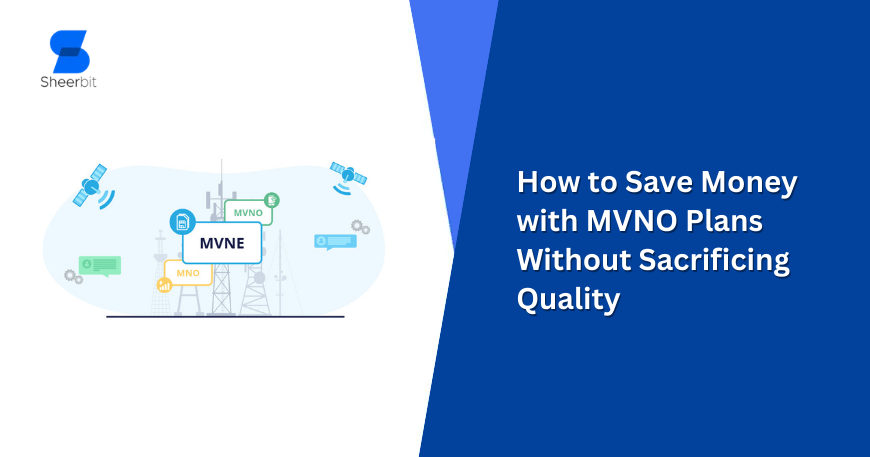
In today’s increasingly connected world, mobile phone service has become an essential utility for millions of consumers worldwide. However, the traditional landscape of mobile telecommunications has been dominated by major carriers like Verizon, AT&T, and T-Mobile, which often charge premium prices for their services. For budget-conscious consumers and those seeking alternatives to expensive contracts, MVNO providers have emerged as game-changing solutions that allow users to access wireless connectivity at a fraction of the cost. MVNO plans represent a revolutionary approach to cellular service, leveraging the infrastructure of established carriers while offering significantly lower monthly fees. This comprehensive guide explores how consumers can effectively save money with MVNO plans, whether through low-cost carriers like Mint Mobile, Visible, or Ultra Mobile, while understanding the realistic trade-offs involved in areas such as network coverage, data speeds, and customer support quality. The rapid growth of MVNO providers and MVNE providers (Mobile Virtual Network Enablers) has fundamentally transformed how consumers think about wireless service. Instead of paying $60-$120 per month to major carriers, thousands of customers now pay $15-$50 monthly through virtual networks while maintaining access to the same underlying networks. This shift has made premium cellular service accessible to students, seniors, budget travelers, and families looking to reduce monthly expenses without completely sacrificing service quality. Understanding the nuances between different MVNO options, recognizing which providers operate on which carrier networks, and identifying which trade-offs matter most to your personal usage patterns are crucial factors in making an informed decision. Whether you’re interested in unlimited data plans, pay-as-you-go pricing, family packages, or specialty services designed for specific use cases, MVNO providers offer diverse solutions that cater to virtually every consumer need and budget constraint. Understanding MVNO Providers and MVNE Providers Before diving into specific MVNO plans and their financial benefits, it’s essential to understand the infrastructure that makes these services possible. MVNO providers are cellular carriers that do not own the wireless network infrastructure but instead lease network capacity from the major carriers known as hosts or facilities-based carriers. This business model eliminates massive capital expenditures required to build and maintain physical infrastructure such as cell towers, base stations, and network switching equipment. MVNE providers play a crucial intermediary role in this ecosystem. MVNE providers offer the technical platforms, billing systems, customer management infrastructure, and network access that allow MVNO providers to operate their services. Some MVNO providers work directly with major carriers, while others leverage MVNE providers to handle the technical and operational complexities. Understanding this distinction is important because it affects service reliability, billing practices, and the sophistication of available features. Major MVNE providers include Convergence, Amdocs, and Mavenir, which provide the technological backbone for hundreds of MVNO providers worldwide. How MVNO Providers Generate Savings The fundamental reason MVNO providers can offer significantly cheaper plans compared to major carriers revolves around their operational cost structure. By eliminating infrastructure investment, network maintenance, research and development for network technology, spectrum licensing fees, and extensive physical retail networks, MVNO providers reduce their overhead dramatically. Furthermore, most MVNO providers operate virtual-only models without physical stores, further reducing costs. These savings are directly passed to consumers in the form of lower monthly fees. Additionally, MVNO providers often implement data prioritization strategies—another cost-reduction method that allows them to offer cheaper service while maintaining network stability. Key Insight: MVNO providers typically save 30-50% on operational costs compared to major carriers, passing these savings directly to customers through lower pricing. Budget-Friendly MVNO Plans: Detailed Options Today’s market offers an impressive array of MVNO options catering to different budgets, data usage patterns, and consumer preferences. Let’s explore the leading budget-friendly MVNO providers and their distinctive offerings. Mint Mobile: Premium Experience at Budget Prices Mint Mobile has revolutionized the MVNO landscape by offering competitive data speeds and excellent coverage using T-Mobile’s extensive network infrastructure. Operating as an MVNO provider, Mint Mobile typically charges between $15 to $50 monthly depending on data allowances, with plans offering unlimited talk and text. The budget tiers (3GB, 8GB, and 12GB) are ideal for light to moderate users, while higher data allowances suit heavy users. Mint Mobile’s annual prepayment option—where customers pay for an entire year upfront—offers additional savings of approximately 25-30% compared to month-to-month billing. This prepayment model reduces Mint Mobile’s operational costs and transaction fees, allowing them to maintain competitive pricing. However, users should note that Mint Mobile’s network prioritization policies place their users behind T-Mobile’s postpaid customers, potentially resulting in slower speeds during network congestion. Visible: Premium Performance from Verizon Network Visible operates as a unique MVNO provider owned by Verizon, offering unlimited data, talk, and text for a flat $45 monthly fee, with regular promotions reducing this to $25-$35. The critical distinction about Visible is that it uses Verizon’s 5G network without deprioritization—a significant advantage over traditional MVNO practices. Visible customers maintain priority access to Verizon’s network equivalent to Verizon’s entry-level postpaid customers, meaning data speeds generally equal what Verizon customers receive. Visible’s unlimited plan appeals to heavy data users who previously had no budget options without deprioritization. The trade-off involves customer service limitations: Visible doesn’t maintain physical stores or traditional phone support, relying instead on chat-based customer service, which can be slower for resolving technical issues. Additionally, Visible users cannot use certain Verizon business services or access some advanced features available to standard Verizon customers. Ultra Mobile: Maximum Flexibility and International Options Ultra Mobile distinguishes itself as an MVNO provider emphasizing flexibility and international connectivity. Operating across multiple carrier networks (T-Mobile, AT&T, and Sprint), Ultra Mobile offers customizable plans starting as low as $9 monthly for pay-as-you-go users, with standard plans ranging from $15-$50. Ultra Mobile’s primary appeal lies in its international roaming capabilities—included in most plans—and data stash features that carry unused data into future months. This flexibility particularly suits frequent travelers, international callers, and users with unpredictable monthly usage patterns. However, as a traditional MVNO provider, Ultra Mobile users face prioritized data access behind carrier postpaid customers, potentially resulting in degraded speeds during peak usage hours. Furthermore, Ultra Mobile’s customer service reputation has been inconsistent, with some
Custom VoIP Solution vs White Label VoIP Solution: A Complete Guide for Businesses
Communication technology plays a crucial role in modern business operations. As companies expand globally and remote work becomes more common, reliable and cost-effective communication systems are essential. Voice over Internet Protocol (VoIP) technology has transformed how businesses communicate by allowing voice calls to travel over the internet instead of traditional telephone lines. This shift enables organizations to reduce communication costs, increase flexibility, and access advanced features such as call analytics, video conferencing, smart routing, and integration with other digital systems. When businesses decide to implement VoIP technology, they typically choose between two main approaches: custom VoIP solutions and white label VoIP solutions. Custom VoIP platforms are developed specifically for a company’s needs, offering full control over features and integrations. White label VoIP solutions allow businesses to quickly launch VoIP services using an existing platform that can be rebranded. Understanding these two approaches helps businesses choose the best communication infrastructure for long-term growth. Understanding VoIP Technology Voice over Internet Protocol (VoIP) is a communication technology that converts voice signals into digital packets and transmits them over internet networks. Instead of relying on traditional telephone infrastructure, VoIP uses IP networks to deliver voice communication. When a VoIP call occurs, the following process takes place: The voice is captured through a microphone. The analog signal is converted into digital data. The digital data is divided into packets. These packets travel through the internet. The receiving device converts the packets back into audio. VoIP supports multiple communication services such as: Voice calling Video conferencing Instant messaging Call recording Interactive Voice Response (IVR) Call monitoring and analytics What is a Custom VoIP Solution? A custom VoIP solution is a communication platform designed and developed specifically to meet the unique needs of a business. Instead of using a ready-made system, companies build their VoIP infrastructure from scratch or heavily customize an existing framework. Custom VoIP platforms are typically used by enterprises, telecom providers, SaaS companies, and startups that require highly specialized communication systems. Core Components of a Custom VoIP Solution SIP Infrastructure Session Initiation Protocol (SIP) is the signaling protocol used to manage voice communication sessions. It is responsible for initiating, maintaining, and terminating calls between users. SIP servers also handle authentication, call routing, and connection management within the VoIP network. Media Servers Media servers process voice streams during calls. They perform important tasks such as audio encoding and decoding, conference call mixing, voicemail storage, and call recording. VoIP Gateways VoIP gateways connect internet-based VoIP systems with traditional telephone networks (PSTN). This allows VoIP users to call mobile phones and landlines. Softphones and Applications Softphones are software-based applications that allow users to make calls using computers, mobile devices, or web browsers. Custom VoIP platforms often include branded desktop, mobile, or web calling applications. Call Management Systems Call management systems control how calls are routed and handled within an organization. These systems include features such as call queues, call forwarding, call monitoring, and automated attendants. Security Framework VoIP security ensures that communication data remains protected. Security measures include encryption, secure SIP authentication, network monitoring, and fraud detection systems. Benefits of Custom VoIP Solutions Complete Control Over Features Businesses can design communication features specifically tailored to their workflows. This allows companies to create unique functionality that is not available in standard VoIP platforms. Seamless Integration Custom VoIP platforms can integrate directly with CRM systems, ERP platforms, helpdesk software, and other business tools. This enables employees to access customer information during calls and automatically log communication data. Scalability Custom platforms can grow alongside the business. Organizations can add users, features, and services without being limited by the constraints of pre-built systems. Enhanced Security Companies can implement advanced security frameworks tailored to their industry requirements, ensuring secure communication and regulatory compliance. Competitive Advantage Organizations that offer communication services can build unique VoIP products that differentiate them from competitors in the telecom market. Challenges of Custom VoIP Development High Development Cost Building a VoIP system from scratch requires experienced developers, infrastructure investment, and testing resources, which can significantly increase development costs. Long Development Timeline Developing a fully functional VoIP platform takes time, often several months depending on the complexity of the system. Maintenance Responsibility Businesses must continuously maintain the system by managing server infrastructure, security updates, and feature improvements. What is a White Label VoIP Solution? A white label VoIP solution is a ready-made communication platform developed by a VoIP provider that businesses can rebrand and sell as their own product. Instead of building the technology themselves, companies purchase access to the platform and customize its branding with their company name, logo, and pricing plans. How White Label VoIP Works The VoIP provider builds and manages the infrastructure. Businesses purchase reseller or white label access. The platform is customized with the reseller’s branding. The reseller sells VoIP services to their customers. The technology remains managed by the original provider while the reseller focuses on marketing and customer acquisition. Features of White Label VoIP Solutions Hosted PBX Hosted PBX systems allow businesses to manage calls through cloud infrastructure instead of maintaining physical telecom equipment. Call Routing Call routing automatically directs incoming calls to the appropriate departments or agents based on predefined rules. Interactive Voice Response (IVR) IVR systems allow callers to interact with automated voice menus to reach the correct department. Billing and Management Dashboards White label platforms usually include admin dashboards where businesses can manage customers, usage statistics, and billing. Mobile and Web Applications Most white label VoIP platforms provide ready-to-use mobile and web apps that can be branded with the reseller’s identity. Benefits of White Label VoIP Solutions Faster Time to Market Businesses can launch VoIP services quickly without building the technology from scratch. Lower Initial Investment White label platforms eliminate the need for expensive infrastructure development. Reduced Technical Complexity The original provider manages updates, maintenance, and infrastructure operations. Proven Technology Since these platforms are already used by multiple businesses, they are generally stable and reliable. Limitations of White Label VoIP Solutions Limited customization options Dependency on the original provider Less opportunity for product differentiation Custom VoIP vs
How Sheerbit Chat Helps Healthcare & Finance Teams Stay Compliant
Compliance is no longer a back-office concern. It sits at the center of every strategic conversation in healthcare and financial services, shaping how teams communicate, how data is stored, who can access what, and what happens when something goes wrong. Yet most enterprise chat tools were not built with these realities in mind. For decades, regulated industries have operated under a painful tension: the tools that make teams most productive are often the ones that create the greatest compliance risk. Consumer-grade messaging apps, shadow IT, and patchwork integrations have left compliance officers scrambling to retroactively apply policy to platforms that were never designed to support it. Sheerbit Chat was built to resolve this tension, not by limiting what teams can do, but by making compliance the foundation everything else is built on. This article explores exactly how it does that, and why it matters for healthcare organizations managing HIPAA obligations and financial firms navigating GDPR, SOC 2, FINRA, and more. The Compliance Landscape: What Regulated Industries Are Really Up Against Before examining what Sheerbit Chat does, it is worth understanding what compliance actually demands from modern teams, because the requirements are more extensive, and more nuanced, than many organizations appreciate. Healthcare: HIPAA’s Long Reach The Health Insurance Portability and Accountability Act (HIPAA) governs how protected health information (PHI) is stored, transmitted, and accessed. Its requirements extend well beyond clinical records. Any communication channel, chat messages, file attachments, voice notes, that carries PHI falls under HIPAA’s Security and Privacy Rules. This means that a nurse messaging a colleague about a patient’s test results, a billing team discussing a claim, or an administrator sharing a discharge summary through a chat tool is creating PHI in motion. If that tool lacks end-to-end encryption, proper access controls, and audit logging, the organization is potentially in violation, even if the conversation itself was entirely legitimate. The consequences are severe. HIPAA penalties can reach $1.9 million per violation category per year. More significantly, breaches erode patient trust in ways that no fine can fully capture. Financial Services: A Web of Overlapping Frameworks Financial institutions face an even more complex regulatory environment. GDPR imposes strict data sovereignty requirements for any organization handling EU residents’ personal data, including the right to erasure, data portability, and explicit consent. FINRA mandates that broker-dealers retain all business communications for a minimum of three years, in a format that is easily retrievable and tamper-evident. SOC 2 Type II, increasingly required by enterprise clients and insurers, demands documented evidence of security, availability, processing integrity, confidentiality, and privacy controls. And organizations operating globally must layer these frameworks on top of one another, meeting GDPR in Europe while satisfying SEC requirements in the US and MAS guidelines in Singapore. Most chat platforms were not designed to support this kind of layered compliance. Sheerbit Chat was. Key Insight: Regulatory bodies increasingly treat internal communications as the first place they look during investigations. The question is not whether your team uses chat, it is whether that chat leaves an audit trail you can actually stand behind. End-to-End Encryption That Meets Regulatory Standards Encryption is the bedrock of compliant communication, but not all encryption is created equal. Many platforms encrypt data in transit but leave it decrypted at rest on their servers, creating a vulnerability that regulators, and attackers, can exploit. Sheerbit Chat implements AES-256 encryption at rest and TLS 1.3 in transit for all messages, files, and attachments. Critically, encryption keys are managed by the customer organization, not by Sheerbit’s infrastructure team. This means that even in the unlikely event of a server breach, attackers retrieve ciphertext they cannot decrypt without keys that never leave the client’s control. What This Means for HIPAA Compliance HIPAA’s Security Rule requires covered entities to implement technical safeguards that guard against unauthorized access to PHI transmitted over electronic communications networks. Customer-managed encryption keys, combined with per-channel access controls, directly satisfy this requirement. Sheerbit Chat’s architecture ensures that PHI in transit cannot be intercepted, and PHI at rest cannot be accessed without authenticated credentials from within the customer’s domain. What This Means for GDPR and Financial Frameworks GDPR’s Article 32 requires that organizations implement appropriate technical measures to ensure a level of security appropriate to the risk, including encryption of personal data. Sheerbit Chat‘s end-to-end encryption model satisfies this requirement while the customer-held key structure directly addresses data sovereignty concerns, ensuring that EU residents’ data cannot be accessed by parties outside the customer’s jurisdictional control. Granular Access Controls and Role-Based Permissions Compliance frameworks consistently emphasize the principle of least privilege: users should have access only to the information they need to perform their specific role. In practice, most chat platforms make this extraordinarily difficult to enforce at scale. Sheerbit Chat’s permission architecture was designed with regulated industries in mind. Administrators can define channel-level access controls that restrict visibility to specific teams, roles, or even individual users. A cardiologist’s patient communication channel is invisible to billing staff. A trading desk’s discussion thread is inaccessible to the compliance department until an investigation requires access, at which point an audited disclosure workflow creates a documented record of who accessed what and why. Dynamic Role Assignment Healthcare and financial organizations are not static. Staff rotate through departments, contractors join for specific projects, and senior personnel take temporary oversight roles during regulatory reviews. Sheerbit Chat’s dynamic role assignment allows administrators to modify access permissions in real time, with every change logged automatically. This creates a living access record that compliance teams can present during audits, demonstrating not just the current state of access controls, but a full history of how they evolved and who authorized each change. Guest Access with Automatic Expiration A persistent compliance headache in both healthcare and finance is the management of external collaborators, consultants, auditors, specialist referrals, and counterparties who need temporary access to specific communication channels. Sheerbit Chat handles this through time-limited guest credentials with automatic expiration, scoped to specific channels and file types. When the engagement ends, access expires automatically. No manual cleanup required.
Sheerbit Chat vs WhatsApp vs Telegram: Which Is the Best for Business Communication?
In today’s fast-moving business world, communication is everything. Whether you’re managing a customer support team, coordinating with remote employees, or reaching out to clients, the messaging platform you choose can make or break your operations. Three platforms have emerged as popular contenders for business communication: Sheerbit Chat, WhatsApp Business, and Telegram. Each comes with its own strengths, limitations, and ideal use cases. In this detailed guide, we’ll break down everything you need to know about features, security, compliance, pricing, scalability, integrations, and real-world use cases so you can make an informed decision for your business. Why Your Choice of Messaging Platform Matters More Than You Think Most businesses underestimate the impact of their communication tools. A messaging platform isn’t just a convenience. It’s the infrastructure through which your team collaborates, your customers get helped, and your brand reputation is either built or damaged in real time. The wrong platform can lead to data breaches in regulated industries, slow response times that frustrate customers, compliance failures that result in heavy fines, poor team coordination that kills productivity, and missed sales due to clunky customer-facing tools. Choosing the right platform, on the other hand, creates faster resolutions, happier teams, more loyal customers, and a competitive edge that compounds over time. With that in mind, let’s look at each platform in depth. What Is Sheerbit Chat? Sheerbit Chat is a cloud-based, enterprise-grade omnichannel contact center solution. It’s not just a messaging app. It’s a full communication management platform designed for businesses that handle large volumes of customer interactions across multiple channels simultaneously. At its core, Sheerbit Chat brings together voice calls, live chat, email, WhatsApp, SMS, and social media messaging into a single unified dashboard. This means your agents don’t have to switch between tools. Everything is managed from one place. Key Features of Sheerbit Chat Omnichannel Communication Dashboard Sheerbit Chat integrates voice, chat, email, WhatsApp, and social media into one interface. Agents can see a customer’s full interaction history regardless of which channel they used, enabling truly personalized and context-aware support. AI-Powered Routing Incoming interactions are automatically routed to the most suitable agent based on skill set, language, availability, and customer priority. This reduces wait times and ensures customers always speak to someone qualified to help them. Real-Time Agent Assist While an agent is in a conversation, Sheerbit’s AI provides live suggestions, relevant knowledge base articles, and guided scripts to help resolve queries faster and more accurately. Sentiment Analysis The platform monitors tone and language in real time to detect frustrated or at-risk customers. Supervisors receive alerts and can step in before a situation escalates, dramatically improving resolution rates. Predictive Dialers For outbound teams, Sheerbit’s predictive dialing system automatically dials multiple numbers, connects agents only when a live person answers, and eliminates wasted time on busy signals and voicemails. Compliance and Security Sheerbit Chat is GDPR, HIPAA, and PCI-DSS compliant. It offers data encryption at rest and in transit, role-based access controls, audit trails, and secure data storage, making it suitable for healthcare, banking, and financial services. CRM and ERP Integrations Native integrations with Salesforce, HubSpot, and major ERP systems mean your agents always have the full customer context including purchase history, past support tickets, and billing status right in front of them. Analytics and Reporting Detailed real-time dashboards track agent performance, queue volumes, average handling times, customer satisfaction scores, and more. Managers can make data-driven decisions rather than guessing at what’s working. 99.99% Uptime SLA For enterprise operations, downtime is not an option. Sheerbit guarantees near-perfect uptime backed by a formal service level agreement. Who Is Sheerbit Chat Best For? Sheerbit Chat is ideal for enterprises and fast-scaling businesses in regulated industries. It’s particularly well-suited for financial services companies handling sensitive customer data, healthcare providers that need HIPAA compliance, logistics and supply chain companies managing large customer bases, e-commerce businesses with high-volume support operations, and BPOs that manage communication on behalf of multiple clients. If your business runs a contact center, manages a distributed support team, or needs to prove compliance to regulators, Sheerbit Chat is purpose-built for you. What Is WhatsApp Business? WhatsApp Business is Meta’s version of WhatsApp designed specifically for businesses. It comes in two forms: the free WhatsApp Business App aimed at small and medium businesses, and the WhatsApp Business API designed for larger organizations that need to manage messaging at scale through third-party platforms or custom integrations. With over 576 million active business users and 2 billion total users globally, WhatsApp Business’s biggest asset is simple: your customers are already on it. In regions like South Asia, Latin America, Southeast Asia, and the Middle East, WhatsApp is the default communication channel for billions of people. Key Features of WhatsApp Business Business Profile You can set up a verified business profile with your company name, description, address, website, email, and business hours. This builds trust and makes your business look professional. Automated Messages Set up greeting messages for new contacts, away messages when you’re unavailable, and quick replies for frequently asked questions. This ensures customers always receive a timely response even outside business hours. Product Catalogue Businesses can build a product or service catalogue directly within WhatsApp, allowing customers to browse and inquire about offerings without leaving the app. Labels and Organization Conversations can be labeled and organized by category such as new customer, pending payment, or order complete, making it easy to manage multiple customer threads without losing track. Broadcast Lists Send messages to up to 256 contacts at once without creating a group, ideal for announcements, promotions, or updates. End-to-End Encryption All messages on WhatsApp are encrypted end-to-end by default, meaning only the sender and recipient can read them. This is a strong security feature for a consumer platform. WhatsApp Business API For larger businesses, the API allows integration with CRM systems, chatbots, and customer service platforms. It enables automated messaging flows, chatbot-driven support, and programmatic communication at scale. However, it comes with per-conversation fees that can become significant at high volumes. Who Is WhatsApp Business Best For? WhatsApp Business is the right choice for small and medium businesses serving a consumer audience, retail brands wanting
Custom Softphone vs White Label Solution: Which Is Right for Your VoIP Business?
The VoIP industry is evolving rapidly as businesses shift from traditional telephony systems to internet based communication platforms. Startups, telecom operators, enterprises, and technology entrepreneurs are exploring scalable communication tools to offer voice, video, messaging, and collaboration services. In this competitive environment, choosing the right softphone strategy becomes a critical business decision. Companies often find themselves deciding between building a solution from scratch or launching quickly using a ready made platform. Two major approaches dominate the market today. One is custom softphone development, which gives businesses full control over features, branding, and scalability. The other is white label solutions, which allow companies to rebrand an existing platform and go to market faster. Both models have their own advantages, limitations, and long term implications. Understanding these differences in depth is essential before investing time, capital, and technical resources into your communication product. What Is a Softphone? A softphone is a software application that enables voice and video communication over the internet using VoIP technology. It replaces traditional hardware phones and works on smartphones, desktops, and web browsers. Modern softphones include features such as call recording, conferencing, chat, presence status, call transfer, and CRM integration. Softphones are widely used by telecom companies, call centers, enterprises, and startups that want to provide branded communication services. They are also used internally by businesses for unified communication. Understanding Custom Softphone Development Custom softphone development involves building a communication application from scratch or with modular frameworks. This approach gives complete control over architecture, features, security standards, and user experience. Full Ownership of the Product When you build a softphone from the ground up, you own the codebase, intellectual property, and product roadmap. This means you are not dependent on third party vendors for feature updates or infrastructure decisions. You decide how your product evolves. Tailored Features Custom development allows you to design features based on your target audience. Industry specific integrations Advanced call analytics AI powered voice insights Custom user interface Unique monetization models You can build exactly what your market demands rather than adjusting your business model to match a pre built system. Scalability and Flexibility A custom built softphone can be architected to scale horizontally and vertically. If you expect thousands or millions of users, you can design backend infrastructure accordingly. You can integrate with SIP servers, WebRTC stacks, and cloud environments that fit your strategy. Strong Branding Control Your brand identity can be deeply embedded into the product. From UI colors to workflow design, everything reflects your brand positioning. Higher Initial Investment The major drawback is cost and time. Development requires experienced engineers, QA testing, security audits, and ongoing maintenance. The timeline may range from several months to over a year depending on complexity. Understanding White Label Solutions White label solutions are ready made communication platforms developed by a provider and offered to businesses for rebranding. You change the logo, company name, and sometimes the interface theme, then launch under your own brand. Faster Time to Market One of the biggest advantages is speed. You can launch within weeks instead of months. This is ideal for startups that want to validate a business model quickly. Lower Upfront Cost Compared to building from scratch, white label platforms require lower initial investment. Most vendors operate on subscription or licensing models. Limited Customization While branding elements can be modified, core architecture and features are usually fixed. If your business requires unique workflows or deep customization, you may face limitations. Vendor Dependency You rely on the platform provider for updates, security patches, scalability, and feature expansion. If the vendor changes pricing or stops support, your business is affected. Detailed Comparison: Custom vs White Label Development Time Custom development requires detailed planning, design, coding, testing, and deployment. It can take several months to build a stable product. White label solutions can be deployed quickly since the core product is already built. Configuration and branding are usually the only required steps. Cost Structure Custom development has high initial cost but potentially lower long term licensing expenses since you own the product. White label platforms require ongoing subscription or revenue sharing models. While initial costs are lower, long term expenses can accumulate. Feature Control Custom development allows unlimited feature expansion based on business needs. White label platforms offer predefined features. Some vendors provide add on modules, but deep customization may not be possible. Security and Compliance With a custom solution, you define security protocols, encryption standards, and compliance strategies. In white label models, you depend on the provider’s security architecture. You must trust their infrastructure and compliance practices. Scalability Custom systems can be built with microservices and cloud native architectures that scale with user demand. White label systems scale according to the provider’s infrastructure capacity. Branding and Differentiation A custom product allows complete differentiation in user experience and workflows. White label products may look similar to competitors using the same provider. When to Choose Custom Development You want long term product ownership You plan to scale significantly You need industry specific integrations You want complete control over monetization You aim to differentiate strongly in the market This approach works well for established telecom operators, funded startups, and enterprises with clear product vision. When to Choose White Label Solutions You want quick market entry You have limited technical resources You are testing a new market You prefer lower upfront investment You do not require deep customization This model is popular among resellers and small telecom startups. Long Term Business Strategy Considerations Revenue Model If your revenue model depends on unique features such as AI analytics, custom call routing logic, or industry specific compliance modules, custom development offers better flexibility. If you are focusing on basic voice services with competitive pricing, white label solutions may be sufficient. Technical Team Availability Building and maintaining a softphone requires backend engineers, mobile developers, DevOps experts, and QA teams. Without a strong technical team, managing a custom system can be challenging. Market Competition In saturated markets, differentiation becomes critical. A unique product experience can help you stand out. Role of a VoIP
Top Benefits of Using VoIP Phones for Small Businesses
Communication is the backbone of every successful small business. Whether you are handling customer inquiries, coordinating with remote employees, or managing suppliers, your phone system plays a crucial role in daily operations. Traditional landline systems once dominated business communication, but they are now expensive, rigid, and difficult to scale. Modern small businesses need flexible, affordable, and feature rich solutions that grow alongside them. This is where Voice over Internet Protocol technology, commonly known as VoIP, has transformed the landscape. VoIP phones allow businesses to make and receive calls using the internet instead of traditional telephone lines. This shift brings significant advantages in cost savings, mobility, scalability, and productivity. Small businesses, startups, and growing companies increasingly adopt VoIP because it delivers enterprise level capabilities without the enterprise level price tag. Choosing the right voip solution provider can empower businesses to compete with larger organizations while maintaining lean operations. In this article, we will explore the top benefits of using VoIP phones for small businesses and why this technology has become essential for modern communication. What Is a VoIP Phone System A VoIP phone system converts voice signals into digital data and transmits them over the internet. Instead of relying on copper telephone lines, VoIP uses your existing broadband connection to handle calls. VoIP systems can operate through: Desk IP phones that look like traditional business phones Softphone apps on computers Mobile apps on smartphones Web based calling platforms This flexibility allows employees to communicate from anywhere while maintaining a professional business presence. Significant Cost Savings Lower Call Charges Traditional phone systems often involve high local and international call rates. VoIP dramatically reduces these costs because calls travel through the internet rather than public switched telephone networks. Long distance and international calls become significantly cheaper, making VoIP ideal for businesses with global clients or remote teams. Reduced Infrastructure Expenses Traditional systems require expensive hardware, wiring, and maintenance. VoIP eliminates much of this infrastructure. You typically need: Reliable internet connection VoIP compatible devices Subscription plan No complex wiring or separate voice network is required. Minimal Maintenance Costs Maintenance of legacy phone systems often requires specialized technicians. VoIP systems are largely software based, meaning updates and troubleshooting can be handled remotely. For small businesses with limited IT budgets, this is a major advantage. Easy Scalability for Growing Businesses Small businesses rarely remain static. As teams expand, communication systems must grow too. Add or Remove Users Instantly With traditional systems, adding new phone lines involves hardware installation and delays. VoIP allows administrators to add users through a dashboard in minutes. This flexibility is ideal for startups experiencing rapid growth, seasonal businesses, and companies hiring remote staff. Pay Only for What You Use Most VoIP services operate on subscription models. Businesses can scale up or down without paying for unused capacity. Working with a reliable voip solution provider ensures seamless scaling without service disruptions. Mobility and Remote Work Support Modern work is no longer confined to a physical office. VoIP empowers employees to stay connected from anywhere. Work From Anywhere Employees can make and receive business calls using mobile apps or laptops while maintaining the company phone number. Customers cannot tell whether the employee is in the office, at home, or traveling. Ideal for Distributed Teams Remote teams can collaborate easily through VoIP features such as conference calling, video meetings, instant messaging, and file sharing. This creates a unified communication environment. Business Continuity Natural disasters, travel disruptions, or unexpected events do not halt communication. Calls can be rerouted to mobile devices or alternate locations instantly. Advanced Features at No Extra Cost Auto Attendant An automated receptionist greets callers and routes them to the appropriate department. This gives even small businesses a professional image. Call Forwarding and Routing Calls can be forwarded based on time, availability, or location. For example, after hours calls can route to mobile phones or voicemail. Voicemail to Email Voicemail messages can be converted into audio files and sent directly to email inboxes, ensuring no message is missed. Call Recording Businesses can record calls for training, quality assurance, or compliance purposes. Video Conferencing Many VoIP platforms include video communication tools, reducing the need for separate conferencing software. Improved Customer Service Customer experience often determines business success. VoIP enhances responsiveness and professionalism. Faster Call Handling Smart routing ensures customers reach the right person quickly, reducing frustration and wait times. Call Queuing When agents are busy, callers can wait in a queue instead of hearing busy tones. Businesses can also play announcements or promotional messages during the wait. CRM Integration VoIP systems can integrate with customer relationship management software. When a customer calls, the system displays their information instantly, allowing personalized service. Professional Image for Small Businesses Virtual Phone Numbers Businesses can obtain local, toll free, or international numbers without having physical offices in those locations. Multiple Extensions Even a small team can have individual extensions, departments, and call menus. Consistent Branding Professional greetings, music on hold, and automated menus reinforce brand identity. Easy Installation and Setup Traditional phone systems can take weeks to install. VoIP systems can often be operational within hours. Plug and Play Devices IP phones simply connect to the internet and are ready to use after configuration. Minimal Technical Expertise Required Most providers offer guided setup, making it accessible even for non technical users. Remote Configuration Administrators can manage settings from a web portal without on site visits. Enhanced Collaboration Unified Communications VoIP platforms often combine multiple tools into one interface including voice calls, video meetings, messaging, screen sharing, and file transfers. This reduces the need for separate software solutions. Team Presence Indicators Employees can see who is available, busy, or offline, improving coordination. Internal Communication Tools Internal calls are usually free, encouraging frequent communication among team members. Reliability and High Call Quality Modern VoIP systems deliver excellent audio quality when supported by a stable internet connection. HD Voice Technology Many systems offer high definition audio, making conversations clearer than traditional lines. Redundancy Features Calls can automatically reroute to alternate
When to Choose VICIdial Over Other Call Center Dialer Solutions

Modern call centers operate in an environment where speed, scalability, compliance, and cost efficiency determine success. Whether it is outbound sales, inbound customer support, collections, or appointment scheduling, the dialer solution at the heart of the call center plays a critical role in productivity and customer experience. Industry studies indicate that automated dialing systems can increase agent talk time by up to 300 percent compared to manual dialing while significantly reducing idle time. Despite these advantages, selecting the right dialer platform remains a strategic decision rather than a technical one. Among the many call center dialer solutions available today, VICIdial continues to stand out for organizations that prioritize flexibility, operational control, and long term cost efficiency. As an open source contact center platform, it enables businesses to build highly tailored calling environments. This article explains when it makes practical and strategic sense to choose VICIdial over other call center dialer solutions, supported by real world use cases and operational considerations. Understanding Call Center Dialer Solutions A call center dialer is software that automates outbound calling or intelligently routes inbound calls to agents based on predefined rules. Dialers typically support preview, progressive, predictive, and inbound modes. Modern dialer solutions also provide features such as call recording, CRM integration, live monitoring, compliance tracking, and performance analytics. Most commercial dialers are delivered as cloud based platforms with subscription pricing and limited flexibility. In contrast, open source solutions provide deeper control over infrastructure, workflows, and integrations, making them better suited for complex or large scale operations. What Is VICIdial VICIdial is an open source call center software platform built on Asterisk. It supports inbound, outbound, and blended call center operations and is widely adopted across industries such as telemarketing, customer support, collections, healthcare, political campaigns, and business process outsourcing. The platform is recognized for its advanced dialing engine, granular reporting capabilities, and ability to scale efficiently. It supports predictive, progressive, preview, and inbound dialing, along with features such as skill based routing, agent scripting, real time dashboards, and call recording. Key Factors to Consider When Choosing a Dialer Budget Constraints and Cost Structure Many proprietary dialer platforms charge recurring fees based on agents, call minutes, or advanced features. These costs can increase rapidly as call center operations grow. VICIdial does not impose licensing fees, making it attractive for organizations seeking predictable and controllable operational expenses. Requirement for Customization Businesses with unique workflows or integration needs often find SaaS dialers restrictive. VICIdial allows organizations to configure campaigns, call routing logic, agent screens, and reports at a much deeper level, enabling the dialer to align closely with business processes. Data Control and Compliance Organizations operating in regulated industries often prefer complete control over call recordings, logs, and customer data. VICIdial supports on premises and private cloud deployments, allowing businesses to meet internal and external compliance requirements. Availability of Technical Resources Unlike plug and play cloud dialers, VICIdial requires technical expertise for setup, maintenance, and optimization. Companies with in house IT teams or access to specialized service providers are better positioned to benefit from its flexibility. When VICIdial Is the Right Choice Need for Infrastructure Ownership Organizations that require full ownership of servers, databases, and call data often prefer VICIdial. Unlike hosted platforms where infrastructure is controlled by the vendor, VICIdial can be deployed in environments chosen by the business. Complex and Custom Workflows Businesses with non standard call flows or campaign logic benefit significantly from VICIdial customization. The platform can be adapted to support complex routing rules, custom agent scripts, and integrations with internal systems such as CRMs and billing platforms. High Volume Outbound Operations VICIdial is well suited for high volume outbound campaigns, including telemarketing, political outreach, and collections. Its predictive dialing capabilities are designed to maximize agent productivity while maintaining control over call pacing and drop rates. Scalability With Cost Control As call centers scale, licensing based pricing models can erode margins. VICIdial enables organizations to scale agent counts and call volumes without proportional increases in software costs, making it ideal for long term growth. Advanced Reporting and Visibility Supervisors and managers benefit from VICIdial’s extensive reporting suite, which includes real time dashboards, historical performance reports, agent activity tracking, and campaign analytics. VICIdial Versus Hosted Dialer Solutions Flexibility Compared to Convenience Hosted dialers emphasize ease of use and rapid deployment, which can be beneficial for small teams. However, this convenience often comes at the expense of flexibility. VICIdial requires more setup effort but provides greater control and adaptability. Total Cost Over Time While hosted dialers may appear cost effective initially, recurring subscription fees can accumulate significantly. VICIdial typically involves higher upfront effort but offers lower long term operational costs. Freedom From Vendor Lock In With proprietary dialers, switching platforms can be challenging due to restricted access to data and configurations. VICIdial provides full access to system data and architecture, reducing dependency on any single vendor. Use Cases Where VICIdial Excels Business process outsourcing companies managing multiple clients and campaigns Political calling and survey based outreach programs Debt collection and financial services operations Healthcare appointment reminders and patient engagement initiatives VICIdial Installation and Deployment Considerations A successful VICIdial installation requires careful planning, including server provisioning, VoIP carrier integration, network optimization, and security configuration. When deployed correctly, it delivers stable performance, high call quality, and the ability to scale efficiently as demand grows. Customization Capabilities One of the strongest advantages of the platform lies in VICIdial customization, which allows businesses to tailor agent interfaces, automate workflows, integrate third party systems, and create custom reports aligned with operational goals. Challenges and Limitations Despite its flexibility, VICIdial requires ongoing maintenance, monitoring, and technical expertise. The user interface may feel less modern compared to newer SaaS platforms, and training is often required for agents and supervisors. When Not to Choose VICIdial Organizations that need immediate deployment, minimal configuration, or fully managed services may find cloud based dialers more suitable. Small teams with limited call volumes often prioritize simplicity over deep customization. Conclusion VICIdial remains a robust and proven
Top 10 WebRTC Development Companies in 2026
In the rapidly evolving landscape of real-time communication, WebRTC has emerged as a cornerstone technology, enabling seamless video, voice, and data exchange directly within browsers without plugins or downloads. As businesses across telecom, edtech, healthcare, and e-commerce demand low-latency, scalable solutions for virtual meetings, live streaming, and collaborative tools, selecting the right WebRTC development company becomes critical. This blog post ranks the top 10 WebRTC development companies for 2026, starting with Sheerbit Technologies at the forefront due to their unmatched expertise in custom SFU/MCU servers, multi-tenant PBX systems, and AI-enhanced features tailored for high-volume enterprise deployments. Drawing from industry benchmarks like client reviews on Clutch and G2, GitHub contributions, and proven case studies, these firms excel in overcoming WebRTC challenges such as NAT traversal, codec optimization (VP8/H.264), and global edge acceleration for sub-200ms latency. Sheerbit Technologies Sheerbit Technologies tops this list as a leading innovator in VoIP and WebRTC solutions, delivering fully customized platforms that prioritize client ownership and scalability. Their expertise spans end-to-end WebRTC implementations, including signaling via WebSocket/SIP protocols, robust TURN/STUN server configurations, and advanced media servers built on FreeSWITCH and Kamailio. What sets Sheerbit apart are their strengths in handling multi-tenant PBX systems capable of supporting 10,000+ concurrent users, AI-powered noise suppression, and low-latency global deployments across AWS, Azure, or on-premise setups. They’ve empowered telecom providers, edtech platforms, and enterprises with solutions featuring VP8/H.264 codec optimization, seamless screen sharing, and 99.99% uptime guarantees. Clients praise Sheerbit for rapid prototyping and long-term support, making them the go-to for complex B2B communication apps<. Dyte Dyte delivers a developer-centric CPaaS platform with pre-built UI kits that accelerate video and voice app development from 1:1 calls to large-scale webinars. Their core expertise includes adaptive bitrate streaming, real-time screen sharing, and effortless integrations with tools like Slack, Zoom, or custom CRMs. Strengths shine in their global edge network spanning 200+ countries, ensuring sub-200ms latency even on bandwidth-constrained networks, alongside HIPAA and GDPR-compliant features for regulated industries. Dyte’s SDK supports 4K video, dynamic layouts, and server-side recording, making it perfect for interactive apps in education and telehealth. With pay-per-minute pricing starting at $0.004, Dyte suits startups and scaling teams prioritizing speed to market.</p Agora Agora powers millions of apps worldwide with its battle-tested WebRTC SDK, renowned for global edge acceleration and AI-infused communication features. Expertise covers cross-platform development (Web, iOS, Android, React Native) with geo-redundant infrastructure delivering 99.999% reliability. Key strengths include virtual backgrounds, real-time transcription, spatial audio, and custom TURN server management, enabling everything from Zoom-like platforms to live auctions. Their network of 200+ regions minimizes latency below 300ms, while robust analytics track engagement metrics. Trusted by over 20,000 customers, Agora excels in high-scale, feature-rich deployments. MirrorFly MirrorFly specializes in 100% customizable, white-label SDKs for chat, voice, and video, with a focus on on-premise hosting and complete IP ownership. Their strengths lie in supporting group video calls for up to 250 participants, end-to-end encryption, and modular add-ons like voice transcription or AR filters. Expertise extends to SIP-WebRTC bridging, Flutter and React Native wrappers, and fintech/healthcare-compliant architectures that avoid recurring usage fees. MirrorFly’s one-time licensing model empowers enterprises to deploy branded solutions rapidly. Perfect for teams needing full control and cost predictability. Twilio Programmable Video Twilio’s Programmable Video API harnesses WebRTC for flexible, composable communication that integrates seamlessly with their broader ecosystem of SMS, voice, and chat. Core expertise includes event-driven room management, bandwidth-adaptive streaming, and built-in recording/moderation tools. Strengths feature RESTful API simplicity, DTLS-SRTP security, global Points of Presence (PoPs), and detailed analytics dashboards for optimizing user experience. It scales effortlessly for unpredictable loads in customer support or virtual events. Pay-as-you-go pricing at $0.004 per participant-minute offers unmatched flexibility. Vonage Video API Vonage (formerly Nexmo) provides serverless WebRTC APIs with AI orchestration for dynamic video rooms, broadcasts, and interactive streams. They excel in archive-to-cloud storage, customizable layouts, and SIP interoperability for hybrid VoIP-WebRTC setups. Strengths include real-time Webhooks, multi-language SDKs, and support for complex scenarios like telemedicine or remote collaboration. Global coverage ensures reliable performance worldwide. Pricing from $0.00395 per minute supports diverse business models. Daily Daily offers a managed WebRTC platform optimized for video-first applications, complete with UI components and zero-infrastructure overhead Expertise focuses on room-based APIs, live captions, and canvas compositing for branded overlays and effects. Their strengths include effortless scaling to 1,000+ viewers, WebAssembly optimizations for superior browser performance, and simple embedding via iframes. Daily handles all NAT traversal and media routing automatically. A freemium tier makes it accessible for prototyping. ZegoCloud ZegoCloud dominates in ultra-low latency WebRTC for gaming, live commerce, and social apps, leveraging proprietary protocols for under 100ms delays. Strengths encompass beauty filters, advanced echo cancellation, and seamless CDN/RTMP bridging. Expertise in Asia-Pacific infrastructure and AR effects positions them for interactive entertainment, with global nodes for broader reach. They support high-concurrency streams reliably. Cost-effective for high-engagement use cases EnableX EnableX delivers a low-code WebRTC platform with smart encoding, role-based access, and compliance-ready features for education and enterprise. Key strengths include interactive tools like polling, quizzing, and server-side recording. Their expertise covers SOC2/GDPR adherence, mobile SDKs, and hybrid deployments blending live with on-demand content. EnableX simplifies complex collaboration. Usage-based pricing appeals to SMBs. AWS Chime SDK AWS Chime SDK integrates native WebRTC with the AWS ecosystem, enabling serverless backends via Lambda and Kinesis for streaming. Strengths feature ML-driven noise suppression, high-scale messaging, and VPC peering for secure enterprises. Expertise in global redundancy and seamless scaling makes it ideal for AWS-centric teams building video into apps. At $0.0017 per participant-minute, it leverages familiar AWS tooling Company Comparison Company Key Expertise Core Strengths Pricing Model Global Reach Sheerbit Custom SFU/MCU, Multi-tenant AI noise cancel, On-prem Custom quote Global Dyte UI Kits, Adaptive bitrate HIPAA, 200+ countries $0.004/min Edge networks Agora AI features, Geo-routing 99.999% uptime $0.00399/min 200 regions MirrorFly White-label SDKs, SIP bridge E2EE, One-time license Licensing fee USA/India Twilio Composable REST APIs Analytics, PoPs $0.004/participant Global Vonage Serverless rooms, Webhooks SIP interop $0.00395/min Global Daily Managed rooms, Canvas WebAssembly Freemium Global ZegoCloud Low-latency gaming AR beauty filters
Future of Cloud PBX: SIP Ingress in WebRTC and AI-Driven Telecom
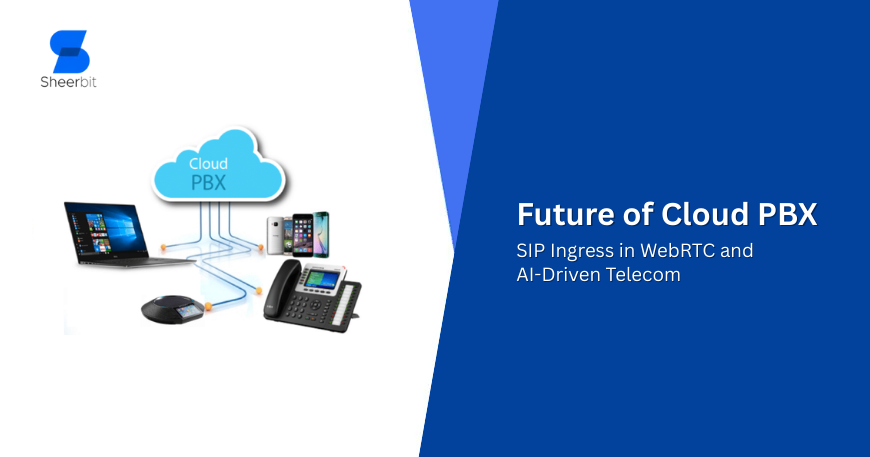
Cloud PBX systems are undergoing a revolutionary transformation, driven by the seamless integration of SIP ingress for legacy telephony bridging, WebRTC for native browser-based communication, and AI for intelligent automation and insights. This triad positions cloud PBX as the intelligent backbone of next-generation telecom, shifting from static call routing to dynamic, data-driven platforms that enhance customer experiences and operational efficiency. Introduction The evolution of cloud PBX represents a pivotal shift in telecommunications, where traditional voice infrastructure meets cutting-edge web and AI technologies to create programmable communication ecosystems. SIP ingress serves as the robust entry point, securely terminating carrier SIP trunks and PSTN connections while applying real-time policy controls, fraud detection, and media transcoding to prepare streams for modern consumption. WebRTC complements this by enabling plugin-free voice, video, and data channels directly in browsers, CRMs, and SaaS applications, supporting scalable multi-party sessions via SFUs and adaptive streaming for low-latency global delivery. AI elevates the entire stack, acting as an autonomous brain for predictive routing, real-time transcription across 100+ languages, sentiment analysis, and network self-optimization, turning every interaction into structured data for CRM enrichment and business intelligence. For VoIP providers and enterprises building on platforms like FreeSWITCH or Asterisk, this convergence unlocks high-value use cases such as embedded calling in telemedicine or EdTech, AI-assisted contact centers with 15-20% conversion lifts, and frictionless global collaboration with instant translation. As the cloud comms market surges toward $50B+ by 2030 at 25% CAGR, early adopters of SIP-WebRTC-AI architectures gain a decisive edge over legacy systems. SIP Ingress: The Connectivity Anchor SIP ingress forms the foundational layer in cloud PBX, acting as a programmable gateway that interconnects with PSTN carriers, enterprise trunks, and multi-tenant environments through deep packet inspection and dynamic routing. It handles codec transcoding (G.711 to Opus/AV1), DDoS mitigation via WAFs, and per-tenant policies for rate limiting, geography-based failover, and toll fraud prevention, ensuring carrier-grade uptime above 99.99%. Advanced deployments integrate SIP ingress with edge proxies like Kamailio, feeding processed media into Kubernetes-orchestrated pipelines for seamless handoff to WebRTC gateways, while exposing APIs for custom logic in fraud scoring or QoS prioritization. This layer decouples legacy voice from modern apps, allowing providers to monetize existing SIP investments through cloud-native extensibility. WebRTC: Frictionless Experience Layer WebRTC transforms cloud PBX into an embeddable communication fabric, delivering peer-to-peer media with DTLS-SRTP encryption, Data Channels for co-browsing, and ML-driven congestion control for consistent quality over variable networks. Selective Forwarding Units (SFUs) like Janus or Mediasoup enable scalable video rooms, click-to-call in Salesforce/HubSpot, and in-app softphones without desk hardware or plugins. Security features such as JWT identity assertion and TURN/STUN traversal ensure HIPAA/GDPR compliance, while adaptive bitrate adjusts streams in real-time, making WebRTC ideal for hybrid workforces shifting fluidly between voice, video, chat, and screen share in browser-based workspaces. This positions cloud PBX as a native web primitive, powering vertical SaaS like logistics dispatching or virtual classrooms with sub-150ms session setup. AI: The Autonomous Intelligence Core AI redefines cloud PBX operations, deploying agentic models for traffic engineering, anomaly detection in CDRs/QoS metrics, and automated scaling that slashes MTTR from hours to minutes. Application-side AI delivers real-time STT/NLP via Whisper/Deepgram for transcription, intent detection, emotion scoring, and PCI compliance flagging, with predictive analytics routing calls to optimal agents for 15-20% outcome improvements. In multi-tenant setups, federated learning aggregates anonymized patterns across tenants for cross-optimization, while event streams like Kafka pipe insights to ClickHouse for BI querying, evolving the PBX from cost center to revenue engine. This AI-native approach anticipates issues, personalizes interactions, and generates structured data feeds for ERPs and analytics platforms. Converged Architecture and Use Cases Production architectures layer SIP proxies, WebRTC media servers, and AI services on Kubernetes with edge CDNs for low-latency global distribution, using Kafka for real-time data flows and serverless functions for STT/routing. Key use cases include AI contact centers blending SIP calls with WebRTC dashboards, live summaries, and auto-dispositioning; embedded comms in vertical SaaS for telemedicine compliance calls; and enterprise optimizations like best-time-to-call predictions. Challenges like SIP-WebRTC codec mismatches and data sovereignty are addressed through microservices isolation, regional AI hubs, and standards-compliant signaling, enabling seamless multi-channel experiences. Implementation Roadmap Phase 1: Aggregate SIP trunks and deploy basic WebRTC softphones with TURN infrastructure. Phase 2: Add AI transcription/IVR and predictive routing via APIs. Phase 3: Scale to autonomous ops and embed in partner SaaS, benchmarking with load tests for <150ms setups. Partner with CPaaS like Twilio for SIP onboarding while differentiating via proprietary AI models. Conclusion The SIP ingress, WebRTC, and AI convergence elevates cloud PBX from virtual telephony to an intelligent, API-first platform that embeds natively in digital ecosystems, driving automation, insights, and growth. Telecom providers and VoIP innovators must prioritize AI-native designs and WebRTC interoperability to capture the exploding demand for predictive communication services. By 2026 and beyond, platforms mastering this stack will deliver not just connectivity, but personalized, outcome-optimized experiences that turn every call into a strategic asset, powering the $50B cloud comms era with unmatched efficiency and innovation.