Outsource VoIP Development or Hire In House?
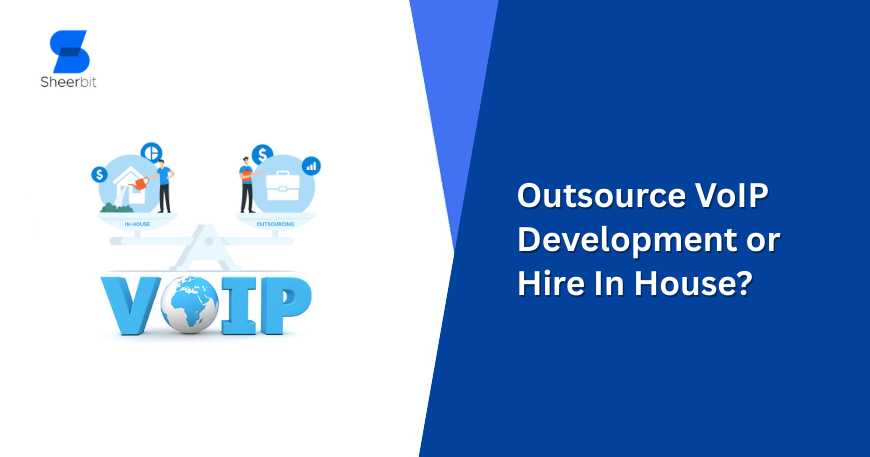
Modern businesses depend heavily on real time communication to serve customers, coordinate teams, and stay competitive. Voice over Internet Protocol technology has become the backbone of this transformation, enabling voice, video, messaging, and collaboration over the internet at a fraction of traditional telecom costs. As organizations plan to build or upgrade their communication systems, a critical strategic decision emerges early in the process. Should you outsource the project to external specialists or build an internal team to handle everything? This decision is not only about cost. It influences speed to market, product quality, scalability, security, long term maintenance, and even business agility. Choosing the right path requires a deep understanding of your company’s goals, technical capabilities, budget constraints, and timeline. In this comprehensive guide, we explore both options in detail so you can make an informed decision that aligns with your organization’s future. Understanding What a VoIP Project Involves Before deciding how to execute the project, it is important to understand the complexity behind building modern internet based communication systems. A robust VoIP platform is far more than just making calls over the internet. It typically includes call routing, session management, media handling, security layers, billing systems, integrations, analytics, and user interfaces across web and mobile. Developing such a system requires expertise in networking protocols, distributed systems, cloud infrastructure, real time media processing, database design, security compliance, and user experience. This multidisciplinary nature is why many organizations struggle to determine whether to build internally or rely on external experts. What Does Hiring In House Mean? Hiring in house means building your own dedicated team of VoIP developers, engineers, QA specialists, DevOps professionals, and support staff who work exclusively for your organization. They become deeply familiar with your product, business processes, and long term vision. An internal team typically handles everything from architecture design to deployment, updates, troubleshooting, and ongoing improvements. Advantages of Hiring In House Complete Control Over the Product One of the biggest advantages of an internal team is full ownership. You control priorities, development roadmap, security policies, and release cycles without depending on external timelines. Changes can be implemented immediately. There is no need for contract renegotiation or waiting for vendor availability. Deep Product Knowledge Over time, internal engineers develop deep institutional knowledge. They understand not only how the system works but why specific decisions were made. This knowledge reduces the risk of miscommunication and helps maintain consistency across updates. Strong Alignment With Business Goals Internal teams work closely with leadership, marketing, sales, and operations. This proximity ensures that technical decisions directly support business objectives rather than generic industry solutions. Long Term Cost Efficiency for Large Scale Operations While initial hiring costs are high, maintaining a stable internal team may become cost effective over many years, especially for companies where communication systems are core to revenue generation. Enhanced Security Control Sensitive industries such as finance, healthcare, or government may prefer internal teams because they offer tighter control over data handling, infrastructure access, and compliance requirements. Disadvantages of Hiring In House High Upfront Costs Recruiting experienced engineers is expensive. Salaries, benefits, office space, equipment, training, and management overhead quickly add up. Specialized telecom engineers are particularly costly due to limited talent availability. Longer Time to Build a Team Finding the right talent can take months. During this period, product development may stall, delaying your market entry and competitive advantage. Limited Skill Diversity No single team can master every technology. Complex communication systems often require niche expertise that may not exist within your internal workforce. Ongoing Management Burden Managing engineers requires strong technical leadership. Without experienced managers, productivity and quality may suffer. Risk of Employee Turnover When key engineers leave, they take critical knowledge with them. Replacing them can be difficult and disruptive. What Does Outsourcing Mean? Outsourcing involves partnering with an external company or specialists who design, build, and sometimes maintain your communication platform. This partner typically has an established team, proven methodologies, and experience across multiple projects. Organizations often choose this approach when they need rapid development, specialized expertise, or reduced operational burden. Advantages of Outsourcing Access to Specialized Expertise External teams often consist of professionals who focus exclusively on communication technologies. They bring deep technical knowledge, best practices, and experience from numerous deployments. This expertise significantly reduces trial and error during development. Faster Time to Market Since the team already exists and is trained, work can begin immediately. Established workflows and reusable components accelerate development, allowing businesses to launch much sooner. Lower Initial Investment Outsourcing eliminates recruitment costs, infrastructure setup, employee benefits, and training expenses. You pay for the service rather than building an entire department. Scalability on Demand External partners can scale resources up or down based on project needs. This flexibility is valuable for startups or businesses with fluctuating workloads. Reduced Management Overhead Project management is typically handled by the vendor, freeing your leadership team to focus on strategy, marketing, and growth. Access to Latest Technologies Specialized firms continuously update their skills and tools to stay competitive. Your project benefits from modern architectures, security standards, and performance optimizations. Disadvantages of Outsourcing Less Direct Control External teams follow contractual agreements and defined scopes. Making major changes mid project may require renegotiation. Communication Challenges Time zone differences, language barriers, and remote collaboration can slow decision making if not managed properly. Dependency on Vendor Your product’s future may become tied to the partner’s availability, financial stability, and priorities. Security Concerns Sharing sensitive data or infrastructure access with third parties requires strong legal agreements and trust. Potential Quality Variability Not all vendors deliver the same level of expertise. Choosing the wrong partner can result in delays, technical debt, or substandard performance. Cost Comparison Between the Two Approaches In House Cost Components Recruitment expenses Competitive salaries Employee benefits Office infrastructure Hardware and software licenses Training programs Management salaries Retention incentives Outsourcing Cost Components Contract fees Project management charges Maintenance agreements Possible customization costs Quality and Innovation Considerations Quality depends more on expertise than on whether the team is internal or external. Internal
What Is a VoIP Phone and How Does It Work in 2026?
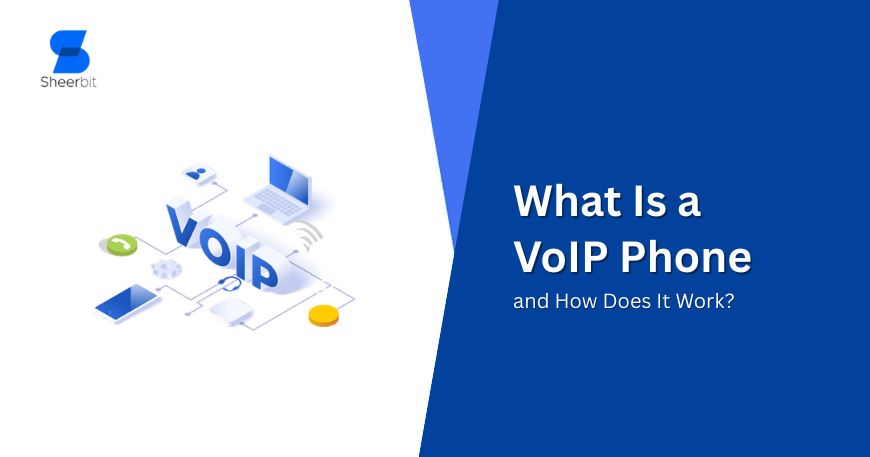
Communication is the backbone of every successful organization and personal relationship. Over the years, the way people communicate has transformed dramatically, moving from handwritten letters to landline telephones and now to internet based calling. Traditional phone systems were once considered reliable and essential, but they come with limitations such as high costs, limited flexibility, and dependence on physical infrastructure. As businesses expand globally and remote work becomes common, these limitations have become more noticeable. Modern organizations now require communication tools that are flexible, scalable, cost effective, and capable of integrating with digital workflows. Voice over Internet Protocol technology has emerged as the solution to these challenges. Instead of relying on copper wires and circuit switched networks, VoIP uses internet connectivity to transmit voice data. A VoIP phone enables users to make calls from virtually anywhere using broadband connections, offering features that traditional systems cannot provide. From small startups to large enterprises, adoption of VoIP phones continues to rise due to their efficiency and versatility. This article provides a detailed explanation of what a VoIP phone is, how it works, its types, features, benefits, requirements, setup process, and why it has become a critical component of modern communication systems. Understanding Voice over Internet Protocol Voice over Internet Protocol is a technology that allows voice communication to be delivered through internet networks rather than conventional telephone lines. Instead of establishing a dedicated electrical circuit for each call, VoIP converts voice signals into digital data and transmits them as packets across IP networks. This method is similar to how emails, videos, and websites are delivered over the internet. The shift from circuit switching to packet switching is significant because it allows more efficient use of network resources. Multiple conversations can share the same connection without interfering with one another. This reduces infrastructure requirements and operational costs while enabling advanced capabilities such as video conferencing, file sharing, and real time collaboration. VoIP technology has therefore become a foundation for unified communication systems used by modern organizations worldwide. What Is a VoIP Phone A VoIP phone is a device specifically designed to make and receive calls using internet connectivity instead of traditional telephone networks. Although many VoIP phones resemble standard desk phones, their internal components are optimized for digital communication. These devices connect directly to routers or network switches rather than wall mounted telephone jacks. A typical VoIP phone includes a microphone to capture voice input, a speaker or handset for audio output, a keypad or touchscreen for dialing, and network interfaces for connectivity. Many models support Ethernet connections, while others include wireless capabilities. Some devices also use Power over Ethernet technology, which allows both power and data to be delivered through a single cable, simplifying installation. VoIP phones can function independently or as part of a larger communication system managed through cloud or on premises platforms. They often include built in software that supports call management, directory access, conferencing, voicemail, and other advanced features. How a VoIP Phone Works Voice Capture and Signal Conversion When a user speaks into the microphone, the sound waves produced by the voice are captured and converted into electrical signals. This is similar to how traditional phones operate at the initial stage. However, instead of sending these signals through analog circuits, the VoIP phone prepares them for digital transmission. Analog to Digital Encoding The electrical signals are converted into digital data using specialized algorithms known as codecs. These codecs compress the audio to reduce bandwidth consumption while maintaining clarity. Compression is essential because uncompressed audio would require significantly more data to transmit. Packet Formation Once encoded, the digital audio stream is divided into small units called packets. Each packet contains a portion of the audio data along with information about its destination and sequence. This structure enables packets to travel independently across the network. Transmission Through IP Networks The packets are transmitted over the internet using Internet Protocol. Unlike traditional systems that reserve a single path for the entire duration of a call, VoIP packets may take different routes to reach the destination. Network routers determine the most efficient path for each packet based on current conditions. Packet Reassembly At the receiving end, the system collects incoming packets and arranges them in the correct order. If some packets arrive late or out of sequence, buffering mechanisms ensure that the audio remains smooth and understandable. In some cases, missing data can be reconstructed to maintain call quality. Digital to Audio Conversion Finally, the reassembled digital data is converted back into analog signals and played through the speaker or headset. This entire process occurs in fractions of a second, allowing conversations to feel natural and real time. Types of VoIP Phones Hardware Desk Phones These are physical devices commonly used in offices. They resemble traditional business telephones but connect to internet networks instead of phone lines. Hardware VoIP phones often provide superior audio quality, dedicated buttons for features, and professional reliability. Softphones Softphones are software applications that transform computers, tablets, or smartphones into communication devices. Users can make calls using headsets or built in microphones. Softphones are popular among remote workers because they eliminate the need for dedicated hardware. Cordless VoIP Phones Cordless models provide mobility within a limited range. A base station connects to the network, and wireless handsets communicate with the base using radio signals. These devices are useful in environments where users need to move around while on calls. Conference Phones Conference VoIP phones are designed for meeting rooms and collaborative spaces. They feature multiple microphones and speakers to capture voices from different directions. Such devices enable group discussions with remote participants. Mobile VoIP Apps Many organizations use mobile applications that operate over WiFi or cellular data networks. These apps allow employees to use business phone numbers on their personal devices, ensuring consistent communication regardless of location. Essential Components for VoIP Communication A successful VoIP setup requires several interconnected components working together. A stable broadband internet connection is the most critical requirement. Without sufficient bandwidth, call quality
How virtual mobile numbers can help your business
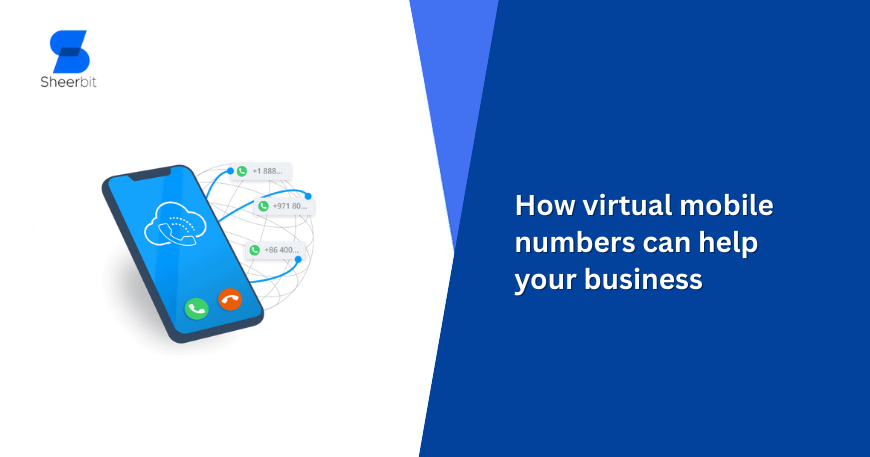
Modern businesses are no longer limited by geography, office locations, or traditional phone systems.Customers expect instant access, seamless communication, and personalized interactions no matter wherethey are located. As companies expand into new markets and adopt remote work models, communicationinfrastructure has become a strategic asset rather than a basic utility. Businesses that fail tomodernize their communication often struggle with missed calls, poor customer experience, and risingoperational costs. Virtual mobile numbers have emerged as a powerful solution to these challenges. They allow businessesto establish a professional presence in multiple regions without the need for physical SIM cards orlocal offices. By using cloud based communication technology, virtual mobile numbers help companiesmanage customer calls, messages, and support interactions efficiently while maintaining flexibilityand scalability. This blog explores how virtual mobile numbers work and how they can transform theway your business communicates with customers and teams. What Are Virtual Mobile Numbers Virtual mobile numbers are phone numbers that are not tied to a physical SIM card or a specific device.Instead, they operate over the internet using cloud based communication platforms. These numbers cansend and receive calls and messages just like traditional mobile numbers, but they are managed throughsoftware dashboards and applications. Businesses can use virtual mobile numbers on multiple devices such as smartphones, laptops, or desktopsystems. Calls can be routed to different agents, departments, or locations based on business rules.This makes virtual numbers ideal for customer support, sales teams, marketing campaigns, and remotework environments. How Virtual Mobile Numbers Work Virtual mobile numbers function through internet based telephony systems. When a customer calls avirtual number, the call is routed through cloud servers and delivered to the assigned endpoint. Thisendpoint could be a softphone application, a browser, or a call center system. Advanced routing features allow businesses to define how calls are handled. Calls can be directedbased on time zones, business hours, caller location, or agent availability. Messages sent to virtualnumbers can also be managed centrally, enabling consistent communication across channels. Key Benefits of Virtual Mobile Numbers for Businesses Establish a Local Presence Without Physical Offices One of the biggest advantages of virtual mobile numbers is the ability to create a local presence indifferent regions. Businesses can acquire numbers from multiple cities or countries and offercustomers a familiar local number to call. This builds trust and increases the likelihood of customer engagement. Customers are more comfortablecalling a local number than an international one. At the same time, businesses avoid the cost andcomplexity of setting up physical offices in every location. Improve Customer Support and Accessibility Virtual mobile numbers allow businesses to handle customer calls more efficiently. Calls can bedistributed among support agents, ensuring faster response times and reduced wait periods. Featuressuch as call queuing, call forwarding, and voicemail ensure that no customer inquiry goes unanswered. Businesses can also offer round the clock support by routing calls to different teams based on workinghours. This level of accessibility significantly improves customer satisfaction and brand reputation. Enable Remote and Hybrid Work Models As remote work becomes the norm, businesses need communication systems that are not tied to a singlelocation. Virtual mobile numbers allow employees to make and receive business calls from anywhereusing internet connected devices. This ensures continuity and professionalism regardless of where team members are working from.Employees can use the same business number while working from home, traveling, or operating fromdifferent offices, creating a consistent brand identity. Reduce Communication Costs Traditional phone systems often involve high setup costs, maintenance expenses, and internationalcalling charges. Virtual mobile numbers eliminate many of these costs by using internet basedcommunication. Businesses can significantly reduce expenses related to hardware, SIM cards, and long distance calls.Subscription based pricing models make costs predictable and scalable as the business grows. Centralized Call Management and Analytics Virtual mobile number platforms provide centralized dashboards where businesses can monitor and manageall communication activity. Call logs, message histories, and performance metrics are available inreal time. These insights help businesses identify peak call times, measure agent performance, and understandcustomer behavior. Data driven decision making leads to better staffing, improved service quality,and optimized workflows. Virtual Mobile Numbers for Sales and Marketing Track Campaign Performance Effectively Virtual mobile numbers are extremely useful for marketing campaigns. Businesses can assign differentnumbers to different campaigns, channels, or regions. This makes it easy to track which campaignsgenerate the most calls and inquiries. By analyzing call data, businesses can refine their marketing strategies and allocate budgets moreeffectively. This level of visibility is difficult to achieve with traditional phone numbers. Increase Lead Conversion Rates When potential customers can easily reach your business through a familiar and accessible number,lead conversion rates improve. Virtual mobile numbers ensure calls are routed to the right salesrepresentative at the right time. Missed calls are minimized, and follow ups become more structured. This improves response time andincreases the chances of converting leads into paying customers. Enhancing Business Continuity and Reliability Virtual mobile numbers provide built in redundancy and failover mechanisms. If one endpoint orlocation becomes unavailable, calls can automatically be redirected to another device or team. This ensures uninterrupted communication even during network issues, power outages, or emergencies.Reliable communication builds customer trust and protects business operations from unexpecteddisruptions. Security and Compliance Advantages Modern virtual mobile number platforms offer strong security features such as encrypted calls, accesscontrols, and audit logs. These features help protect sensitive customer data and ensure compliancewith industry regulations. Businesses operating in regulated sectors such as finance, healthcare, or ecommerce benefit fromsecure and compliant communication systems that reduce risk and improve accountability. Scalability for Growing Businesses As businesses grow, their communication needs evolve. Virtual mobile numbers are highly scalable,allowing companies to add or remove numbers and users as needed. Whether you are launching a new product, entering a new market, or expanding your support team,virtual mobile numbers adapt easily without complex infrastructure changes. This flexibility supportslong term business growth. Integration With Business Tools Virtual mobile number systems can integrate with customer relationship management platforms, helpdesksoftware, and analytics tools. This creates a unified communication ecosystem where customer data andinteractions are easily accessible. Integrated systems improve agent
How to Choose the Right Class 5 Softswitch Solution for Your VoIP Business
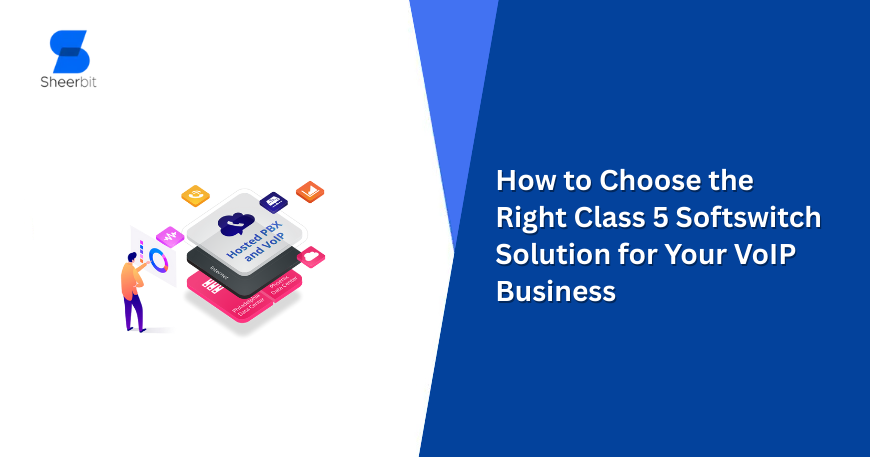
The VoIP industry continues to evolve at a rapid pace, driven by increasing demand for reliable communication, advanced calling features, and scalable digital infrastructure. For service providers, telecom startups, and enterprises entering the voice communication space, selecting the right backend technology is one of the most critical decisions. At the heart of this decision lies the Class 5 softswitch, a core component that directly impacts service quality, customer satisfaction, and long term profitability. A Class 5 softswitch acts as the control center for end user voice services, handling call routing, feature management, billing integration, and subscriber authentication. Choosing the right solution is not simply a technical decision but a strategic one. It determines how efficiently you can launch services, manage growth, comply with regulations, and compete in a crowded market. This guide explains everything you need to know to confidently select the best Class 5 softswitch for your VoIP business. Understanding What a Class 5 Softswitch Does A Class 5 softswitch is designed to serve end users directly. Unlike Class 4 softswitches that focus on carrier to carrier traffic, Class 5 systems manage subscriber level services such as call forwarding, voicemail, caller ID, IVR, and billing. These platforms support residential users, enterprises, hosted PBX customers, and mobile VoIP subscribers. The softswitch acts as the brain of your VoIP operation. It manages SIP signaling, controls call logic, authenticates users, and integrates with other network components such as media servers, billing platforms, and CRM systems. A strong Class 5 solution ensures seamless call delivery while maintaining high availability and performance. Why Choosing the Right Solution Matters Your Class 5 softswitch influences nearly every operational aspect of your business. A poorly chosen system can lead to call drops, billing disputes, limited scalability, and frustrated customers. On the other hand, a robust and flexible platform allows you to launch new services faster, reduce operational costs, and deliver a premium user experience. As competition increases among VoIP providers, customers expect crystal clear call quality, advanced features, and uninterrupted service. The right softswitch empowers you to meet these expectations while staying compliant with regulatory standards and adapting to future technologies. Key Business Requirements to Define First Before evaluating vendors or platforms, it is essential to define your business needs clearly. Every VoIP business has unique goals, and the right solution must align with those objectives. Consider the size of your target audience and your growth plans. A startup serving a limited region has different requirements than a provider planning global expansion. Define whether you will serve residential users, enterprises, call centers, or a combination of all three. You should also assess your expected call volume, concurrency levels, and peak traffic patterns. This information helps determine whether a softswitch can handle your operational load without performance degradation. Scalability and Future Growth Scalability is one of the most critical factors when choosing a Class 5 softswitch. Your platform should support business growth without requiring a complete system overhaul. Look for solutions that allow easy expansion of subscribers, concurrent calls, and geographic coverage. A scalable system should support horizontal and vertical scaling, enabling you to add capacity as demand increases. Cloud based deployments or hybrid architectures often offer better flexibility compared to rigid on premise systems. Future readiness is equally important. Your softswitch should support modern protocols, integrations, and feature upgrades so your business can adapt to market changes and evolving customer expectations. Feature Set and Service Flexibility The richness of features offered by a Class 5 softswitch directly impacts your service portfolio. Core features should include call forwarding, call waiting, voicemail, DND, IVR, conferencing, and number portability support. Advanced features such as call analytics, real time monitoring, customizable dial plans, and white label portals can help differentiate your offerings. Enterprise customers often require advanced PBX features, while residential users value simplicity and reliability. Ensure the platform allows you to customize features per user or per plan. This flexibility enables you to create competitive pricing models and tailored service packages. Call Quality and Performance Reliability Call quality is non negotiable in the VoIP industry. Even minor latency or jitter issues can lead to customer churn. The right softswitch should offer robust call routing, intelligent load balancing, and failover mechanisms to maintain consistent performance. High availability architecture is essential. Look for solutions that support redundancy, geo redundancy, and automatic failover to minimize downtime. Real time monitoring tools help detect issues early and maintain service continuity. Performance testing and proven deployments in real world environments are strong indicators of reliability. Security and Fraud Prevention Security is a major concern for VoIP businesses. SIP attacks, toll fraud, and unauthorized access can result in financial losses and reputational damage. Your softswitch should include built in security features to protect your network and customers. Essential security capabilities include SIP authentication, IP whitelisting, rate limiting, and anomaly detection. Advanced fraud prevention tools that analyze call patterns and trigger alerts can significantly reduce risk. Compliance with data protection standards and encryption protocols adds an extra layer of trust, especially for enterprise clients. Billing and Monetization Capabilities Billing accuracy is critical for revenue management. A strong Class 5 softswitch should integrate seamlessly with billing systems and support flexible pricing models. Features such as prepaid and postpaid billing, real time charging, and usage based pricing are essential. Look for support for multiple currencies, taxation rules, and customizable rate plans. Detailed call detail records help ensure transparency and reduce billing disputes. An efficient billing integration allows you to automate invoicing and reduce manual intervention, improving operational efficiency. Integration with Existing Systems Your softswitch should not operate in isolation. Integration with CRM platforms, payment gateways, number management systems, and analytics tools is vital for smooth operations. API support is a key consideration. A well documented API enables seamless integration with third party tools and allows you to build custom workflows. This flexibility is especially important for businesses offering white label or enterprise services. Smooth integration reduces deployment time and enhances overall system efficiency. Deployment Options and Infrastructure Class 5
What Is Class 4 Softswitch Development and Why It Matters for Modern VoIP Carriers
The global telecom industry has undergone a major transformation as voice services shift from traditional circuit switched networks to IP based communication. This evolution has allowed carriers to reduce infrastructure costs, improve flexibility, and expand their reach across international markets. At the center of this transition is softswitch technology, which replaces legacy hardware with intelligent software driven call control systems. For wholesale VoIP carriers that manage high volumes of domestic and international traffic, Class 4 softswitch development plays a critical role. It enables efficient call routing between networks, supports carrier interconnection, and ensures service reliability at scale. As competition intensifies and margins tighten, understanding the value of Class 4 softswitches is essential for carriers aiming to build sustainable and future ready voice networks. What Is a Class 4 Softswitch A Class 4 softswitch is a carrier grade switching system designed to route voice traffic between different telecom networks. Its primary responsibility is transit switching, meaning it handles calls that pass through the network rather than terminating at end users. This makes it fundamentally different from Class 5 systems, which focus on subscriber level services. In a VoIP environment, the Class 4 softswitch controls call signaling, manages routing logic, and connects with media gateways that handle voice streams. By operating on IP networks and using protocols such as SIP, it allows carriers to replace expensive legacy switches with scalable software based solutions. The Importance of Class 4 Softswitches in VoIP Networks Modern VoIP carriers operate in an environment where traffic volumes are high and operational efficiency is critical. A Class 4 softswitch acts as the backbone of wholesale voice operations by providing centralized control over call routing and interconnection. Carriers rely on these systems to manage multiple upstream and downstream partners while maintaining quality and cost efficiency. Without a robust switching platform, handling complex routing scenarios and maintaining service stability would be extremely difficult. Core Features of Class 4 Softswitch Development Class 4 softswitch development focuses on performance, reliability, and control. Call control mechanisms handle signaling and ensure proper call setup and teardown. Routing engines analyze destination prefixes and apply predefined rules to determine the most suitable path for each call. Billing and rating modules calculate costs accurately based on agreed carrier rates. Monitoring and reporting tools give operators real time visibility into traffic flows and performance metrics. Together, these components form a comprehensive system for managing large scale voice traffic. Intelligent Call Routing Capabilities One of the most valuable aspects of a Class 4 softswitch is its ability to perform intelligent call routing. Carriers can configure routing strategies based on cost, quality, availability, and time based conditions. Least cost routing helps minimize expenses by selecting the most economical routes while maintaining acceptable quality. Quality based routing further enhances performance by directing calls through routes with proven reliability. These capabilities allow carriers to balance profitability with customer satisfaction. Scalability and Carrier Grade Reliability VoIP traffic can grow rapidly, especially as carriers expand into new markets. Class 4 softswitches are designed with scalability in mind, allowing operators to increase capacity without major infrastructure changes. High availability features such as redundancy and failover ensure uninterrupted service even during hardware or network failures. This level of reliability is essential for wholesale carriers that must meet strict service level agreements. Global Interconnection and Compatibility International voice traffic requires seamless interconnection between networks that may use different codecs and signaling behaviors. A well developed Class 4 softswitch ensures compatibility across diverse carrier environments. By supporting multiple standards and protocol variations, it allows carriers to connect globally with minimal technical barriers. This flexibility is a key enabler of international VoIP expansion. Security and Fraud Management Security is a major concern for VoIP carriers due to the risk of fraud and unauthorized access. Class 4 softswitches include built in mechanisms to monitor traffic patterns and detect anomalies in real time. Authentication controls ensure that only trusted partners can send traffic through the network. By addressing security at the switching level, carriers protect both revenue and reputation. Operational Efficiency Through Automation Manual network management is not practical at carrier scale. Class 4 softswitch development emphasizes automation to simplify operations and reduce human error. Automated provisioning allows new routes and partners to be onboarded quickly. Detailed analytics and reporting help operators make informed decisions and optimize network performance continuously. Why Class 4 Softswitch Development Matters Today The VoIP market is highly competitive, with increasing traffic volumes and shrinking margins. Carriers must operate efficiently while maintaining consistent call quality. Class 4 softswitch development provides the technical foundation needed to meet these challenges. By enabling intelligent routing, scalability, and centralized control, these systems help carriers adapt to changing market demands. Modern Class 4 Softswitch Solutions are not just technical tools but strategic assets that support long term growth. Selecting the Right Technology Partner Implementing a Class 4 softswitch requires deep technical expertise and industry knowledge. Many carriers choose to work with an experienced voip solutions provider to ensure successful deployment and ongoing support. The right partner understands carrier grade requirements and helps customize the platform to specific business needs. This collaboration reduces risk and accelerates time to market. The Future of Class 4 Softswitch Technology As telecom networks continue to evolve, Class 4 softswitches are becoming more software defined and cloud ready. Virtualization allows carriers to deploy switching infrastructure more flexibly and cost effectively. Advanced analytics and intelligent routing technologies are also shaping the future of carrier networks. These innovations will further enhance efficiency and performance in wholesale voice operations. Conclusion Class 4 softswitch development is a critical element of modern VoIP carrier infrastructure. It enables efficient call routing, global interconnection, and reliable management of large scale voice traffic. In a market defined by performance and cost control, a robust switching platform is essential for operational success. By investing in well designed Class 4 Softswitch Solutions and working with a trusted voip solutions provider, carriers can build resilient networks that are prepared for future growth. As voice communication continues to evolve,
What Is DID? Complete Direct Inward Dialing Guide for Businesses 2026
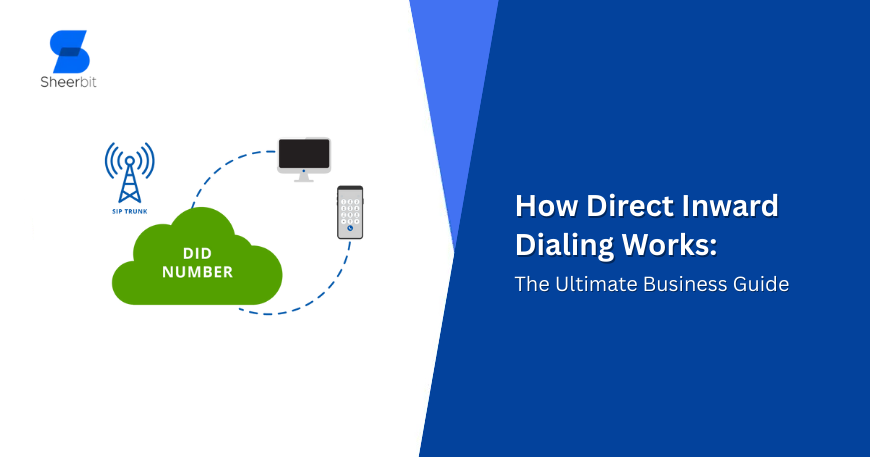
Direct Inward Dialing (DID) is a service that lets external callers reach a specific person, team, or extension directly without going through an operator or dialing extra extension digits. In modern business telephony, DIDs are commonly delivered through VoIP or SIP trunking so the same “direct number” can ring desk phones, softphones, call queues, or mobiles based on routing rules. Direct Inward Dialing might sound like a legacy telecom term, but it has become even more important in cloud calling and UCaaS setups where customers expect fast, human-first access. Instead of forcing every caller into a single main line and a long IVR tree, DID lets you publish direct numbers for sales, support, billing, branches, or even individual reps—while still managing everything centrally. What is DID (Direct Inward Dialing)? Direct Inward Dialing (DID) is a telephone service that assigns individual phone numbers to people or endpoints inside a company phone system (typically a PBX), allowing callers to dial those numbers and get routed straight to the right destination. Traditionally, DID was designed so organizations could receive calls to specific extensions without requiring an operator to manually transfer calls. A DID number is the public-facing number someone dials from the outside, but it does not necessarily represent a “physical line.” In fact, DID is commonly described as a way to give employees individual numbers without buying separate phone lines for each person, because the routing happens through the PBX and trunk capacity. DID is also called DDI (Direct Dial-In) in some regions (especially Europe), but the concept is the same: unique inbound numbers mapped to internal destinations. Key terms (quick clarity): DID number: The external number customers dial to reach a person/team. PBX: The business phone system that routes calls to internal extensions. Trunks (PRI/SIP): The connectivity between the public phone network and the PBX/VoIP system used to carry calls. How DID works (traditional to VoIP) At a high level, DID works by mapping an inbound number to a destination (extension, queue, ring group, IVR option, voicemail box, or external forwarding number). When someone dials that DID, the provider delivers the call to your phone system, and the phone system applies routing logic to complete the call to the intended target. Classic DID (PSTN + trunks + PBX) In traditional setups, a telco connects trunk lines to a company PBX and allocates a block of direct-dial numbers to that business. When an inbound call hits one of those numbers, the call is forwarded to the PBX over the trunk, and the PBX uses the dialed number information to route the call to the correct extension—without an operator having to answer first. Modern DID (VoIP / SIP trunking / cloud PBX) With cloud telephony, the same concept is implemented digitally using VoIP infrastructure—commonly via SIP trunking or provider-based cloud PBX routing. In this model, the DID is still the number customers dial, but the call is carried over IP networks and then routed to a user, department, or application endpoint based on your configuration. A common modern flow looks like this: A customer dials a DID that is associated with a user or department. The provider delivers the call to your system (often over a SIP trunk or cloud PBX connection). Your routing rules determine where the call should ring (softphone, desk phone, queue, voicemail, or a forwarding target). DID versus “main number + IVR” DID doesn’t replace your main number—it complements it. A main number is still useful for general inquiries, while DID numbers create fast lanes for high-intent callers (existing customers, VIP accounts, priority support, direct sales lines) who should not be forced through menus. Quick comparison: PRI/PSTN DID vs SIP/VoIP DID Factor Traditional DID (PRI/PSTN + PBX) VoIP DID (SIP trunk / cloud routing) Delivery method Calls delivered over PSTN trunks to PBX. Calls delivered over IP, often via SIP trunking. Scalability Adding capacity may require telecom provisioning/hardware changes. Scaling is often configuration-based (numbers/routing). Routing flexibility PBX-centric routing; forwarding possible but can be limited. Advanced routing to apps, queues, remote teams, devices. Best fit Sites with legacy PBX and fixed capacity. Distributed teams, multi-site, fast growth, modern CX. DID in VoIP: features, benefits, and real use cases DID becomes especially valuable when combined with a modern PBX/UC system because the number is just the entry point—everything after that can be automated, measured, and optimized. What DID enables (practically) Direct-to-person or direct-to-team calling: Callers can reach a specific extension or department without a human operator. Call forwarding strategies: DIDs can be configured to forward calls to other numbers (including mobile phones), which is useful for coverage and remote work. Call center and queue routing: Inbound calls to certain DIDs can route into agent queues rather than to a single phone. Voicemail per user/team: Calls can be directed to voicemail boxes tied to specific users or functions. Business outcomes (why teams actually buy DIDs) Better customer experience: Direct access reduces transfers and helps callers reach the right person faster. Cleaner org structure: Each department (or campaign) can have a published number while the backend stays centralized. Higher answer rates for revenue lines: Sales DIDs can ring multiple devices or follow-the-sun schedules, so fewer leads get lost. More measurable marketing: Assign unique DIDs per channel (Google Ads, landing pages, geo campaigns) to attribute calls accurately. Common DID use cases by department Sales: Unique DIDs for reps, territories, or product lines so prospects connect quickly to the right specialist. Support: DIDs per product tier (standard vs priority) or region to reduce wait times and improve first-call resolution. Finance/Billing: A direct line reduces internal transfers and helps handle sensitive account issues efficiently. Multi-location businesses: Local DIDs for each city/branch while keeping one centralized PBX and shared agent pool. DID and virtual presence (local numbers) Many businesses use DIDs to create a local presence in multiple cities or countries without physically opening offices there. With the right routing, a local DID can ring a central team, a regional partner, or a local queue—while presenting
VoIP Statistics 2026 – Complete Analysis
VoIP technology has revolutionized global communication by 2026, offering cost-effective, scalable solutions that integrate seamlessly with cloud services, AI, and 5G networks. Businesses worldwide leverage its advantages for enhanced productivity, while consumers enjoy ubiquitous access via mobile apps and OTT platforms. In an era defined by remote work and digital transformation, VoIP statistics underscore its dominance over legacy PSTN systems, with projections signaling sustained double-digit growth through the decade. Market Size and Growth The global VoIP services market reached approximately $112.9 billion in 2023 and is forecasted to expand to $179.6 billion by 2026, reflecting a robust CAGR of 9.6% to 10.9%. This surge stems from widespread cloud adoption, where SMEs—comprising over 60% of users—drive demand for affordable, flexible telephony. Enterprise segments contribute significantly, with 61% of organizations planning full migration from on-premise PBX systems by mid-decade. Mobile VoIP leads revenue streams, projected at $58.21 billion by 2025, extending into 2026 amid 5G rollout. Fixed VoIP subscriptions grew to 204 million in 2024, though combined fixed-voice services face a 1.1% annual decline through 2031 as VoIP supplants them. North America holds the largest share due to 90%+ broadband penetration, while Asia-Pacific emerges as the fastest-growing region via OTT apps in India and China. User Adoption Metrics Global VoIP subscribers surpass 1.8 billion, with mobile users expected to hit 3.6 billion by end-2026, fueled by smartphone saturation. Over 40% of worldwide voice calls now traverse VoIP networks, eclipsing PSTN, which declines 6% yearly. Business users total 1.93 billion, residential at 1.17 billion, with SMEs at 45-60% of the customer base preferring cloud VoIP over landlines. 93% of enterprises report workflow enhancements, averaging 32 minutes daily time savings per employee through features like call analytics. Cost Savings Analysis Businesses save 50-75% on long-distance calls via VoIP, with total telephony costs dropping 40% on average. SMEs eliminate hardware expenses, as cloud models reduce upfront investments by 60-70% compared to traditional systems. International calling rates plummet to pennies per minute, enabling global teams without prohibitive fees. ROI materializes within 6-12 months, with 75% of adopters citing financial benefits as primary motivators. Feature Utilization Breakdown Feature Adoption Rate Key Benefit Call Forwarding 92% Seamless mobility Voicemail-to-Email 88% Instant access Video Conferencing 75% Remote collaboration AI Call Routing 65% Efficiency gains Call Analytics 70% Data-driven insights These features drive 32-minute daily savings and position VoIP as indispensable for hybrid workforces. Regional Market Breakdown Region Market Share (%) Growth Driver North America 38 High broadband Asia-Pacific 30 Mobile OTT Europe 20 Cloud migration Rest of World 12 5G rollout Productivity Enhancements VoIP integrations yield 18% productivity boosts through features like auto-attendants and CRM syncing. Employees log 400 minutes monthly on VoIP calls, augmented by AI transcription and real-time analytics. UCaaS platforms, used by 60% of firms, consolidate voice, video, and messaging, slashing switch-tasking time. 85% of providers prioritize voice quality, correlating with 20% higher customer satisfaction scores. Security Evolution AI-driven encryption and blockchain integration mitigate toll fraud, affecting <1% of calls in 2026. 70% of providers offer end-to-end encryption, with VPNs standard for 80% of enterprise users. Future Projections By 2030, VoIP could capture 70% of voice traffic, with AR/VR integrations and 6G enabling immersive comms. Mobile subscribers may double, driven by IoT voice devices. In conclusion, VoIP’s 2026 statistics affirm its pivotal role in communication evolution, delivering unmatched efficiency and innovation across sectors. As integrations deepen and barriers diminish, its trajectory promises even greater impact, urging businesses to adopt proactively for competitive advantage.
Sheerbit: Leading VoIP Provider in the USA

Sheerbit is a leading VoIP provider in the USA known for delivering advanced, secure, and scalable communication solutions tailored to modern business needs. Through its comprehensive suite of services, Sheerbit empowers businesses to enhance communication infrastructures with real-time voice and video communication technologies, driving efficiency and collaboration across various industries. Their expertise in innovative VoIP development encompasses WebRTC, Asterisk, FreeSWITCH, MVNE, softphone solutions, and contact center solutions designed to meet diverse enterprise requirements. Sheerbit’s VoIP solutions are custom-built by skilled developers who focus on providing seamless, high-quality, reliable communication platforms. These solutions reduce operational costs, improve call quality, and support integration with business systems to ensure efficient, cost-effective communications. As a technology-driven company, Sheerbit emphasizes cutting-edge protocols and platforms like WebRTC, Asterisk, and FreeSWITCH, ensuring businesses remain competitive in a fast-paced digital environment. WebRTC Development WebRTC (Web Real-Time Communication) is a core service offered by Sheerbit, enabling peer-to-peer voice, video, and data communication directly through web browsers without requiring any plugins or additional software. Sheerbit’s WebRTC solutions facilitate real-time communication that is secure, scalable, and interoperable with existing VoIP infrastructure. This technology enables businesses to implement Web-based softphones, video conferencing platforms, and collaboration tools that enhance customer engagement and operational efficiency. By leveraging WebRTC, Sheerbit helps businesses reduce communication barriers with instant, browser-based connections that enhance accessibility and user experience. Their custom WebRTC development includes signaling servers, media gateways, and API integrations, designed to seamlessly connect with existing telephony systems or new digital communication platforms. Asterisk Services Asterisk, an open-source PBX platform, is another pivotal service in Sheerbit’s VoIP portfolio. Sheerbit specializes in developing, customizing, and integrating Asterisk-based solutions to create powerful telephony systems that handle call routing, IVR, voicemail, conferencing, and more. These solutions are highly customizable, allowing businesses to automate and streamline their communication workflows. With Asterisk, Sheerbit enables enterprises to deploy scalable IP-PBX systems that support multi-channel communication, connecting on-premise infrastructure with cloud services. Their Asterisk services include development, deployment, maintenance, and support to ensure high availability and resilience. FreeSWITCH Solutions FreeSWITCH is an advanced telephony platform that Sheerbit develops to support scalable and flexible communication services. Sheerbit’s FreeSWITCH solutions include custom development of voice, video, and messaging applications designed for enterprise communications, contact centers, and service providers. The platform’s modular architecture allows for the integration of new features and protocols, meeting evolving business demands. Sheerbit’s expertise with FreeSWITCH enables clients to build secure, high-performance communication systems that can operate in both cloud and on-premises environments. These solutions are often used for SIP trunking, unified communications, and interactive voice response (IVR) systems. MVNE Services Sheerbit offers MVNE (Mobile Virtual Network Enabler) solutions that provide the infrastructure and platform services necessary for mobile virtual network operators to launch and operate their services. These solutions include SIM management, billing, provisioning, and core network integration to support wireless communication services without owning the physical network infrastructure. Their MVNE services are designed to be scalable, flexible, and secure, supporting thousands of subscribers with real-time management and operational capabilities. This enables telecom startups and enterprises to enter the mobile service market efficiently. Softphone Solutions Softphones are software-based phones that enable voice and video communication over the internet using computers or mobile devices. Sheerbit develops customizable softphone applications compatible with a wide range of devices and operating systems. These applications support features such as call transfer, voicemail, conference calling, and presence indicators. By delivering user-friendly and feature-rich softphone solutions, Sheerbit empowers remote and mobile workforces to communicate seamlessly, reducing reliance on traditional desk phones while maintaining enterprise-grade call quality and reliability. Contact Center Solutions Sheerbit’s contact center solutions are designed to optimize customer service operations by integrating omnichannel communication channels such as voice, email, chat, and social media. These solutions include intelligent routing, automatic call distribution, interactive voice response (IVR), call recording, analytics, and CRM integrations. Sheerbit’s contact center platforms help businesses enhance customer interactions, improve agent productivity, and gain insights through detailed reporting and analytics. Their scalable contact center software can support both inbound and outbound communication needs, suitable for businesses of all sizes. Conclusion Sheerbit stands out as a premier VoIP service provider in the USA by offering a comprehensive suite of advanced communication technologies tailored to meet the dynamic needs of modern businesses. From WebRTC’s seamless browser-based communication to powerful Asterisk and FreeSWITCH telephony platforms, their solutions enable enterprises to build robust, scalable communication systems. With additional services like MVNE infrastructure, flexible softphones, and intelligent contact center platforms, Sheerbit delivers end-to-end communication ecosystems that drive business growth and operational efficiency. By partnering with Sheerbit, businesses gain access to top-tier VoIP expertise and customized solutions designed to enhance connectivity, reduce costs, and support digital transformation. Their commitment to high-quality, reliable services and continuous innovation makes Sheerbit a trusted partner for organizations looking to future-proof their communication infrastructure in an increasingly digital world.
VoIP Trends 2026: The Rise of AI, 5G, and Custom VoIP Development Solutions

VoIP trends in 2026 propel custom VoIP development into the forefront of enterprise communications, powered by AI-driven intelligence, 5G’s ultra-reliable low-latency networks, and WebRTC’s seamless browser integration for VoIP solutions that eliminate legacy hardware dependencies. With the global VoIP market accelerating from USD 55 billion in 2023 to a projected USD 150 billion by 2030 at an 8-10% CAGR, businesses leveraging custom VoIP solutions achieve up to 50% cost reductions through optimized bandwidth and cloud scalability. This in-depth 3000-word analysis dissects emerging VoIP development paradigms, market forecasts, security imperatives, and strategic implementation roadmaps, guiding decision-makers toward elite VoIP solutions providers and bespoke custom VoIP development that delivers omnichannel dominance and future-proof agility. Explosive Market Expansion and Projections Global VoIP services forecast USD 83 billion in corporate segment revenue by 2026, growing at 4.0% CAGR as cloud telephony supplants traditional PBX systems amid 68% business adoption rates. India’s VoIP sector surges from USD 1.74 billion in 2024 to USD 3.88 billion by 2030 with a 14.11% CAGR, creating fertile ground for custom VoIP development targeting SMBs and enterprises. White-label VoIP solutions gain traction among MSPs, with providers like Viirtue enabling rapid deployment of AI-enhanced platforms across emerging industries. AI-Powered Transformations in VoIP Artificial intelligence redefines VoIP development in 2026, with conversational AI slashing contact center expenses by $80 billion worldwide via automated sentiment analysis, real-time transcription, and predictive routing in custom VoIP solutions. Machine learning enables self-optimizing networks that detect 95% of anomalies proactively, while natural language processing powers virtual agents handling 10% of interactions autonomously. UCaaS platforms embedding AI voicebots deliver personalized experiences, boosting customer retention through dynamic call flows and proactive outreach. 5G’s Game-Changing Impact on Connectivity By 2026, 5G voice users hit 2.5 billion globally, unlocking HD audio, jitter-free video, and IoT-synced communications that supercharge custom VoIP development. Urban 5G deployments eliminate bandwidth bottlenecks, supporting P2P WebRTC calls and real-time collaboration without desk phones in mobile-first VoIP solutions. WebRTC’s Browser-Native Revolution WebRTC dominates 2026 VoIP trends, facilitating plugin-free P2P video, data channels, and screen sharing with edge computing extensions for specialized applications like drone telemetry. Custom VoIP development leverages WebRTC for white-label softphones, as exemplified by Sheerbit’s cross-platform excellence integrating SIP and browser calls seamlessly. Fortified Security and Regulatory Compliance Zero-trust architectures, post-quantum cryptography, and DTLS-SRTP become non-negotiable in 2026 custom VoIP development, countering deepfake voice attacks and ransomware via AI-driven SOC automation. Elite VoIP Solutions Providers Comparison Provider Core Expertise Ideal Use Case Starting Price Sheerbit AI UCaaS, video integration Scalable enterprises Custom quote TeleCMI Real-time analytics, AI dialers SMBs/contact centers $10/user/month Viirtue White-label wholesale VoIP MSPs/resellers Custom Nextiva Omnichannel reliability Growing businesses Tiered plans Strategic Roadmap for VoIP Implementation Audit Infrastructure: Evaluate AI readiness, 5G compatibility, and WebRTC support for targeted custom VoIP development. Select Partners: Engage proven VoIP solutions providers offering Asterisk/FreeSWITCH expertise and Sheerbit-style WebRTC customization. Phased Migration: Pilot cloud VoIP for 50% savings via silence suppression and scalable licensing. Embed Future Tech: Prioritize IoT gateways, quantum security, and omnichannel APIs from day one. Conclusion 2026 VoIP trends synthesize AI sophistication, 5G resilience, WebRTC ubiquity, and ironclad security into unparalleled custom VoIP development prospects that elevate communications from commodity to strategic advantage. Forward-thinking organizations partnering with specialized VoIP solutions providers seize a USD 83 billion corporate market slice, armed with predictive analytics, omnichannel fluidity, and compliance fortification.
VoIP Development Company: Complete Guide to Choosing the Right Partner in 2025

Overview The adoption of VoIP (Voice over Internet Protocol) has transformed how businesses communicate—moving from expensive legacy telephony systems to cloud-driven, scalable, and secure real-time communication infrastructure. In 2025, VoIP is not limited to voice; modern systems combine WebRTC-powered browser experiences, AI-driven routing, CPaaS features, SIP trunking, multi-tenant PBX capabilities, and deep CRM integrations. Index Why read this? Key takeaways Who this helps What Is VoIP Development? Common Deliverables Why Businesses Choose Custom VoIP Core Technologies VoIP System Architecture Design Considerations Essential & Advanced Features Industry Use Cases Security & Compliance Development Lifecycle Pricing Guide & Time Estimates How to Choose a VoIP Development Company Why Work With Sheerbit Technologies FAQs Next Steps Why read this? This guide helps businesses, CTOs, product owners, and telecom founders understand the technical and commercial aspects of VoIP development: when to choose custom development over SaaS, what technologies and architectures matter, security and compliance considerations, real-world use cases, and a practical pricing & timeline estimate for 2025. Key takeaways Custom VoIP provides complete ownership, branding, and compliance advantages compared to off-the-shelf SaaS. WebRTC is the standard for browser-based voice and video; Opus is the recommended codec. Security must include TLS/SRTP, SBCs, DDoS protections, and fraud detection. Architectures that scale use microservices, containerization and distributed routing across regions. Expect development costs and timelines to vary widely depending on multi-tenancy, carrier integrations, and regulatory needs. Who this helps This guide is designed for CTOs & technology leaders, telecom product owners, SaaS founders adding communications features, enterprises replacing legacy PBX, call centers, MSPs and developers evaluating VoIP vendors. What Is VoIP Development? VoIP development refers to building communication systems that transmit voice, video, and multimedia over the internet using SIP, RTP, WebRTC, VoIP APIs, and modern telecom infrastructure. VoIP development includes designing architecture, provisioning servers, building signaling and media engines, integrating carriers, and developing applications like softphones, PBX systems, conferencing platforms, and call automation tools. Modern VoIP development goes beyond calling — it enables unified communications, messaging, AI analytics, programmable voice/video APIs, and cloud-based telecom for global scalability. Businesses use VoIP to replace expensive PBX hardware, provide remote collaboration, manage customer engagement, and build telecom products that integrate deeply with CRM, helpdesk, and automation workflows. Common deliverables from a VoIP development company Category Deliverables Infrastructure SIP servers, SBC, NAT traversal, load balancing Applications Softphones, WebRTC apps, iOS/Android VoIP apps Business features IVR, dialers, ACD, voicemail, advanced routing Analytics Dashboards, call recordings, logs, KPIs Integrations CRM, Billing, Helpdesk, SMS & WhatsApp Security & Compliance TLS/SRTP, STIR/SHAKEN, HIPAA/GDPR readiness Why Businesses Choose Custom VoIP over Off-the-Shelf SaaS Off-the-shelf telephony (RingCentral, Zoom Phone, etc.) offers fast setup but limited control. Custom VoIP gives you full ownership, deep workflow integration, and the flexibility to optimize costs and features long-term. For regulated industries, custom systems enable precise compliance controls and private data handling. Core Technologies — What Your Vendor Must Know A credible VoIP vendor must be proficient across protocols, telecom platforms, web/mobile stacks and cloud infrastructure: Telecom & Protocols SIP, RTP, SRTP, SDP, STUN/TURN/ICE, SIP-TLS, codecs such as Opus/G.711/G.729. Platforms Asterisk, FreeSWITCH, OpenSIPS, Kamailio, Janus (for WebRTC media). Programming & Stack WebRTC (JS), Node.js / Go / Python, React/Angular/Vue, Flutter/React Native for mobile, Redis/Kafka/Postgres for data and queues. Cloud & DevOps AWS/GCP/Azure, Docker/Kubernetes, CI/CD, observability stacks (Prometheus, Grafana, ELK) and auto-scaling patterns. VoIP System Architecture — Patterns That Scale A scalable architecture typically includes: Load-balanced SIP/WebRTC core Session Border Controller (SBC) for security & NAT traversal Media servers for conferences & recording Application layer for feature logic Database + cache + message queue Monitoring, auto-healing and analytics High-scalability patterns Microservices for independent scaling, multi-tenant designs for SaaS, distributed routing for geolocation optimization and containerized auto-scaling for handling spikes. Design considerations Key design decisions to make early: Target users (internal vs. public customers) Expected call volume and concurrency On-premise, cloud, or hybrid deployment Latency and QoS expectations by region Carrier partnerships and international routing Compliance (HIPAA, GDPR, PCI-DSS) SLA & redundancy requirements Essential & Advanced Features Essential HD voice & video SIP & WebRTC calling IVR, call queuing & routing Voicemail, call recording SIP trunking & basic analytics Advanced AI auto-attendant and transcription Voice biometrics & fraud detection Real-time emotion analysis Predictive dialers & VDI support Deep CRM-driven call intelligence Industry Use Cases & Real-World Examples Modern VoIP systems are used across industries: Industry Use Case Healthcare HIPAA-compatible telehealth & support hotlines Banking Secure customer authentication & compliance-ready contact centers Logistics Automated dispatch, IVR tracking SaaS In-app WebRTC voice/video collaboration eCommerce AI-driven customer support Hospitality Multi-branch unified communications On-demand marketplaces Masked calling between users Education Virtual classroom & webinar platforms Security & Compliance — What To Audit Before You Buy Before selecting a vendor or product, audit for: TLS & SRTP encryption for signaling and media SBC deployment & NAT traversal strategy DDoS & SIP flood mitigation Call fraud detection & toll-bypass protection Role-based access control & secure API design GDPR/HIPAA/PCI evidence & data residency options STIR/SHAKEN support for call authentication (where relevant) Development Lifecycle — From Discovery to Production Typical stages and deliverables: Discovery: Requirements, compliance, integrations, deployment model Architecture: Blueprint, redundancy & scaling patterns UI/UX: Softphones, dashboards, agent consoles Development: Core telecom, API & app modules Security: Encryption, SBCs, IAM QA & Load Testing: Resilience & network variation testing Deployment: Cloud/on-prem setup, automation Monitoring: APM, call analytics, support & SLAs Pricing Guide & Time Estimates (2025) Indicative costs and delivery timelines (ballpark estimates): VoIP Solution Type Price Range (USD) Delivery Time Softphone & WebRTC Calling App $12,000 – $35,000 6–12 weeks Multi-Tenant PBX Platform $45,000 – $120,000 3–6 months Full Telecom SaaS with Mobile Apps $90,000 – $380,000 6–12 months Custom CPaaS (Twilio-like) $180,000 – $650,000+ 9–18 months Maintenance & support is typically 15–25% of development cost per year depending on SLA. How to Choose the Right VoIP Development Company — 10-Point Checklist Specialization in VoIP & telecom engineering (not just generic software). Proven experience with FreeSWITCH / Asterisk / OpenSIPS / Kamailio. Multi-tenant & high-concurrency deployments in their