MVNO Technology Stack: OSS, BSS, Billing, and Network Integration
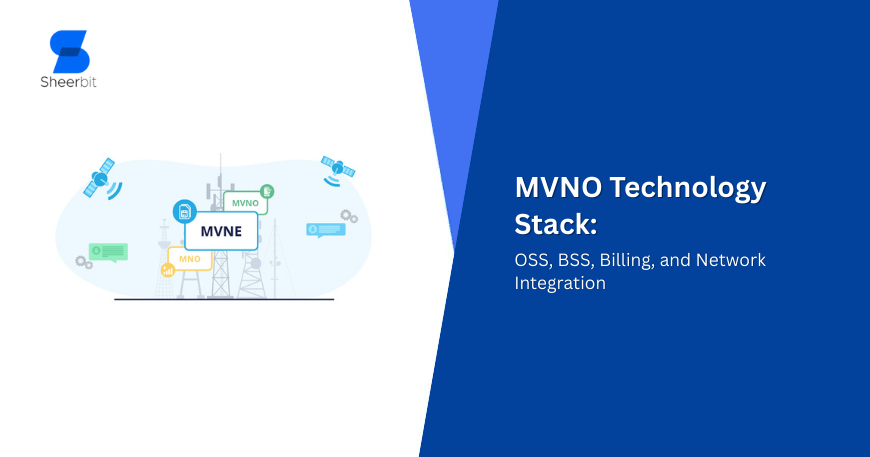
Mobile Virtual Network Operators have become a critical part of the global telecom ecosystem. By operating without owning physical radio infrastructure, they focus on customer experience, pricing innovation, and niche market strategies. Behind this business flexibility lies a complex and carefully connected technology stack that enables service delivery, subscriber management, and network interaction. Understanding how this stack works is essential for anyone planning to launch or scale an MVNO operation successfully. At the heart of every MVNO is a tightly integrated system made up of OSS, BSS, billing platforms, and network integration layers. These components work together to manage subscribers, ensure service quality, handle charging, and connect seamlessly with host networks. This article explores each layer in detail and explains how they come together to form a reliable and scalable MVNO technology foundation. Understanding the MVNO Technology Architecture An MVNO technology stack is not a single platform but a collection of interconnected systems. Each system serves a specific purpose while sharing data and workflows with others. The architecture must support real time operations, high availability, regulatory compliance, and future growth. A well designed stack allows an MVNO to launch services quickly, introduce new plans easily, and maintain consistent quality across voice, messaging, and data services. The core components include Operational Support Systems, Business Support Systems, billing engines, mediation layers, and network integration interfaces. Operational Support Systems in MVNO Operations Operational Support Systems handle the technical side of telecom service delivery. They focus on network related processes and ensure that services work as expected from activation to termination. Provisioning and Activation OSS platforms manage subscriber provisioning across the host network. When a new user signs up, the OSS communicates with network elements to activate SIM profiles, enable services, and assign resources. This process must be fast and accurate to avoid delays or service failures. Automation plays a major role here. Modern OSS platforms reduce manual intervention and allow instant activation, which is now a basic expectation in the telecom market. Network Monitoring and Fault Management Service quality is directly linked to customer satisfaction. OSS tools continuously monitor network performance indicators such as call success rates, data throughput, and latency. When issues occur, alerts are generated and corrective actions are triggered. Fault management systems help identify whether a problem originates from the host network, the MVNO platform, or an external integration. This visibility is critical for maintaining service level agreements. Inventory and Resource Management OSS platforms track logical resources such as SIMs, numbers, and service profiles. They ensure that inventory is allocated correctly and that unused resources are recycled efficiently. This helps control costs and supports rapid scaling. Business Support Systems and Subscriber Management Business Support Systems sit closer to the customer side of operations. They manage customer data, products, orders, and interactions. Customer Relationship Management BSS platforms store subscriber profiles, usage history, and support interactions. This data enables personalized offers, targeted promotions, and efficient customer service. A unified view of the customer across channels is essential for consistent experiences. Self service portals and mobile apps often connect directly to the BSS, allowing users to manage their accounts, change plans, and view usage in real time. Product and Offer Management MVNOs differentiate themselves through creative plans and pricing models. BSS systems allow operators to define products, bundles, and promotions without deep technical changes. Flexible product catalogs support prepaid, postpaid, hybrid, and value added services. This flexibility is especially important for mvno providers targeting niche markets with unique requirements. Order Management and Workflow Automation From SIM purchase to plan changes, BSS platforms orchestrate order workflows. They coordinate with OSS and billing systems to ensure that orders are fulfilled correctly and in the right sequence. Automation reduces errors and shortens time to market for new services. Billing Systems and Revenue Management Billing is one of the most critical components of the MVNO technology stack. It directly impacts revenue, compliance, and customer trust. Real Time Charging and Rating Modern billing systems support real time charging for voice, data, and messaging. They rate usage events instantly and update balances without delay. This is especially important for prepaid services where spending control is essential. Accurate rating engines handle complex scenarios such as roaming, bundles, fair usage policies, and promotional discounts. Invoicing and Payment Processing For postpaid customers, billing platforms generate invoices based on usage, subscriptions, and one time charges. They integrate with payment gateways, banks, and digital wallets to support multiple payment methods. Clear and transparent billing reduces disputes and improves customer retention. Revenue Assurance and Fraud Prevention Billing systems also play a role in revenue assurance by detecting anomalies and preventing leakage. Fraud management tools analyze usage patterns and flag suspicious behavior such as SIM abuse or unauthorized access. Strong controls are essential for maintaining profitability and regulatory compliance. Mediation and Data Flow Management Between the network and the billing system lies the mediation layer. This component collects, normalizes, and routes usage data. Usage Data Collection Network elements generate raw usage records for calls, messages, and data sessions. Mediation systems collect these records from multiple sources and convert them into standardized formats. This process ensures consistency and prepares data for accurate billing and analytics. Data Validation and Enrichment Mediation platforms validate records to remove duplicates or incomplete data. They also enrich records with additional information such as customer identifiers or service types. Clean and enriched data improves billing accuracy and reporting quality. Network Integration and Host Connectivity Network integration is what allows an MVNO to operate on a host mobile network. This layer requires careful design and ongoing coordination. Core Network Interfaces MVNO platforms connect to host network components such as HLR or HSS, packet core systems, and messaging centers. These interfaces enable authentication, session management, and service delivery. Security and reliability are critical since any failure directly affects customer services. Roaming and Interconnect Management For international services, MVNOs must integrate with roaming hubs and interconnect partners. This allows subscribers to use services abroad while maintaining correct charging and quality controls. Proper integration ensures seamless
Why Fintechs and E-commerce Brands Are Entering Telecom with White Label MVNOs
The telecommunications landscape is witnessing a fascinating trend: fintech companies and e-commerce brands are expanding beyond their traditional domains into mobile telecom by launching white label Mobile Virtual Network Operators (MVNOs). This crossover is driven by the need for new revenue streams, deeper customer engagement, and greater differentiation in saturated markets. In this blog, we will explore why these industries are making this shift, how white label MVNOs work, the strategic benefits, risks, and what the future holds for this convergence. What is a White Label MVNO? A Mobile Virtual Network Operator (MVNO) is a company that provides mobile telecom services under its own brand by leasing network infrastructure from established Mobile Network Operators (MNOs), without owning the physical network themselves. A white label MVNO is an even more turnkey solution where a third-party Mobile Virtual Network Enabler (MVNE) offers ready-made backend systems—such as billing, SIM management, and customer support—enabling non-telecom brands to launch branded mobile services quickly and cost-effectively. With white label MVNO platforms, fintechs and e-commerce companies can control pricing, customer experience, and branding while relying on the network, technology stack, and regulatory compliance expertise of partners. The advent of eSIM technology now allows seamless digital SIM activation from within apps, accelerating launch timelines to as little as seven days. Why Are Fintechs Entering Telecom with White Label MVNOs? Growth Challenges in Fintech The fintech sector is grappling with rising customer acquisition costs (CAC), intense competition, and high churn. The average CAC for fintech SMB customers has soared to around $1,450, making traditional growth levers unsustainable. Most fintech products look similar—cards, digital wallets, BNPL services—and differentiation has become difficult. Telecom as a Strategic Differentiator Telecom offers fintechs a powerful new surface area to engage customers daily rather than sporadically. Mobile connectivity, through branded phone plans, becomes an indispensable service layered alongside payments and financial management apps. This creates a “daily-use anchor” that increases user retention and lifetime value (LTV). New Revenue and Data Opportunities Through mobile plans, fintechs unlock recurring monthly revenue untied to financial transactions, helping stabilize cash flow. They also gain access to richer behavioral data—such as usage patterns, location, and device interaction—that can improve fraud detection, personalize offers, and refine credit scoring models. Lowered Acquisition Cost and Stickier Customers By offering an in-app mobile service to their existing users, fintech companies can reduce marketing spend on new acquisitions. The hassle of switching mobile providers also increases switching costs, reducing churn. Bundling mobile with financial products gamifies financial responsibility and encourages positive financial behavior. Leading Examples Industry pioneers like Klarna, Nubank, and Revolut have already launched MVNO services, validating the business case. Klarna’s US MVNO offering integrates eSIM technology to enable instant activation from its app, while Revolut combines telecom with loyalty rewards to deepen customer engagement globally. Why Are E-commerce Brands Entering Telecom with White Label MVNOs? Diversification of Revenue Streams E-commerce brands traditionally rely on transactional sales. Launching an MVNO allows them to add a recurring revenue model through mobile subscriptions, reducing reliance on one-time purchases. Enhanced Customer Loyalty and Engagement Mobile services create frequent touchpoints, making the brand a constant part of customers’ daily lives. Bundling telecom plans tailored to user needs (e.g., family or roaming plans) fosters a stronger emotional connection. Unique Service Bundles and Competitive Differentiation By offering personalized telecom bundles, e-commerce brands can differentiate themselves in crowded markets. For example, an online retailer might bundle mobile data with exclusive shopping discounts or loyalty benefits. Simplified Go-to-Market with MVNEs White label MVNO enablement platforms allow e-commerce companies to launch mobile services without telecom expertise or heavy upfront investment. These turnkey platforms manage the complexity of billing, customer support, and compliance. Case Examples and Market Potential Retailers and marketplaces exploring MVNO models find new growth avenues and customer value propositions. Telecom services embedded within e-commerce ecosystems can transform ordinary customers into loyal advocates by increasing “stickiness.” Key Benefits of White Label MVNOs for Fintech and E-commerce Rapid Market Entry: MVNE platforms enable launch within days, drastically reducing time and cost barriers. Brand Control: Full control over branding, pricing, and customer experience strengthens brand equity. Recurring Revenue: Monthly mobile subscriptions create predictable cash flows beyond transactional sales. Customer Retention: The mobile phone plan increases daily app engagement, reducing churn significantly. Data Insights: Telecom usage data enriches profiling and personalization efforts. Cost Efficiency: Outsourcing network infrastructure minimizes CAPEX and operational risks. Scalability & Flexibility: Plans can be customized to niche markets, regions, or customer segments. Cross-Sell Opportunities: Telecom services become an effective cross-sell and bundling tool. Challenges and Risks Regulatory Complexity: Telecom is highly regulated, requiring compliance with consumer protection and data privacy laws. Margin Pressure: Telecom markets often have thin margins, which could impact profitability without scale. Network Dependence: MVNOs depend on host MNO network quality and coverage, affecting customer experience. Customer Support Requirements: Telecom customers expect prompt service for technical issues and billing. Integration Complexity: Aligning telecom features and fintech/e-commerce services requires careful planning. Potential Over-Extension: Brands risk diluting focus if telecom moves beyond strategic complement to core offerings. Future Outlook The convergence of fintech, e-commerce, and telecom is poised to accelerate, driven by evolving customer expectations and technology advances such as eSIMs and programmable MVNE platforms. Mobile connectivity is becoming a new platform for digital services—much like payments once were—with telecom services embedded into broader lifestyle apps. As more fintechs and e-commerce companies launch white label MVNOs, competition will increase, innovation velocity will rise, and fresh business models will emerge combining finance, shopping, and connectivity. This could lead to the rise of holistic digital ecosystems or “super apps” where telecom services are not just a utility but a driver of customer loyalty and growth. Conclusion Fintechs and e-commerce brands entering telecom through white label MVNOs represent a strategic evolution, enabling them to deepen customer relationships, diversify revenue, and gain a competitive edge in commoditized markets. By leveraging modern MVNE technology and eSIMs, these companies can efficiently launch tailored mobile services that complement their core offerings, making telecom a pivotal channel
AT&T MVNO White Label: Powering Your Mobile Brand
The mobile telecommunications market is evolving rapidly, and the rise of Mobile Virtual Network Operators (MVNOs) has transformed how brands deliver wireless services. AT&T’s MVNO white label solutions are at the forefront, enabling businesses to launch custom-branded mobile services quickly and efficiently without owning network infrastructure. This empowers brands to create unique consumer experiences with flexibility, cost savings, and rapid market entry. What is an AT&T MVNO White Label Solution? AT&T MVNO white label solutions allow businesses to leverage AT&T’s extensive 5G network by licensing capacity and using fully customizable mobile apps and platforms. These white label offerings enable companies to brand and market mobile services under their own identity while AT&T handles the underlying network operations. This model removes the complexity of building mobile infrastructure and reduces time-to-market dramatically. Key Features of AT&T MVNO White Label Fully Customizable Mobile App: With solutions like WaveMaker’s TestDrive app, MVNOs can launch branded apps that allow consumers to activate eSIMs and trial services easily on iOS or Android devices. No Coding Required for Branding: MVNOs can use AI-driven tools to personalize app look, feel, and service packages without deep technical skills. Pre-integrated APIs and BSS Platforms: Seamless integration with AT&T’s MVNx APIs and leading digital Business Support Systems (BSS) for streamlined operations, billing, and CRM. High Performance and Compliance: Features like encrypted communications, ADA compliance, optimized load times, and cross-platform compatibility ensure a top-notch user experience. The Growing MVNO Market and Why 2025 is Crucial The U.S. MVNO market is experiencing explosive growth, projected to reach $14.83 billion in 2025, with a global market poised to grow from $87 billion in 2025 to nearly $150 billion by 2035, driven by advancements like 5G, eSIM adoption, and IoT connectivity. Businesses are increasingly seeking cost-effective, flexible, and personalized mobile services, driving MVNO expansion and innovation. AT&T’s white label solutions enable new entrants and existing companies to capitalize on this trend efficiently. Emerging market shifts include AI-driven customer service, dynamic plan offerings tailored by consumption behaviors, and integration with cutting-edge networks like upcoming 6G—all aligning with AT&T’s innovative MVNO platforms to provide future-ready connectivity options. Benefits of Using AT&T MVNO White Label Solutions Rapid Market Launch: Companies can launch a fully branded mobile service in days or weeks rather than months or years thanks to pre-built infrastructure and integrations. Brand Differentiation: White label technology empowers MVNOs to stand out by offering unique plans, pricing, and customer experiences tailored to specific niches. Reduced Technical Complexity: AT&T manages network, billing, and regulatory compliance, letting MVNOs focus on marketing, customer engagement, and service innovation. Cost Efficiency: Lower upfront investment and predictable operating costs make it accessible even for startups or niche players. Access to AT&T’s 5G Network: Gain the performance and coverage benefits of one of America’s leading mobile networks. Real Challenges in Launching a White Label MVNO (And How AT&T Helps Solve Them) Launching a GSM white label MVNO can be complex, with regulatory requirements, network agreements, and operational intricacies posing hurdles: Regulatory Licensing and Compliance: Telecom services are highly regulated; AT&T’s partner programs often cover key licensing and compliance components or provide guidance to simplify this burden. Securing Network Partnerships: AT&T’s established network agreements ease access to top-tier infrastructure compared to independent MVNO startups negotiating alone. Billing, Provisioning, and Support Systems: Real-time billing and SIM/eSIM activation are critical. AT&T’s robust platforms and white-label apps like WaveMaker’s streamline these functions, reducing revenue leakage and user frustration. Customer Management & Service Quality: Advanced CRM systems coupled with AI enable personalized engagement and efficient support, raising user retention. Device Lock and BYOD Constraints: Programs integrated with AT&T’s white label offerings address locked-device challenges by incorporating IMEI checks and enabling seamless phone bundling. Use Cases and Ideal Customers Consumer brands looking to add mobile connectivity as a value-added service. Influencers or online communities aiming to create niche mobile plans. Enterprises wanting to provide custom mobile solutions to employees or customers. Retailers and tech companies launching IoT or connected device ecosystems. Startups entering the telecom space without heavy infrastructure costs. Future Outlook: AT&T MVNO White Label and Beyond Advancements in AI, network slicing, and 6G technologies will push MVNO capabilities further. AT&T’s ongoing innovation in white label offerings will enable hyper-personalized, predictive connectivity services and seamless integration with emerging digital ecosystems. MVNOs launched through AT&T white label solutions are positioned not only to benefit from current growth trends but also to capitalize on next-generation mobile services, IoT expansions, and evolving consumer expectations. Conclusion AT&T’s MVNO white label solutions provide a transformative opportunity for brands across industries to build, launch, and scale their own mobile networks with minimal friction and maximum flexibility. Whether for consumer apps, IoT connectivity, or enterprise applications, this white label model is reshaping the future of mobile telecommunications by making it accessible to innovators everywhere.
White Label MVNO + eSIM: The Next Evolution in Telecom Services

The telecom industry is undergoing a quiet revolution. Gone are the days when launching a mobile service required billion-dollar infrastructure, long contracts with network operators, and fleets of plastic SIM cards. Today, with the rise of White Label MVNOs and eSIM technology, businesses can become mobile service providers without owning a single network tower. From travel tech to fintech, e-commerce, and IoT, brands across industries are embracing this next evolution in telecom. The marriage of white label MVNOs and eSIM enables fast, digital-first mobile experiences tailored to niche audiences. Whether it’s global data connectivity for travelers or embedded cellular plans in smart devices, this model is disrupting how telecom services are created and delivered. In this article, we’ll explore how white label MVNOs and eSIMs work, why their combination is so powerful, and what it takes to build a successful solution in this fast-changing space. What Is a White Label MVNO? A White Label MVNO (Mobile Virtual Network Operator) is a pre-built telecom solution that allows businesses to offer mobile services under their own brand. Instead of building telecom infrastructure from scratch, the business partners with a provider who handles the backend—network agreements, billing, provisioning, support—and the business focuses on customer acquisition and brand growth. Key Features of a White Label MVNO: Branded services: You offer voice, data, and SMS under your own label. Zero infrastructure: No need to invest in physical telecom equipment. Revenue share model: You earn a margin from service reselling. Custom plans: Tailor offerings based on your target audience. Quick launch: Set up in weeks, not years. What Is eSIM Technology? eSIM (Embedded SIM) is a digital alternative to physical SIM cards. Instead of inserting a SIM into a device, users can download a mobile profile directly onto their phone, tablet, smartwatch, or IoT device. This technology is already supported in most modern smartphones (iPhone, Google Pixel, Samsung Galaxy, etc.) and is rapidly becoming the global standard. Key Benefits of eSIM: Instant activation: Users can switch carriers or plans within seconds. No physical logistics: No need to ship or manage SIM inventory. Global access: Enables roaming or multi-country plans effortlessly. Remote provisioning: Update or change mobile profiles over-the-air. Why Combine White Label MVNO and eSIM? The fusion of white label MVNO and eSIM opens doors to scalable, digital-first mobile services that can be launched quickly and globally. Here’s why this combo is revolutionary: Fully Digital User Onboarding eSIM enables seamless provisioning. A user downloads a QR code or clicks a link—no waiting for SIM delivery or store visits. Global Reach, Localized Plans White label MVNOs often come with multi-carrier agreements. With eSIM, businesses can offer region-specific plans to travelers, remote workers, or IoT devices globally. Cost Efficiency No SIM logistics means reduced operational costs. No need for SIM packaging, shipping, or warehousing. Faster Go-To-Market With backend telecom infrastructure ready and eSIM provisioning in place, businesses can launch in weeks. Ideal for Niche Verticals Travel tech, logistics, healthcare, automotive, smart cities, and even influencer brands can create custom mobile services for their audiences. Use Cases Across Industries 1. Travel & Tourism Offer global data packs for international tourists with easy activation via QR code. No roaming fees, no physical SIM swaps. 2. Fintech & Super Apps Add mobile connectivity as a bundled service—create SIM-based wallets, authenticate users via mobile plans, or add value through exclusive plans. 3. IoT & Smart Devices eSIM is ideal for embedded connectivity in GPS trackers, health wearables, smart meters, and vehicles. White label MVNOs allow control over device data plans. 4. Remote Workforce & Freelancers Provide custom data bundles or secure connectivity for distributed teams working across borders. 5. Influencers & Celebrities Launch personal mobile brands with exclusive plans and fan engagement tools. Build communities around lifestyle connectivity. Benefits for Brands and Entrepreneurs 1. Brand ControlYou own the customer relationship, branding, pricing, and packaging. The white label model ensures full control over the user experience. 2. Recurring RevenueTelecom services generate consistent monthly income. Add this to your existing revenue streams without major infrastructure costs. 3. DifferentiationOffer something truly unique to your user base. Whether it’s eco-friendly plans, content bundles, or lifestyle data packs—this is your canvas. 4. Scalable GloballyWith eSIM, you’re not bound by geography. Sell and activate plans across countries with minimal technical complexity. 5. Lean OperationsThere’s no need for customer support teams, SIM logistics, or network maintenance. Everything is managed by your MVNO provider. Key Technical Components To launch a white label MVNO with eSIM support, you’ll need: Core Network Provider They provide access to the radio network (2G/3G/4G/5G). MVNE Platform The Mobile Virtual Network Enabler handles billing, provisioning, user management, CRM, etc. eSIM Platform / SM-DP+ A secure eSIM download platform that provisions profiles to users’ devices. Branded Customer Interface This can be a website, app, or portal through which users buy, activate, and manage their plans. Support System Outsourced or white-labeled customer support to handle inquiries, KYC, and activation issues. Steps to Launch a White Label eSIM MVNO Define Your Market Niche Target travelers? Gamers? Logistics providers? Choose a focused audience. Select the Right MVNO Provider Partner with one that offers full white label capability, global carrier coverage, and eSIM infrastructure. Design Plans & Packages Decide your data/voice offerings, validity, and pricing structure. Develop Your Branding & UX Create a seamless and visually consistent website/app for onboarding and activation. Launch & Market Focus on digital acquisition, influencers, SEO, and performance marketing to gain traction. Monitor & Optimize Use analytics to track activations, churn, and user behavior to refine offerings. Challenges to Consider Device Compatibility Not all devices support eSIM. Education and fallback options (like physical SIMs) may be needed initially. Regulatory Compliance Local telecom regulations vary. Ensure your provider helps you stay compliant with KYC, roaming rules, etc. Customer Support Even with a white label model, high-quality end-user support is essential to avoid churn. Brand Trust Telecom is sensitive. Customers must feel confident your brand can deliver reliable mobile service. Marketing Investment As a new entrant, you’ll
Launching a GSM White Label MVNO: Challenges and Solutions

Launching a GSM white label MVNO is a promising business move, especially in today’s digitally connected world. With the global demand for affordable, localized, and niche-focused telecom services, Mobile Virtual Network Operators (MVNOs) are rapidly gaining popularity. However, the journey to building a successful MVNO is not without challenges. This blog explores everything you need to know about launching a GSM-based white label MVNO. We will cover what it means, common roadblocks, and practical solutions that can help you launch faster, scale smarter, and operate more profitably. What Is a GSM White Label MVNO? A GSM White Label MVNO is a business model where you provide mobile services under your own brand, but you don’t own the mobile network infrastructure. Instead, you lease capacity from a Mobile Network Operator (MNO) that operates a GSM (Global System for Mobile Communications) network. You then use a white-label platform provided by a Mobile Virtual Network Enabler (MVNE) or Aggregator (MVNA) to manage SIMs, billing, support, and other telecom services under your own branding. This model is ideal for: Entrepreneurs entering the telecom market without massive capital investment Brands wanting to offer mobile services as part of a larger ecosystem Businesses targeting niche demographics such as expats, students, or rural users Enterprises offering mobile connectivity to employees or private networks Why GSM?GSM remains one of the most widely used mobile technologies globally. It is cost-effective, compatible with most mobile devices, and well-supported across urban and rural areas alike. Why Launch a GSM White Label MVNO? The MVNO model has evolved beyond just reselling mobile services. Today, it is a platform for: Brand expansion into telecom Recurring revenue generation Customer retention through bundled services Community building by serving localized or underserved populations For instance, a retail chain can offer mobile SIMs under its brand with cashback or loyalty integration. A travel company can sell international SIMs bundled with their packages. The opportunities are endless. Major Challenges in Launching a GSM White Label MVNO (and How to Solve Them) While the business model is compelling, execution can be tricky. Here are the biggest roadblocks and proven solutions: 1. Regulatory Licensing and Compliance Challenge: Telecom services are heavily regulated in most countries. Getting the necessary licenses or operating under an existing one is mandatory and often complex. Solution: Consult a legal team familiar with telecom licensing in your country or region. Partner with an MVNE that provides licensing coverage or guidance. Apply for licenses early and maintain a compliance checklist for audits. 2. Securing a GSM Network Partnership Challenge: Getting access to GSM infrastructure via a network agreement with an MNO can be difficult. MNOs are selective, and onboarding new MVNOs can take months. Solution: Choose an MVNA that has pre-negotiated agreements with Tier 1 MNOs. Focus on niche customer bases or regions to demonstrate market fit. Build a strong business case showing how your MVNO will complement the MNO’s growth strategy. 3. Integrating Billing, Provisioning, and Support Systems Challenge: Telecom requires real-time systems that can handle billing, SIM activation, user provisioning, and usage reporting. Delays or errors can lead to lost revenue and poor user experience. Solution: Use a white-label MVNO platform with ready-to-launch OSS/BSS modules. Ensure it supports prepaid and postpaid billing, real-time rating, multi-currency pricing, and tax automation. Run pre-launch testing with simulated user accounts to validate performance. 4. Logistics for SIM Cards and eSIM Delivery Challenge: Managing inventory, printing, shipping, and tracking SIM cards is a logistical burden for new MVNOs. Solution: Use third-party logistics partners who specialize in telecom delivery. Choose a platform that supports eSIM provisioning for faster, digital onboarding. Maintain adequate stock forecasting and offer multiple delivery methods to customers. 5. Standing Out in a Saturated Market Challenge: The telecom industry is highly competitive, with numerous MVNOs and major MNOs offering similar plans. Solution: Differentiate through customer experience, niche targeting, or bundled services like OTT platforms, cloud storage, or family plans. Customize branding on SIM cards, mobile apps, and websites to reflect your brand voice. Provide transparent pricing with no hidden charges to build trust. 6. Customer Acquisition and Retention Challenge: Acquiring telecom customers is expensive, and churn is high without loyalty or value-added services. Solution: Launch localized campaigns using Facebook, Google Ads, and influencer marketing. Use incentives like refer-a-friend, first recharge bonus, or family plans. Create a loyalty program that rewards long-term usage or recurring top-ups. 7. Technical and Customer Support Infrastructure Challenge: Poor technical support is a leading reason for MVNO failure. Most customers expect immediate resolution for mobile service issues. Solution: Offer 24/7 multi-language support via chatbots, live chat, and phone. Use AI and knowledge bases for Tier 1 support and escalate critical issues to human agents. Monitor SLAs closely and use CRM-integrated help desk platforms. 8. Roaming and Global Connectivity Challenge: Without proper roaming support, customers will face limitations when traveling abroad. Solution: Work with MVNEs that offer global roaming partnerships. Clearly communicate roaming charges and offer travel packs. Monitor roaming usage and block anomalies to prevent fraud. 9. Profitability and Margin Management Challenge: MVNOs often have tight margins. Uncontrolled costs, low ARPU, or high churn can kill profitability. Solution: Bundle services that increase customer value without high cost (e.g., VPN, insurance, streaming access). Optimize pricing using usage data and predictive analytics. Encourage longer recharge validity or subscriptions to lock in revenue. 10. Scalability and Multi-Brand Expansion Challenge: As the MVNO grows or expands into new markets, its architecture must support scaling. Solution: Choose a cloud-native, modular white-label MVNO platform. Enable multi-brand or multi-tenant configurations from the start. Plan for geo-specific language, currency, and regulatory requirements early on. Key Features to Look for in a White Label GSM MVNO Platform Not all platforms are equal. Your MVNO platform should offer: Pre-integrated OSS/BSS API-first architecture GSM, LTE, VoLTE, and eSIM compatibility White-label mobile apps for iOS and Android Usage analytics and reporting CRM, ticketing, and invoicing tools Support for data rollover, loyalty, and VAS Multi-language and multi-currency support Real-Life MVNO Use Cases Retail Chains: Offer branded
Building a Profitable MVNO: Platform, Licensing & Monetization
The Mobile Virtual Network Operator (MVNO) market is booming due to improvements in telecom technology, demand for niche mobile services and the ever-decreasing barriers to entry. It is a sustainable and scalable telecom business model as of 2025, but profit will depend on choosing the right platform, licensing appropriately, and applying monetization methods comfortably. This guide details important considerations regarding how to build a profitable MVNO and insights on defining and choosing a technical platform, your preferred licensing and compliance obligations, and how to monetize your new MVNO business. Know Your MVNO Model An MVNO is a wireless service provider using either own or third-party wireless infrastructure. The MVNO leases or purchases network services from traditional mobile network operators (MNO) and resells under other brands. MVNO are categorized based on the amount of stack they control: Full MVNO – owns the core service provider infrastructure (ex. HLR, SMSC, billing, etc); Light or Thin MVNO – only controls the branding, pricing, marketing and customer relationship; Hybrid MVNO – a hybrid and MVNO that fully controls sales to the customer, and partially controls the value and support to the customer as part of an MNO customer relationship. Knowing what type of MVNO you want to start is the first step toward determining what technical, legal and financial commitments you might consider. Choose The MVNO Platform The platform is technically how you developIt manages provisioning, billing, customer service, policy management, network, policy and value-added services. Here are the considerations: a) Cloud-Based or On-Premise Platforms? MVNO cloud-based platforms will provide you with scalability, low upfront and faster time to market capabilities. These platforms represent value for upstart or value-conscious MVNOs. On-premise solutions will provide you with more control and may be more appealing to MVNOs with high demands for regulatory or data privacy. b) Key Platform Capabilities Real Time Billing & Charging System (OCS) Customer Relationship Management (CRM) and Self-Care Portal SIM Lifecycle Management Policy & Network control Number Portability & Activation Tool Analytics & Revenue Assurance c) Interoperability An MVNO platform needs to integrate with the host MNO systems, third-party value-added service providers (VASPs) and your business support systems (BSS). d) Vendor Requirements Select platform providers with: Solid telecom domain experience End-to-end MVNO system set-up 24/7 technical support & upgrades Regulatory compliance Understanding and Complying with MVNO Licensing & Regulatory Frameworks Before launch, you must understand the national telecommunications licensing laws and comply with them. MVNO licensing varies considerably from region to region; a) Licensing Models by Country USA (FCC): No specific license for an MVNO; responsibility is based on agreements with MNOs and FCC regulations. Europe (e.g. UK, Germany): Regulatory bodies like Ofcom oversee MVNOs, you may be required to register with the respective regulator. India: The Department of Telecommunications (DoT) offers unified licensing to VNO (virtual network operator) providers. Middle East & Africa: Many countries are in the process of developing MVNO licensing regulations. b) Key Licensing Matter KYC and Data Retention Policy Numbering and Portability Lawful Interception Roaming/Emergency Current Services e) Partner Agreements Your working agreement with the MNO is the basis of your MVNO, if you include: Wholesale Pricing Network Access Quality of Service (QoS) Revenue Sharing Always engage telecommunications lawyers, who can assist in negotiating the best position bunch of terms. Building Your MVNO Brand and Niche The most successful MVNOs contain a hyper-targeted market, some examples include: Ethnic MVNOs: International calling with language support Youth MVNO’s: Entertainment geared bundles, unlimited social B2B MVNOs: KPI oriented product to SME’s, Internet of Things (IOT) Retail MVNOs: Loyalty SIM cards, with utilities in built. Your MVNO brand will reflect the additional or unique value proposition that is relevant to a market segment e.g. cool branding, flexible billing, local content, exclusive promotional offers, community based etc. Revenue Streams & Monetization Strategies a) Traditional Revenue Models Voice, SMS & Data Plans Pay-as-you-go Subscription Plans Family Bundles & Group Discounts b) Value-Added Services (VAS) Mobile banking (m-banking) OTT content providers (Netflix, Spotify) Cloud storages and productivity applications Insurance and warranties Digital identity products c) Advertising & Data Monetization Sponsored data (zero-rated apps) SMS ad campaigns User behavior analytics to 3rd party advertisers Ensure data monetization strategies abide by privacy regulation, e.g., GDPR, CCPA, or local equivalents. d) Wholesale Reselling & White Label Lease your MVNO infrastructure to micro-MVNOs or brands Launch sub-brands under your license to target niches Decrease Costs to Enhance Profit a) Leverage Network Agreements Minimize data, SMS, and voice termination costs. Use predictive analytics for capacity planning to anticipate bandwidth demand, reducing overprovisioning. b) Leverage Lean Operations to Manage Costs Automate billing, provisioning and customer care functions Outsource functions, not considered critical to your business Employ ai-enabled chatbots and virtual agents c) Customer Retention & Lifetime Value (CLV) Retaining customers is cheaper than acquiring a new one. To improve retention, focus on what fosters loyalty: – Custom loyalty programs – Smooth number porting – Tailored offers – Insights into in-app usage. Case Studies: MVNOs That Are Getting it Right a) Lycamobile Operates in over 23 countries. Focuses on affordable international calling with a lean, cloud-based MVNO platform. b) Mint Mobile A US-based Digital-Only MVNO to take advantage of bulk plan pricing, with no retail overhead and supply chain (inventory and warehousing), and viral marketing. Mint MD made its first profit before it was three years old! c) Tuenti (Spain) Targeting young people with flexible plans, app-first design and social-first experience. Monetization through digital subscriptions and Value Added Services (VAS). Future-Proofing Your MVNO a) Build 5G into your road-map Make sure your vendor platform and related contracts support 5G capabilities. 5G will deliver ultra-fast data to new clients and offer more IoT opportunities to existing clients. b) eSIM and IoT with Smart Device Makers & OEMs Offering eSIM enables reduction in logistics and more streamlined onboarding of customers. Partnering with smart device makers – through embedded connectivity features like imsi or vimsis embedded vice a standalone app – completes our experience and opportunity. c) AI, Data, Insights Deploy AI to
End-to-End MVNO Development by Sheerbit: Scalable, Secure, and Fast
The telecom space is changing fast, and MVNOs are leading the charge. An MVNO is distinct from other businesses since it doesn’t have to pay jaw-dropping amounts of money for infrastructure. Instead, the MVNO pays the MNO (Mobile Network Operator), which owns the infrastructure, for access to the network, enabling the MVNO to bring mobile services to new and existing brands. Whereas the business model is lean, the backend is extremely complex. This is where Sheerbit comes in! Sheerbit, an end-to-end MVNO platform, has all the software requirements for MVNO development (between a business’ play to go to market and the operations to maintain reliability and profitability). Sheerbit has everything from SIM provisioning and billing systems to branded apps and analytics dashboards. The MVNO services help businesses accelerate time to market, smarter growth, and easier mobile operations. Sheerbit has benefited from the unique positioning in the space for MVNO development services to build a name and reputation among startups, enterprises, and niche brands wanting to enter the telecom ecosystem. What are MVNOs and Why Do They Matter? MVNOs provide more choice, flexibility, personalization, and cost savings for mobile users. Whether targeting youth or rural users, catering to digital nomads, or IoT configurations, MVNOs enable companies to evolve with industry trends while delivering alternatives for fixed wireless services. The beauty of MVNOs is that a firm does not have to own the spectrum to provide these services or build tower sites. However, in order for an MVNO to thrive within this competitive landscape, they must be flexible, efficient and have solid technology backing them. Sheerbit has developed an MVNO development platform to provide exactly that. With combined expertise in the industry and a modern telecom tech stack, they give an MVNO a ready-made environment from user onboarding to billing, tracking usage, and customer engagement. Core Components and Features of Sheerbit’s MVNO Service At the centre of Sheerbit’s solution is a set of integrated solutions that support every stage in the life-cycle of an MVNO. Business and Operations Support System (BSS/OSS) This system is the engine that powers all back-office activity for an MVNO, and includes: – Customer acquisition, KYC, and Identity verification – SIM activation, deactivation, and service provisioning – Real-time prepaid/postpaid billing and usage rating – Creation and management of plans – Customer support team CRM tools With Sheerbit, MVNO’s have complete power over subscriber accounts, plans, invoices, and service configurations, accessible via a simple and friendly admin dashboard. White-Label Mobile App In order to improve customer engagement, Sheerbit provides a fully branded mobile application for both Android and iOS. You can customize your app to the visual identity of your company, which empowers customers with: – Activation and account setup – Plan browsing, selection, and upgrade – Real-time tracking of usage data/SMS/calls – In-app support, chat and help centre – Recharge and payments This user-focused app has diminished support requests, which also improves customer satisfaction. SIM and eSIM Management Sheerbit has provided complete life-cycle management for SIMs and digital eSIMs. Some features are: – eSIM QR code generation and eSim provisioning – Remote activation and suspension of SIM – IMEI tracking and secure binding – Bulk or one-click provisioning for enterprise and IoT use cases As eSIM continues to grow, especially with frequent travelers and IoT devices, there is a reason to trust Sheerbit to ensure your MVNO is set for the future. Recharge and Payment Integration Revenue management is an integral part of every MVNO business, and Sheerbit provides the tools needed for flexible, secure, and scalable payment solutions: – Connect to worldwide and region-based payment gateways (Stripe, Razorpay, PayPal, etc) – Integrate wallets, credit cards, UPI and bank transfers – Recharge APIs for distributor network – Promo code and cashback engine MVNOs can provide frictionless as well as convenient recharges, offering repeat business and growing their footprints with retail partners and point-of-sale machines. Advanced Analytics and Reporting Sheerbit provides MVNOs with a built-in analytics engine that supports informed decisions through actionable data. MVNOs can monitor, through a simple web dashboard: – Subscriber behavior and churn risk – ARPU (Average Revenue per user), LTV (Life-Time Value) – Performance of plans and recharge activity – Return on investment from campaigns and support ticket statistics MVNOs that leverage data can optimize how they work with subscribers, personalize offers, or retain subscribers longer! API-First and Integration One of the great features of Sheerbit’s framework is the flexibility they provide!They provide comprehensive API libraries for integrations with: – Carrier systems (such as Vodafone, Airtel,) – CRM or ERP Systems – Third Party Apps and Other Marketing Tools – eKYC and Document Verification systems This means you can easily integrate your MVNO into your existing tech stack or grow into new services more easily than starting from zero and having to rebuild your old tech stack. Features That Will Make Sheerbit Stand Out Features of Sheerbit’s platform consider flexibility and long term scalable possibilities. Here are a few primary features that help it stand out amongst the rest of the MVNO solutions on the market: – 100% white label – (you own your brand, user experience, and your data) – Multi-tenant, multilingual, and multi-currency – grow global and just keep selling – Secure environment (with GDPR, PCI-DSS and telecom compliance) – Speed to market (4 – 6 weeks dependant on requirements) – Built-in fraud detection and SIM misuse alerting – Flexible pricing options- SaaS subscription or license Whether you have a regional or cross-border MVNO, Sheerbit will complement your operational model. Business Use Cases Powered by Sheerbit Sheerbit’s platform continues to support all types of MVNO business models and verticals. Consider a retail MVNO; you could create prepaid plans for students, seniors and low-income purchasers. Or, if you were an enterprise MVNO, you could set up a secure SIM for each employee with a private APN for communication. An IoT or M2M deployment could leverage automated bulk provisioning and device verification discounting under the same plan. If you operated a roaming MVNO
Simplifying MVNO: A step-by-step guide to How it Works
Mobile devices are already an essential part of today’s connected society. They enable us to stay linked to the digital world, which allows us to work, communicate, and stay informed wherever we are. Mobile Virtual Network Operators (MVNOs) are at the center of the intricate infrastructure that runs the show behind this pervasive technology and allows our phones to connect to the outside world. In this post, we’ll dig into the intriguing realm of Mobile Virtual Network Operators and examine how they operate. What is an MVNO? A wireless communications service provider known as “MVNO,” or “Mobile Virtual Network Operator,” does not control the wireless infrastructure it provides services. Instead, Mobile Network Operators (MNOs), the organizations that own and manage the actual wireless networks, grant MVNOs access to network equipment via a leasing agreement. Then, under their brands and frequently at affordable prices, MVNOs offer mobile services to clients. MVNOs work within the guidelines set out by MNOs, utilizing their current infrastructure to provide clients with phone, data, and messaging services. However, the ability to promote and customize their services gives MVNOs the freedom to target particular client categories and set themselves apart from the competitors. How MVNOs Work Leasing Network Infrastructure Leasing network infrastructure from MNOs is the primary tenet of MVNOs. Cell towers, data centers, and backhaul links are just a few of the wireless networks that MNOs have substantially invested in constructing and maintaining. These networks send and receive Voice and data signals from mobile devices. To access these networks, MVNOs bargain with MNOs. The terms of usage, such as pricing, network capacity, and technical requirements, are specified in these agreements. Depending on their business strategy and target market, MVNOs can either lease a piece of the MNO’s network or acquire access to the complete infrastructure. Branding and Marketing Creating brand identities and marketing plans happens once MVNOs access network infrastructure. MVNOs can range in size from well-known, established businesses to young ones with creative concepts. Their capacity to do so significantly impacts their success and differentiates them from MNOs and other MVNOs. MVNOs frequently target particular consumer categories or specialized marketplaces. For instance, some MVNOs offer inexpensive prepaid plans to clients on a tight budget, while others offer premium services to high-end users. Customers are attracted to and kept by MVNOs primarily because of their branding and marketing initiatives. Service Customization MVNOs have the freedom to alter their services to suit their clientele’s particular requirements. Various services, such as phone calls, text messages, mobile data, and even specialized ones like IoT connection, are available for them to pick from. Additionally, MVNOs can control pricing, design their plans and bundles, and combine services with other products like streaming subscriptions or cell phones. Because of this personalization, they can effectively compete in the market and meet the unique needs of their target market. Subscriber Management Managing an MVNO’s subscriber base involves bringing new clients, offering customer service, and paying. To give their users a smooth experience, they invest in customer relationship management (CRM) systems and support infrastructure. Customers effectively become subscribers of the MVNO rather than the underlying MNO when they sign up for an MVNO’s services. This indicates that Mobile Virtual Network Operators take care of invoicing, account management, and customer support issues on behalf of their clients. Network Operations Even though Mobile Virtual Network Operators rent network infrastructure from MNOs, they oversee network operations per their contracts. This entails managing any technical difficulties, streamlining network performance, and assuring quality of service. MVNOs frequently employ network management teams that monitor traffic, examine data consumption patterns, and make modifications to provide a dependable and effective service to their clients. In accordance with their contracts with MNOs and the preferences of their target market regarding technology, they also have the freedom to decide whether to provide 3G, 4G, or 5G services. Benefits of MVNOs MVNOs benefit customers and the whole telecoms sector in several ways: Increased Competition: With the introduction of Mobile Virtual Network Operators, the market becomes more competitive, which may result in consumers receiving reduced costs, higher-quality services, and more cutting-edge products. Market Segmentation: MVNOs can offer specialized services targeted at particular market groups, giving consumers a range of requirements and preferences alternatives. Cost-Effective Expansion: Leasing network capacity to MVNOs can be a strategy for MNOs to increase their income and use their infrastructure best. Innovation: MVNOs’ frequent introduction of fresh, cutting-edge service models forces the industry to change and adapt to shifting customer needs. Challenges Faced by MVNOs MVNOs have a lot to offer, but they also have a lot of problems: Network Quality: The network infrastructure that Mobile Virtual Network Operators lease from MNOs determines the quality of their services. MVNOs and their clients may be impacted if the MNO has network problems. Limited Control: Due to their limited power to influence the network architecture, It may need to help implement improvements or modifications quickly. Competitive Landscape: Due to intense competition in the mobile telecommunications industry, It can be challenging to attract and keep clients. Regulatory Environment: It must navigate the numerous regulatory regulations and compliance standards in various areas and nations. Conclusion Mobile Virtual Network Operators are essential players in the telecoms ecosystem because they provide cutting-edge services and boost market competitiveness. It has become integral to the mobile business by renting network infrastructure from Mobile Network Operators, customizing their offerings, and focusing on specific consumer segments. As customers, we profit from the services that MVNOs offer and their affordable prices. It continues to influence the landscape in the rapidly changing world of mobile technology by fostering innovation and enhancing possibilities for consumers of mobile devices worldwide.