2026 UCaaS Trends: AI and Beyond

In 2026, Unified Communications as a Service (UCaaS) platforms redefine business connectivity by seamlessly blending voice, video, messaging, and collaboration into intelligent, cloud-native ecosystems. As hybrid work solidifies and customer expectations soar, AI emerges as the cornerstone innovation, driving predictive engagement and automation while trends like 5G, edge computing, and CPaaS unlock unprecedented scalability and customization. Leading UCaaS solution providers empower enterprises to navigate this evolution, delivering ROI through reduced costs and enhanced productivity in a $120 billion market poised for explosive growth. AI-Powered Innovations AI integrates deeply into UCaaS, enabling real-time transcription, sentiment analysis, and predictive routing to enhance user experiences across voice calls, video conferences, and chat threads. Platforms use generative AI for automated meeting summaries, virtual assistants that draft responses, and intelligent noise cancellation, reducing manual tasks by up to 30% and improving response times from minutes to seconds. As a leading UCaaS solution provider, companies leverage these features for proactive customer engagement, where predictive analytics scans conversation patterns to spot issues like churn risks before escalation, alerting agents with contextual insights. Advanced AI evolves to handle complex interactions through multimodal conversational bots and self-service IVR systems that understand natural language nuances, context-switching across channels, and emotional tones. In contact centers bundled with UCaaS, these tools route calls based on urgency and expertise, while generative models create personalized follow-ups or knowledge base entries on the fly. Over 60% of firms report higher CSAT scores from such omnichannel AI deployments, with voice biometrics adding secure, frictionless authentication. Voice data fuels continuous AI learning for hyper-personalized workflows, maturing basic chatbots into agentic systems that orchestrate multi-step tasks like scheduling, CRM updates, and compliance logging autonomously. Real-world examples include AI-driven “co-pilots” in platforms like those from top UCaaS providers, where agents receive live script suggestions, objection handling tips, and performance benchmarks during calls. This not only boosts first-contact resolution by 25% but also accelerates onboarding for new hires, making UCaaS indispensable for scaling teams without proportional headcount growth. Market Growth Drivers The global UCaaS market reached $33.4 billion in 2024 and grows at 5.7% annually toward $120 billion by 2026, propelled by remote work persistence, digital transformation mandates, and SMBs shifting from legacy PBX systems. Forecasts predict a 12-15% CAGR through 2033, with UCaaS platforms specifically hitting $30.6 billion amid widespread cloud adoption and integration with CRM tools like Salesforce or Microsoft Dynamics. Hybrid deployments, blending public cloud with private instances, and UCaaS+CCaaS bundles drive this surge, as enterprises ditch siloed tools for unified platforms that consolidate vendors and streamline billing. Managed services markets explode to $595 billion by mid-decade, with MSPs bundling UCaaS alongside cybersecurity, analytics, and helpdesk services to reshape enterprise communication stacks. SMBs favor affordable entry points starting at $15/user/month, while enterprises opt for custom enterprise agreements yielding 30-50% cost savings via cloud migration, pay-as-you-grow models, and eliminated hardware upkeep. Regional hotspots include North America leading at 40% share due to tech maturity, followed by APAC’s rapid 20% YoY growth from 5G rollouts and India’s startup boom. Key drivers include regulatory pushes for remote compliance and investor bets on UCaaS stocks, with M&A activity consolidating players around AI-capable platforms. UCaaS solution providers reporting 90% retention rates thrive by offering white-label reseller programs and API marketplaces. Security and Compliance Advances Escalating cyber threats, rising 25% YoY, propel UCaaS toward zero-trust architectures, where 80% of platforms incorporate biometric authentication, quantum-resistant encryption, and end-to-end media protection by 2026. Real-time anomaly detection uses ML to flag deepfake voices or unusual data flows, while blockchain ledgers ensure tamper-proof call records for audits. Compliance with GDPR, HIPAA, and emerging AI ethics regs favors UCaaS solution providers with granular role-based access, automated PII redaction, and geo-fenced data residency options. Post-quantum cryptography becomes standard to counter future threats, integrated seamlessly without latency hits. Edge security gateways process threats locally, vital for global teams spanning time zones and jurisdictions. Providers differentiate via SOC 2 Type II certifications, annual pentests, and insurance-backed SLAs guaranteeing 99.999% uptime and zero breach liability. 5G and Edge Computing Impact 5G networks deliver 20x faster speeds (up to 10 Gbps), sub-1ms latency, and massive IoT connectivity, revolutionizing UCaaS for crystal-clear 4K video calls, AR/VR huddles, and real-time collaboration in mobile-first workforces. Global 5G coverage reaches 85% by 2029, but 2026 marks enterprise tipping point with dedicated slices for low-latency voice and private networks for industries like manufacturing. Edge computing complements by pushing AI inference to network edges, slashing delays in transcription, translation, or sentiment scoring for global calls. Practical wins include field service apps with live video diagnostics over 5G, reducing truck rolls by 40%, and edge-orchestrated bots for instant multilingual support. Challenges like rural coverage gaps (still 20% underserved) and spectrum auctions spur hybrid 4G/5G fallbacks, while providers offer monitoring dashboards for signal optimization. UCaaS platforms embed 5G handoff logic for seamless roaming, positioning agile solution providers as partners for digital frontline workers. CPaaS and API Customization CPaaS supercharges UCaaS with embeddable APIs for SMS, voice, video, and verification, fusing with AI for intelligent engagement platforms that automate workflows like abandoned cart nudges or compliance reminders. By 2026, every CPaaS vendor pivots to AI-native stacks, wiring LLMs for regional language models, low-code orchestration, and no-code bots deployable in hours. Businesses craft bespoke solutions: SMS OTPs in e-commerce, video widgets in CRMs, or chat embeds in apps, accelerating go-to-market by 50%. Hybrid UCaaS/CPaaS models bridge cloud and on-prem via SDKs, easing legacy migrations with SIP trunking and gradual API swaps. Developers love event-driven architectures for real-time syncing, while no-code builders democratize customization. Top UCaaS solution providers expose 100+ APIs with SDKs in JS, Python, and Go, plus pre-built connectors for 5,000+ apps via Zapier or native marketplaces. Hybrid Work and UCaaS+ Hybrid work models persist for 70% of firms, fueling UCaaS+ ecosystems that layer analytics, workflows, and CCaaS atop core comms to eliminate tool sprawl. Platforms morph into AI-driven command centers spanning voice, video, Slack-like messaging, and task automation, with presence indicators syncing across devices. Mobile-first enhancements like push-to-talk, geofencing alerts,
What is Unified Communication? An Introduction for Businesses
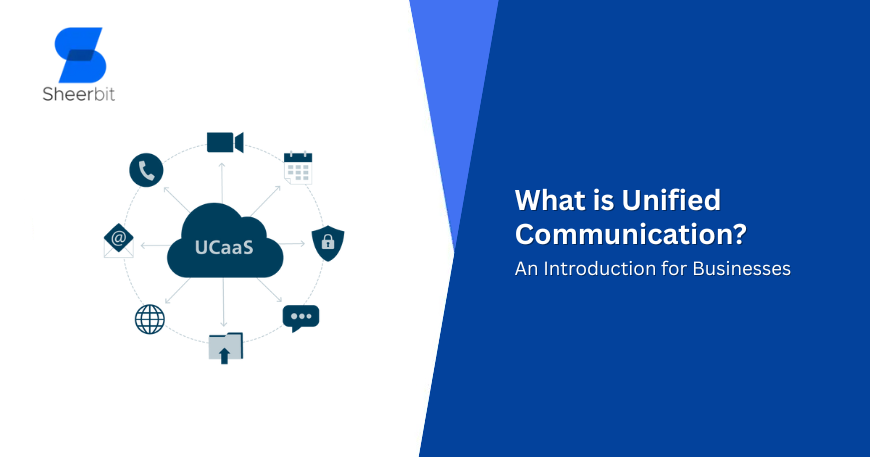
Contents Introduction: The New Era of Unified Communication Defining Unified Communication (UC) Key Components of UC Platforms Major Business Benefits of UCMarket Trends Driving UC Growth in 2025 Security and Compliance Considerations Step-by-Step Guide to UC Implementation Choosing the Right UC Solution for Your Business How Sheerbit Enables Your UC Transformation Conclusion: Embracing UC for Future-Ready Business Introduction: The New Era of Unified Communication In 2025, the business landscape demands agile collaboration, seamless communication, and rapid adaptation. Unified Communication (UC) is no longer a luxury but an operational imperative. It fuses voice, video, messaging, and collaboration into a single intelligent platform that connects people anywhere, anytime, on any device. Modern enterprises face challenges like hybrid workstyles, rising customer expectations, and digital transformation pressure. UC addresses these by simplifying workflows, reducing communication silos, and empowering teams to deliver faster, better results. This comprehensive guide will walk business leaders through the essentials, from what UC is to choosing the right solutions and implementing them successfully. Defining Unified Communication (UC) Unified Communication integrates multiple communication tools and channels—voice calls (VoIP), video meetings, instant messaging, presence indicators, email, voicemail, and collaboration applications—into one cohesive system. The objective is to provide a consistent, accessible, and context-aware communication environment supporting both synchronous and asynchronous interactions. Unlike fragmented communication where messages and calls are spread across standalone apps and devices, UC centralizes everything. Employees can start a conversation in chat, escalate to a voice call, and move to video conferencing without disruption, boosting productivity and clarity. UC encompasses not just technologies but also optimized business workflows that make communication fluid and natural. It empowers remote teams and fosters deeper customer engagement by integrating with business applications like CRM and ERP, delivering communication within context. Key Components of UC Platforms Voice over IP (VoIP): Internet-based telephony that replaces legacy phone operations including advanced routing, voicemail transcription, and conferencing. Session Initiation Protocol (SIP): Manages multimedia sessions ensuring interoperability and seamless real-time communication. Instant Messaging & Presence: Real-time chat with dynamic user availability indicators to optimize engagement timing. Video Conferencing: HD video calls with screen sharing, recording, and co-annotation to facilitate remote collaboration. Unified Messaging: Consolidated inbox combining email, voicemails, and fax messages, improving message management efficiency. Collaboration Tools: Co-editing, task management, file sharing integrated directly in the communication platform. Mobility & Remote Access: Device-agnostic applications offering complete UC features remotely on mobiles and tablets. Integration APIs & Automation: Connect UC with CRM, ERP, etc. for workflow automation and enriched communication context. Security & Compliance: Multi-layer protection such as encryption, MFA, audit logs underlying regulatory adherence. Major Business Benefits of UC Improved Productivity and Collaboration Seamless transitions across chat, voice, and video reduce delays and improve teamwork efficiencies. Support for Hybrid and Remote Work Mobile and cloud UC ensures consistent connectivity and productivity irrespective of location. Cost Reduction and Simplified IT Management Consolidating communication systems significantly cuts infrastructure costs and eases IT burden. Elevated Customer Experiences Multi-channel, integrated communication enables faster, personalized client interactions. Scalability and Business Agility Cloud-based UC platforms grow with your business needs with minimal disruption. Improved Security Enterprise-grade security and compliance protect sensitive communications from breaches. Market Trends Driving UC Growth in 2025 Cloud-Based UCaaS Dominance: High demand for flexible, scalable, and cost-effective cloud-hosted solutions. AI Integration: Virtual assistants, transcription, bots, and predictive analytics improve communication experience. 5G Networks: Enhanced mobile performance with ultra-low latency and higher bandwidth. Platform Extensibility: API-driven ecosystems that integrate UC with business software. Security Innovations: Advanced AI threat detection and continuous monitoring bolster security. User Experience Focus: Interface improvements drive adoption and satisfaction. Security and Compliance Considerations UC platforms aggregate sensitive communications requiring robust security frameworks: End-to-end encryption safeguarding data in transit and at rest. Multi-factor authentication preventing unauthorized access. Role-based access controls limiting system permissions. Compliance with industry regulations such as GDPR, HIPAA, PCI DSS. Network segregation to reduce attack surface. Real-time threat detection and incident response plans. Step-by-Step Guide to UC Implementation Assess Needs and Define Goals: Comprehensive communication system audit plus business objective alignment. Choose Deployment Model: Cloud, on-premises, or hybrid considering factors like cost and control. Prepare Infrastructure: Upgrade network capacity, enable QoS, and secure environment. Plan Rollout: Phased introduction with pilot groups, feedback loops and KPIs. Integrate and Customize: Connect with critical business applications and tailor UI/UX. User Enablement: Training programs and support resources fostering adoption. Pilot Testing: Early deployment to validate features and resolve issues. Full Deployment and Support: Organization-wide launch coupled with monitoring and helpdesk support. Continuous Improvement: Analyze usage data and feedback, update system as necessary. Choosing the Right UC Solution for Your Business Consider these criteria for platform selection: Feature completeness aligned with organizational needs. Strong security and compliance certifications. Integration capabilities with existing enterprise systems. User-friendly interface encouraging adoption. Vendor reliability, support, and roadmap for innovation. Transparent cost model accounting for licenses and support. How Sheerbit Enables Your UC Transformation Sheerbit offers end-to-end services to design, deploy, secure, and optimize Unified Communication solutions tailored to your unique business ecosystem. Our expert consulting, seamless integrations, and comprehensive training ensure fast adoption and measurable ROI. Contact Sheerbit Today Conclusion: Embracing UC for Future-Ready Business Unified Communication is a fundamental pillar for modern digital workplaces, enabling collaboration, agility, security, and superior customer experience. As 2025 unfolds, UC maturity will determine organizational competitiveness, innovation capability, and workforce engagement. By understanding UC’s components, benefits, trends, and best practices for implementation, business leaders can chart a transformation journey that delivers lasting value. Partnering with specialized providers like Sheerbit accelerates success and unlocks the full potential of digital communications.