Building Enterprise Call Centers with Asterisk
Every second counts in customer service. A customer waiting on hold, an agent struggling with outdated tools, a call routed to the wrong department—these moments define brand loyalty and customer satisfaction. Traditional enterprise call center platforms charge exorbitant licensing fees, lock you into inflexible architectures, and demand expensive consultants for simple customizations. Asterisk changes this equation entirely. As the world’s leading open-source communications platform, Asterisk powers thousands of production call centers handling millions of calls daily, from regional healthcare providers to multinational financial institutions. When you build a call center solution on Asterisk, you gain complete control over your infrastructure, eliminate vendor lock-in, and access unlimited customization without proprietary constraints. This is why forward-thinking organizations choose Asterisk for their mission-critical contact center solution. This comprehensive guide explores the architectural considerations, implementation best practices, and operational strategies for deploying enterprise-grade contact centers built on Asterisk. From initial planning through production deployment, we will examine how to leverage Asterisk’s extensive feature set to create a system that meets modern business requirements while maintaining cost efficiency and system reliability. Whether you are a systems architect evaluating VoIP platforms, a development team building communication applications, or an organization planning to migrate from legacy systems, this guide provides actionable insights and technical guidance for success. Understanding Asterisk in Enterprise Environments Asterisk is an open-source communications engine that handles VoIP calls, PBX functionality, and advanced call routing. Since its creation in 1999, it has evolved into a sophisticated platform capable of supporting thousands of concurrent calls across geographically distributed networks. Unlike proprietary systems, Asterisk offers complete source code transparency, allowing organizations to customize features and integrate with existing infrastructure without vendor lock-in. For enterprises building a call center solution, Asterisk provides core capabilities including intelligent call distribution, interactive voice response (IVR), call recording, queuing with priority management, voicemail systems, conference bridges, and seamless integration with customer relationship management platforms. The flexibility to extend functionality through modules and scripts makes Asterisk ideal for organizations with unique business requirements. Core Architecture Design Single Server Deployment For organizations with moderate call volumes, a single Asterisk server provides a cost-effective foundation. A properly configured single server can typically handle 50 to 200 concurrent calls, depending on hardware specifications and feature utilization. This architecture simplifies initial deployment and operational management while maintaining the functionality required for small to medium-sized contact center operations. The single server approach works well for businesses seeking to establish their first professional call center solution with minimal complexity. Organizations can begin with this foundation and evolve toward more sophisticated architectures as call volumes and feature requirements increase. Clustered Architecture Enterprise deployments handling thousands of concurrent calls require distributed architecture across multiple servers. In a clustered configuration, multiple Asterisk instances work in conjunction with load balancing, session management, and database synchronization. This approach provides scalability, redundancy, and the ability to perform maintenance without service interruption. Critical components in a clustered architecture include: Load Balancer: Distributes inbound traffic across multiple Asterisk servers using SIP or other protocols Database Layer: Centralized database for call history, agent information, call queues, and configuration data Message Queue System: Enables asynchronous communication between components for call events and data processing Media Server Cluster: Dedicated servers for recording, conferencing, and IVR processing Scalability Considerations Scalability requires careful planning across multiple dimensions. Server capacity, network bandwidth, database throughput, and storage requirements all must scale in concert to maintain performance. Horizontal Scaling Strategies Horizontal scaling means adding more servers to the cluster rather than increasing resources on existing servers. This approach provides better fault tolerance and distributes processing load more efficiently. Each additional Asterisk server can handle roughly the same number of concurrent calls, allowing near linear capacity growth. Implementing horizontal scaling requires establishing proper session persistence, database connection pooling, and distributed state management. Load balancing algorithms must intelligently route calls to servers with available capacity while maintaining session affinity for the duration of each call. Vertical Scaling Optimization Vertical scaling involves increasing the resources (CPU, memory, network capacity) of existing servers. While this approach has physical limits, optimizing server configuration significantly impacts capacity. Modern hardware with multiple CPU cores, fast SSD storage, and high-speed network adapters can support substantially more concurrent calls on a single machine. Most enterprise deployments combine both horizontal and vertical scaling strategies, starting with well-configured individual servers and expanding into clusters as demand grows. This hybrid approach balances initial investment with long-term flexibility. Deployment and Infrastructure On-Premises Deployment Organizations preferring complete control over their infrastructure often choose on-premises deployment. This approach requires substantial capital investment in hardware, network infrastructure, and facilities, but provides maximum control over security, configuration, and performance characteristics. On-premises installations suit organizations with existing data center infrastructure, stringent data residency requirements, or specialized security requirements that preclude cloud deployment. Internal IT teams maintain full responsibility for system administration, updates, and disaster recovery. Cloud and Hybrid Deployments Public cloud platforms including AWS, Azure, and Google Cloud provide alternatives or complements to on-premises infrastructure. Cloud deployment offers advantages including reduced capital expenditure, automatic scaling capabilities, managed database services, and built-in backup and disaster recovery features. Hybrid deployments combine on-premises and cloud resources, allowing organizations to maintain critical systems locally while leveraging cloud scalability for temporary capacity or geographically distributed operations. This approach requires careful planning for network connectivity, latency management, and data synchronization between environments. High Availability and Disaster Recovery Enterprise call centers require continuous operation and must recover quickly from infrastructure failures. High availability architecture eliminates single points of failure, while disaster recovery planning ensures recovery from major incidents. Redundancy Implementation Critical system components require redundancy at multiple levels. Load balancers should exist in active-passive or active-active pairs. Database servers require replication with automatic failover. Network connections must include primary and backup paths using different providers when possible. Media servers should distribute load across multiple instances so that individual server failures impact only a fraction of active calls. Testing failover scenarios regularly ensures that redundancy systems function correctly when actually needed. Automated monitoring and alerting detect failures quickly, enabling rapid response before customers
How to Modernize Your Contact Center in 2026
In 2026, contact centers must evolve beyond traditional call handling to deliver intelligent, seamless customer experiences across every channel. Businesses adopting modern contact center solutions gain a competitive edge through AI automation, cloud scalability, and data-driven insights that reduce costs by up to 30% and boost satisfaction scores. Rising customer expectations demand proactive service, with 70% of interactions starting digitally before voice engagement. Legacy systems struggle here, leading to high attrition and inefficiencies. This guide outlines a comprehensive roadmap to modernization, focusing on proven strategies for peak performance. AI-Powered Automation AI transforms contact centers from reactive hubs into proactive engines. Conversational AI and chatbots handle 10% of engagements by 2026, automating routine queries and slashing costs by 30% while enabling 24/7 service. Agents benefit from real-time AI copilots that suggest responses, analyze sentiment, and predict needs during live interactions, reducing average handle time below three minutes and lifting first call resolution above 90%. Implement AI by integrating natural language processing for tone detection and personalized routing. Start with pilot programs on high-volume channels like chat and voice, then scale using platforms that blend human oversight with automation. This human-AI synergy not only cuts operational expenses but also empowers agents to focus on complex issues, improving job satisfaction and retention. Businesses adopting these tools report faster resolutions and higher customer loyalty. Track progress with metrics like automation rate and deflection percentage to refine deployments. Cloud-Based Infrastructure Shift Transitioning to cloud contact centers eliminates on-premise hardware burdens, offering scalability and remote access critical for 2026’s hybrid work models. Cloud platforms aggregate data across touchpoints for unified insights, outperforming traditional setups in agent productivity and business intelligence. Key advantages include flexible pricing, automatic updates, and disaster recovery, ensuring 99.99% uptime. Agents manage multiple channels simultaneously, email alongside chats, maximizing throughput without added staff. Integration with CRMs like Salesforce pulls customer history instantly, streamlining workflows. To migrate, assess current systems, prioritize omnichannel compatibility, and choose providers with robust APIs. Phased rollouts minimize disruption, starting with inbound voice before expanding to full CCaaS suites. Omnichannel Engagement Strategies Customers switch channels fluidly, 65% start on social or messaging apps, demanding unified views across voice, chat, email, and SMS. Omnichannel contact centers map journeys to deliver consistent experiences, with 98% SMS open rates enabling quick resolutions via WhatsApp or apps. Build this by centralizing interactions in one platform, using AI for intelligent routing based on history and skills. Features like unified profiles and real-time translation support global teams, while mobile-first designs ensure accessibility. Measure success through cross-channel resolution rates and customer effort scores. Social listening tools monitor mentions for proactive outreach, turning potential issues into loyalty opportunities. Feature Traditional Contact Center Omnichannel Modernization Channel Support Voice-only Voice, chat, social, SMS, video Customer View Fragmented 360-degree unified profile Routing Manual AI-driven skills-based Scalability Hardware-limited Cloud elastic Metrics Improvement Baseline CSAT +20-30% FCR Workforce Optimization Tools Effective workforce management forecasts volumes, aligns schedules, and boosts agent engagement. AI-driven tools predict peaks with 95% accuracy, reducing overstaffing by 25% and shrinkage. Empower agents with unified desktops, gamification, and self-scheduling for better work-life balance. Real-time coaching via sentiment analysis and A/B script testing refines performance continuously. Key steps include building a dedicated WEM team, integrating with CRMs, and monitoring KPIs like adherence and occupancy. This approach cuts attrition and elevates service quality. Advanced Security Measures With rising threats like deepfakes, 2026 demands AI-based detection, voice biometrics, and end-to-end encryption. OTP validations and secure handshakes protect chats, while continuous monitoring flags anomalies preemptively. Compliance with GDPR, PCI DSS, and CCPA requires transparent data handling. Biometrics authenticate users frictionlessly, reducing fraud without slowing service. Audit vulnerabilities, deploy zero-trust models, and train staff on phishing. Providers offering built-in threat intelligence ensure robust defense. Essential KPIs for Success Track core metrics to validate modernization: Average Handle Time (AHT), First Contact Resolution (FCR), Customer Satisfaction (CSAT), and Net Promoter Score (NPS). Real-time dashboards from conversation intelligence reveal trends, guiding optimizations. Aim for AHT under 3 minutes, FCR over 85%, and CSAT above 90%. Agent-focused KPIs like occupancy (75-85%) and attrition (<15%) ensure balanced operations. Leverage tools for automated reporting and benchmarking against industry standards. KPI Target 2026 Impact of Modernization AHT <3 min AI reduces by 30% FCR >85% Omnichannel boosts 20% CSAT >90% Personalization lifts scores Agent Attrition <15% WEM tools improve retention Implementation Roadmap Modernization starts with auditing legacy systems and mapping customer journeys. Prioritize quick wins like cloud migration and self-service IVR, then layer AI and analytics. Engage a contact center solution provider for seamless integration. Pilot in one department, gather feedback via surveys, and iterate. Budget 6-12 months for full rollout, allocating 20% to training. Common pitfalls: underestimating change management and skipping data migration planning. Success hinges on executive buy-in and phased adoption. Vendor Selection Criteria Evaluate providers on omnichannel depth, AI maturity, and integrations. Top CCaaS like Acefone, Worktual, and others excel in real-time analytics and CRM compatibility. Check pricing (e.g., $25-125/user/month), trials, and scalability for SMBs to enterprises. Prioritize security certifications and support SLAs. Read case studies for ROI proof, focusing on cost savings and CSAT gains. Future-Proof Your Operations Modernizing your contact center in 2026 positions your business for sustained growth in a customer-centric era. By integrating AI, cloud infrastructure, and omnichannel capabilities, operations become efficient, secure, and scalable, driving loyalty and revenue. Forward-thinking leaders act now to future-proof their teams. Ready to Transform Your Contact Center? Partner with Sheerbit – Your trusted experts in cutting-edge contact center solutions Custom VoIP & WebRTC implementations for seamless omnichannel AI-powered automation with FreeSWITCH & Asterisk expertise Cloud migration with zero downtime guarantees 24/7 support from India-based development teams Proven ROI: 30% cost reduction, 25% faster resolutions Start your 2026 modernization journey today! Get Your Free Contact Center Audit → Trusted by 50+ global enterprises | 99.99% uptime SLA | Rapid deployment in 4-6 weeks
Revolutionizing Contact Centers: Unleashing Agentic AI for Superior Customer Experiences
Contact centers today face unprecedented demands for seamless, personalized service amid rising customer expectations and operational complexities. Agentic AI emerges as a transformative force, enabling autonomous agents to handle intricate tasks, make real-time decisions, and orchestrate end-to-end interactions without constant human oversight. By integrating agentic AI into contact center solutions, businesses achieve unprecedented scalability, reducing costs while elevating customer satisfaction through intelligent automation and predictive insights. As modern enterprises adopt these solutions, they unlock new potentials in service delivery, making agentic AI not just an upgrade but a competitive necessity. What is Agentic AI? Agentic AI represents an evolution beyond traditional generative AI, featuring autonomous capabilities to plan, execute multi-step processes, and adapt dynamically to contexts. Unlike rule-based chatbots, it employs reasoning loops to break down complex queries, access tools like databases or APIs, and iterate toward optimal resolutions. In contact centers, agentic AI acts as a virtual colleague, managing workflows from initial customer contact to fulfillment, such as troubleshooting issues or updating CRM records seamlessly. This autonomy minimizes handoffs, accelerates resolutions, and learns from interactions to refine future performance continuously. Key differentiators include goal-oriented behavior, where agents pursue objectives independently, and observability for human oversight when needed. Contact center solutions powered by agentic AI thus deliver human-like intelligence at scale. Core Benefits for Contact Centers Agentic AI drives operational efficiency by automating 70-80% of routine tasks, freeing human agents for high-value engagements. Metrics show up to 40% faster resolution times and 30% cost reductions through optimized resource allocation in contact center solutions. Customer experiences improve via hyper-personalization, with AI analyzing interaction history to tailor responses in real-time across voice, chat, and email channels. Agents gain real-time coaching, suggested replies, and summarization tools, boosting productivity by 25-50%. Scalability shines during peak volumes, as AI agents handle surges without proportional staffing increases, ensuring consistent service quality. Long-term, these solutions foster loyalty, with satisfaction scores rising 15-20% through proactive issue anticipation. Top Use Cases in Detail Conversational Search and Self-Service Agentic AI enables natural language queries across languages, pulling from knowledge bases to deliver precise, context-aware answers without rigid menus. Customers resolve issues independently via voice or text, reducing call volumes by 50% while supporting multilingual interactions seamlessly. In practice, it anticipates follow-ups, escalating only nuanced cases, which cuts average handle times significantly. Contact center solutions integrate this for 24/7 self-service portals that evolve with usage data. Real-Time Agent Assistance Agents receive instant summaries, response drafts, and trend insights, transforming novices into experts rapidly. For complex tickets, AI co-pilots diagnose root causes by querying backend systems, suggesting next actions with confidence scores. This duo boosts first-contact resolution to 85%, minimizing escalations and burnout. Implementation involves low-code tools for custom workflows tailored to industry needs. Complex Case Automation AI agents orchestrate multi-step resolutions, like billing disputes involving CRM updates, refunds, and follow-ups, all autonomously. They troubleshoot hardware issues by guiding diagnostics or dispatching services proactively. End-to-end ownership eliminates silos, achieving 60% automation in outbound confirmations and compliance checks. Contact center solutions embed safeguards for ethical handoffs. Predictive Outbound Engagement Proactive AI identifies at-risk customers from sentiment data, initiating personalized outreach to prevent churn. It qualifies leads via conversational calls, scheduling demos with 90% accuracy. This flips contact centers into revenue generators, increasing upsell success by 35%. Back-Office Orchestration Beyond front-line, agentic AI automates documentation, ticket routing, and reporting across CRM, ERP, and knowledge bases. It generates compliance audits and performance dashboards in real-time. Streamlining these reduces administrative overhead by 40%, enabling focus on strategic initiatives. Implementation Strategies Start with process discovery to map high-impact workflows, prioritizing those with repetitive, data-rich tasks. Pilot agentic AI on self-service channels, scaling via no-code platforms like those from Talkdesk or Cognigy. Integrate with existing stacks—Salesforce Agentforce or UiPath for unified data flows, ensuring security through role-based governance. Train teams on oversight dashboards, measuring ROI via metrics like deflection rates and CSAT. Common pitfalls include data silos; unify via APIs early. Phased rollouts yield 3-6 month breakeven. Implementation Phase Key Actions Expected Outcomes Discovery Audit workflows, identify automatable cases 20-30% opportunity pipeline Pilot Deploy on 10-20% volume, monitor KPIs 40% efficiency gains Scale Full integration, agent training 50% cost savings Optimize Feedback loops, continuous learning Sustained 15% CSAT uplift Real-World Examples PwC’s Salesforce-powered solution unifies data for predictive service, slashing handle times enterprise-wide. Talkdesk’s CXA platform deploys agentic AI for voice agents resolving 70% of interactions autonomously. Vendor Strengths Contact Center Fit Salesforce Agentforce CRM integration, predictive AI Enterprise-scale Talkdesk Voice/digital agents Omnichannel UiPath Process orchestration Back-office heavy Cognigy Custom agentic flows Developer-friendly Future of Agentic Contact Centers Agentic AI redefines contact centers as intelligent ecosystems, delivering efficiency, personalization, and growth in tandem. Businesses embracing these solutions today position for tomorrow’s demands, turning service into a strategic advantage. Forward-thinking leaders prioritize pilots now to capture first-mover benefits in the agentic era.
What Is Direct Inward Dialing (DID) & How Does It Work?
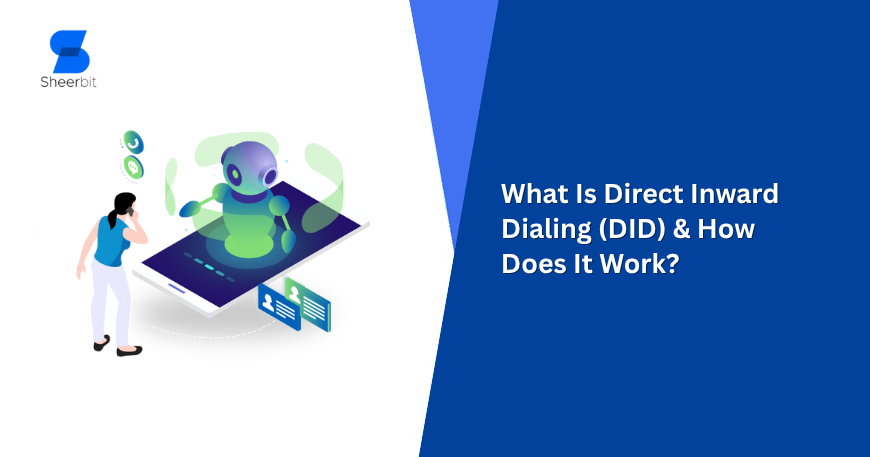
In the modern business environment, efficient and direct communication is vital to maintaining high customer satisfaction and operational productivity. Long wait times, cumbersome menus, and call transfers frustrate callers and waste valuable time. Direct Inward Dialing (DID) offers a solution by enabling callers to dial directly to the extension or department they need without going through intermediaries. This blog delves deep into what DID is, how it works, its advantages, and how businesses can implement it effectively. What Is Direct Inward Dialing (DID)? Direct Inward Dialing (DID) is a telephony feature that allows a company to assign multiple individual phone numbers to different employees, departments, or services, all routed via a limited number of physical or virtual trunk lines connected to a Private Branch Exchange (PBX) or cloud telephony system. It eliminates the need for a separate physical line for each number. When a caller dials a DID number, the system routes the call directly to the intended recipient’s extension, bypassing receptionists or automated menus. How Does Direct Inward Dialing Work? 1. Number Assignment The business acquires a block of DID numbers from a telecom or VoIP provider. These numbers can be geographically local or toll-free depending on business needs. 2. Trunk Line Connection These DID numbers share trunk lines, which are physical or virtual communication channels that connect the provider’s network with the business PBX or phone system. 3. Call Routing When a caller dials a DID number, the telecom system routes the call over the trunk line to the business telephone system. 4. Extension Identification and Forwarding The business’s PBX or cloud phone system recognizes the dialed DID number and forwards the call directly to the associated internal phone extension or user device — whether a desk phone, softphone app, or mobile device. This direct routing avoids unnecessary transfers or delays, ensuring fast and precise connectivity. Types of DID Numbers Individual DID Numbers: Each assigned to a specific employee or user, allowing personalized contact. Departmental DID Numbers: Linked to departments; calls route to queues or hunt groups within the department. Location-based DID Numbers: Remote or distributed offices can have local numbers to maintain a local presence. Fax DID Numbers: Dedicated for fax services where applicable. Key Benefits of Direct Inward Dialing Improved Customer Experience Customers reach the right person immediately without waiting or navigating menus, reducing frustration and increasing satisfaction. Cost Efficiency By sharing trunk lines among many DID numbers, companies reduce the expense of installing and maintaining physical lines for every extension. Scalability and Flexibility Businesses can add, remove, or reassign DID numbers easily without hardware changes, supporting growth and evolving communication needs. Support for Remote and Hybrid Workforces Calls can route to any device regardless of location, enabling seamless communication for remote employees or branch offices. Enhanced Call Management DID integrates with voicemail, call forwarding, call recording, and interactive voice response (IVR), providing powerful call handling and analytics. Real-World Applications of DID Sales Teams: Assign individual DID numbers for personalized, trackable outreach. Customer Support: Route calls to tiered support groups or specific agents directly. Remote Employees: Give distributed teams their own DID numbers accessible from anywhere. Marketing Campaigns: Use campaign-specific DID numbers to measure marketing impact. Fax Services: Route fax communications through dedicated DID lines. How to Implement DID in Your Business: Step-by-Step Step 1: Choose a Reliable DID Provider Select a telecom or cloud telephony provider that offers scalable DID service with excellent support and advanced features. Step 2: Acquire DID Numbers Purchase a block of DID numbers fitting your current team size and anticipated growth. Step 3: Link DID Numbers to Your PBX or Cloud Phone System Configure your phone system to accept calls over your trunk lines and associate each DID number with the appropriate internal extension or group. Step 4: Configure Call Routing and Features Set up call forwarding, voicemail, IVR menus, and backup routing (e.g., voicemail, overflow agents) to handle calls efficiently. Step 5: Test the Setup Simulate calls to verify proper routing, audio quality, and feature functionality in various scenarios (peak hours, after-hours, etc.). Step 6: Train Your Staff Educate employees on using DID features such as forwarding and voicemail to maximize system effectiveness. Common Challenges and How to Overcome Them Number Management Complexity: Keep clear records and labels for all DID numbers. Ensuring Call Quality: Choose providers with high uptime SLAs and redundant infrastructure. Security Concerns: Implement caller ID authentication and monitor for fraud. User Adoption: Provide training and support to employees for smooth transition. Why Sheerbit Is the Perfect DID Partner Sheerbit offers a comprehensive DID solution with an easy-to-use management dashboard, reliable call quality, and scalable plans suited for businesses of all sizes. Its integration flexibility supports remote work, advanced call features, and excellent customer support, helping companies optimize communication without hassle. Conclusion Direct Inward Dialing (DID) is an indispensable tool for modern businesses looking to enhance communication efficiency, reduce costs, and improve customer experiences. By enabling direct, reliable, and scalable call connections, DID helps you stay ahead in a competitive market and support dynamic workforces effectively. Ready to simplify and improve your business calls? Contact Sheerbit today to explore DID solutions tailored for your needs and boost your communication effectiveness!
Contact Center Direct Inward Dialing (DID): The Ultimate Guide for Businesses
In the age of customer-centric business, seamless communication is non-negotiable. Enter Contact Center Direct Inward Dialing (DID)—a technology pivotal for businesses aiming to deliver personalized and efficient client experiences. This post offers an in-depth perspective on how DID integrates with modern contact center solutions, why it matters, and how the right contact center solutions provider can transform your communications landscape for maximum customer satisfaction and operational agility. What is Direct Inward Dialing (DID)? Direct Inward Dialing (DID) is a feature that enables unique direct phone numbers to connect callers to specific extensions within a contact center or business phone system, without needing a human operator or complex menu. Each agent or department gets an individual phone number. Incoming calls are routed directly to the intended recipient’s extension. Bypasses receptionists or interactive voice response (IVR) systems when necessary. Empowers teams to manage large call volumes efficiently. Core Components of DID DID Numbers: Virtual phone numbers managed by the provider. PBX Integration: DID typically works with on-premise PBX or cloud-hosted contact center solutions. Call Routing: Intelligent routing to specific desks, teams, or automated workflows. How DID Works in Modern Contact Centers The DID system operates by associating blocks of telephone numbers with your business’s telephony infrastructure, such as a PBX (Private Branch Exchange) or cloud-based contact center platform. Number Assignment: The contact center solutions provider allocates DID numbers to your business. Call Routing: Incoming calls to those numbers are automatically routed to assigned agents or teams. Integration: DID is configured with your contact center solution, supporting advanced workflows—like skill-based routing, time-of-day rules, or CRM data integration. Monitoring & Analytics: Modern systems track call flow, agent performance, and caller experience, all fueled by DID’s granular reporting capabilities. Key takeaway: DID in contact center solutions provides a direct, seamless customer experience, boosting first-call resolution and customer satisfaction. Key Benefits of DID for Contact Centers Personalized Customer Experiences DID numbers route callers straight to skilled agents or dedicated departments, reducing wait times and unnecessary transfers. Customers reach the right expert faster, enhancing satisfaction and loyalty. Scalability and Flexibility Easily add or remove DID numbers as your team grows or business requirements shift—a feature especially useful for seasonal spikes or global support teams. Enhanced Tracking and Analytics Every DID number’s usage can be tracked individually, providing data-rich insights into each agent’s performance, caller trends, peak call times, and campaign reporting. Streamlined Operations Minimizes human intervention and operator workload. Supports integration with CRM and workforce management tools. Automates omnichannel workflows by assigning dedicated numbers for different communication channels. Improved Business Image Companies present themselves as organized and responsive—with DID, customers connect with exactly the right department or agent, reinforcing trust. DID in the Context of Contact Center Solutions Integrating DID with Contact Center Solutions Contact center solutions have evolved beyond simple call handling to become robust multi-channel engagement platforms. DID is a cornerstone of these platforms—enabling businesses to: Route calls efficiently—straight to agent desktops, omnichannel dashboards, or sales/support queues. Integrate with cloud and on-premise PBX, VoIP, CRM, and AI-driven analytics platforms. Enable hybrid work by routing calls to remote or global agent teams. Omnichannel Communication Modern contact center solutions route not just calls, but also chat, SMS, email, and even social media interactions—all through the same unified dashboard. DID is crucial for mapping specific numbers to targeted campaigns, departments, or communication channels, helping deliver a seamless omnichannel customer experience. Choosing a Contact Center Solutions Provider for DID What to Look for in a DID Provider Global and Local Coverage: Ability to provision DID numbers across various countries or geographic regions. Advanced Routing Features: Support for complex workflows, such as automated failover, skill-based routing, and time-dependent routing. Integration Capabilities: Native integrations with CRM, help desk, AI/chatbots, and analytics suites. Reliability & Security: High call uptime, robust fraud prevention, and compliance certifications. Customization Options: Ability to add branding, toll-free options, or vanity numbers for marketing campaigns. Popular Contact Center Solutions Providers for DID Provider Notable Features DID Services NICE Advanced IVR, AI routing, global DID provisioning Yes Twilio Developer-friendly, programmable DID, SMS & Voice Yes Cisco Enterprise-ready, integration-rich, secure Yes 8×8 Omnichannel workspace, analytics, global DIDs Yes Genesys Customer experience AI, dynamic routing Yes Real-World Use Cases: DID in Action Customer Support Centers: Assign DID numbers per department (technical, billing, returns), so callers reach specialized support instantly. Sales Teams: Allocate unique DID numbers to campaigns for granular tracking and ROI measurement. Remote/Hybrid Work: DID enables seamless call routing to remote or home-based agents, maintaining performance and SLA standards. Global Expansion: Provision international DID numbers for localized support in new geographies without physical offices. VIP Services: Offer premium direct lines to high-value clients, boosting satisfaction and retention. Advanced Features of DID within Leading Contact Center Solutions Multi-Channel Routing and Omnichannel Support DID is not limited to traditional voice calls. Modern contact center solution platforms use DID numbers to segment and prioritize inbound traffic across voice, SMS, web chat, and social media, ensuring a seamless experience across channels. CRM Integration and Personalized Routing Businesses can map customer records to DID numbers enabling agents to have instant access to customer profiles, tailor greetings and support, and log interactions automatically for compliance. AI-Powered Routing and Self-Service Advanced platforms use AI to assess call intent and urgency, routing callers appropriately, triggering self-service workflows, or escalating to supervisors as needed, reducing customer frustration. Quality Management and Compliance DID integration supports call recording, consent management, audit logs, and data protection required in regulated industries such as healthcare and finance. How DID Powers Remote and Hybrid Contact Center Teams Work-from-anywhere: Route incoming calls to remote or mobile agents. Time-zone agility: Assign local DID numbers for regions supporting 24/7 global operations. Consistent Branding: Numbers reflect the business identity regardless of agent location. Essential Features When Selecting a Contact Center Solutions Provider Cloud-native vs. On-premise: Choose scalable and update-friendly solutions. Integrated Reporting: Real-time analytics filtered by DID number or agent. IVR and Workflow Automation: Customizable auto-attendants and call handling. Security & Reliability: Redundancy, encryption, and disaster recovery. Pricing
Top 10 Reasons Why Call Center Companies Are Moving to VoIP
More than just a technical upgrade, VoIP is reshaping how call centers function by enabling remote work, delivering superior call quality, integrating with customer management systems, and providing powerful analytics. It empowers managers to make data-driven decisions and agents to respond with agility and precision. As customer expectations grow – demanding faster, seamless, and personalized interactions – VoIP equips call centers with the tools necessary to exceed these demands. Additionally, VoIP supports omnichannel communications, allowing customers to connect through voice, chat, email, and social media – all from a unified platform. This holistic approach translates to improved customer satisfaction and loyalty, vital metrics in today’s competitive business environment. This comprehensive transformation is why an increasing number of call center companies are embracing VoIP – not just as a means to cut costs, but as a strategic enabler of growth, innovation, and customer-centricity. In the following sections, we will explore the many reasons driving this transition, detailing the benefits and opportunities VoIP offers to the modern call center software solutions. Introduction to VoIP for Call Centers Voice over Internet Protocol, or VoIP, is fundamentally changing how call centers operate in today’s digital world. Unlike traditional phone systems that rely on physical telephone lines, VoIP transmits voice conversations as digital data packets over the internet. This shift from circuit-switched legacy telephony to packet-switched IP networks offers call centers unprecedented advantages in flexibility, cost-efficiency, and functionality. For decades, call centers depended heavily on bulky, hardware-intensive telephone infrastructure that demanded costly installation, maintenance, and upgrades. These systems also limited agents to fixed locations and had limited capabilities for integrating with other business tools or supporting remote work. With rapidly growing customer expectations—such as the demand for faster response times, personalized interactions, and omnichannel support—traditional voice systems have become increasingly inadequate. VoIP technology removes these barriers by enabling voice communication to flow over existing internet connections without the constraints of dedicated phone lines. Agents can make and receive calls on a variety of devices—from desktop computers and smartphones to specialized VoIP phones—allowing businesses to decentralize operations and support a distributed or remote workforce. Moreover, VoIP systems come packed with advanced features that legacy systems lack, including: Real-time call analytics to monitor performance and improve customer service Seamless integration with Customer Relationship Management (CRM) software and helpdesk tools for rich customer context on every call Interactive Voice Response (IVR) systems that route calls intelligently to the best-suited agents Omnichannel support that connects voice, chat, email, and social media, all in one unified platform Because VoIP leverages the internet, it also considerably reduces communication costs, especially for international and long-distance calls, making it a cost-effective solution for businesses scaling globally. This convergence of enhanced capabilities, operational flexibility, and cost savings explains why call centers worldwide are rapidly adopting VoIP technology. It empowers them to meet modern customer demands, respond to changing business needs with agility, and build stronger, more personalized relationships with customers. Historic Challenges of Traditional Call Centers Call centers using traditional telephony systems face several challenges. These include high costs for setup and maintenance, limited mobility for workers, difficulty in scaling operations, and inadequate support for advanced features such as integrations and analytics. Moreover, international calls and disaster recovery scenarios often posed significant hurdles. Traditional systems anchored agents to physical desks, constraining operational agility and hampering the ability to deliver high-level remote support, which is increasingly vital in today’s global and hybrid work environment. Dramatic Cost Savings One of the most compelling reasons for switch to VoIP is cost efficiency. Traditional phone systems require substantial investments in physical infrastructure, such as Private Branch Exchange (PBX) hardware and extensive cabling. VoIP drastically cuts these upfront and ongoing costs by using the internet for voice transmission. This not only eliminates the need for expensive hardware but also reduces monthly operating expenses by offering lower call rates, especially for international and long-distance calls. Additionally, VoIP solutions often bundle multiple communication features—like voicemail, call forwarding, conferencing, and auto-attendants—into one service package at no extra cost. This bundling reduces the need for third-party services, further lowering expenses. For call centers, which operate on tight margins and require high call volumes, these savings are transformative. Unmatched Flexibility and Remote Work Capabilities The ability to support remote work is a game-changer for call centers, and VoIP enables this seamlessly. Since VoIP calls are made over the internet, agents can work from anywhere with a stable connection, freeing companies from the traditional confines of physical office spaces. This flexibility allows hiring across broader geographic regions, tapping into diverse talent pools without relocation costs. Furthermore, remote work supported by VoIP enhances business continuity during emergencies, such as natural disasters or pandemics, ensuring that customer support remains uninterrupted. Agents can use personal computers, smartphones, or VoIP-compatible desk phones, which facilitates quick onboarding and remote management. Effortless Scalability Call centers need to adapt quickly to changing call volumes — whether seasonal spikes or business growth. Scaling traditional telephony systems involves costly hardware additions and installation, often requiring time-consuming changes. VoIP simplifies scalability, allowing call centers to add or remove user lines instantly through a dashboard interface. Moreover, VoIP supports virtual phone numbers that can be deployed in new geographic regions without the need to establish physical offices. This capacity lets businesses expand globally with ease and cost-effectiveness. Superior Call Quality and Reliability Concerns around voice quality have historically slowed VoIP adoption, but advances in technology have largely overcome these barriers. Today’s VoIP systems deliver high-definition voice clarity using advanced audio codecs and Quality of Service (QoS) protocols that prioritize voice data over other network traffic. This ensures crystal-clear calls with minimal latency or jitter. Additionally, reputable VoIP providers build redundancy and failover mechanisms into their infrastructure. If one server or connection fails, calls are automatically routed through alternate paths, minimizing downtime and enhancing reliability—an essential factor for call centers handling critical customer interactions. Enhanced Security and Compliance Security is paramount in call centers, which handle sensitive customer data and must comply with industry regulations. VoIP
OpenSIPS in Contact Centers: Improving Performance and Redundancy

Contact centers are undergoing a massive digital shift, driven by the increasing need for intelligent communication, seamless customer experience, and always-on infrastructure. Traditional telephony systems are struggling to meet the expectations of modern businesses that rely on real-time, scalable, and flexible communication platforms. This is where OpenSIPS steps in. As a highly capable, open-source SIP server, OpenSIPS provides the performance, redundancy, and flexibility that modern contact centers demand. By integrating OpenSIPS into a robust VoIP stack, organizations can build scalable, AI-enhanced, and cost-efficient contact center environments. OpenSIPS is now becoming a core part of AI-powered cloud call center software and future-ready contact center infrastructures across the globe. The Changing Role of Contact Centers in Business Contact centers were once seen as mere customer support departments. Today, they are the hub of brand engagement, sales, marketing, customer success, and retention strategies. A single poor experience can cause a customer to churn, while a great interaction can build loyalty for life. This shift in business expectations requires contact centers to adopt modern contact center software that supports: Cloud-native deployment and remote agent access Real-time analytics and customer journey mapping Omnichannel communication including voice, chat, email, and social AI-powered interactions like intelligent IVRs and virtual agents Integration with CRM, ERP, and helpdesk systems None of this is possible without a flexible and scalable backend system. OpenSIPS provides a strong foundation for contact center solutions that are built to perform under pressure. What Makes OpenSIPS Ideal for Modern Contact Center Software Solutions OpenSIPS is a Session Initiation Protocol (SIP) server that handles SIP signaling for voice and video calls. Unlike traditional PBX systems, it is designed to operate in dynamic, high-volume, and distributed environments. Some standout features of OpenSIPS that benefit contact center software include: High-speed call setup and teardown Intelligent SIP routing with customizable rules Load balancing across multiple servers Failover and high availability capabilities NAT traversal for agents working remotely Support for presence, registration, and media proxying These features make it ideal for enterprises looking to deploy or upgrade to AI-powered cloud call center software that can grow with business needs. Enhancing Call Quality and Speed in Contact Centers Speed is everything in customer service. Long wait times and dropped calls lead to frustration and lost revenue. OpenSIPS helps eliminate these issues by acting as an intelligent SIP proxy and registrar. By routing SIP signaling efficiently and balancing traffic across multiple application or media servers, OpenSIPS ensures: Faster call setup times Fewer dropped connections Lower server resource consumption Increased simultaneous call handling This results in a smoother customer experience and improved KPIs like average handling time (AHT) and first call resolution (FCR). Ensuring Redundancy and High Availability Redundancy is not optional for modern contact centers. Downtime can paralyze customer operations and damage brand trust. OpenSIPS supports multiple levels of redundancy and failover mechanisms, including: SIP server clustering with synchronized configurations Load balancing across geographically distributed nodes Database redundancy with MySQL or Cassandra DNS SRV-based routing for multi-node resilience These capabilities help build a highly reliable contact center environment where operations continue even if one or more nodes fail. Scalability That Matches Business Growth Whether you’re operating a 10-agent support desk or a 5,000-seat global contact center, OpenSIPS scales gracefully. Its modular architecture allows businesses to deploy multiple instances, distribute traffic intelligently, and scale horizontally without downtime. This scalability makes OpenSIPS the go-to solution for future-ready contact centers that expect to grow and adapt to changing demands quickly. Some scalable deployment patterns include: SIP Load Balancer in front of multiple media servers SIP Registrar cluster with shared state and database Distributed call routing logic based on agent availability Separate OpenSIPS layers for registration, authentication, and routing This architectural flexibility means you can start small and expand over time, without re-architecting your contact center solution. AI and Automation Capabilities Modern contact center software solutions are increasingly powered by AI. From virtual agents to real-time call transcription, automation enhances efficiency and customer satisfaction. OpenSIPS supports the integration of AI systems such as: AI-powered IVRs for intelligent call steering Real-time speech analytics for compliance Sentiment analysis engines Voice bots and chatbots Automated QA and post-call summaries By acting as a flexible SIP core, OpenSIPS enables seamless communication between the contact center infrastructure and these AI tools. This turns your contact center into a true AI-powered cloud call center software platform. Secure Communication Infrastructure Security is a major concern for any organization handling customer data. OpenSIPS includes built-in features to ensure secure communication over SIP: TLS for secure SIP signaling SRTP for encrypted media transmission ACLs to prevent unauthorized access Anti-fraud protection through call pattern monitoring SIP traffic filtering and denial-of-service prevention This ensures that your contact center software complies with data protection laws such as HIPAA, GDPR, and PCI DSS while keeping customer interactions private and secure. OpenSIPS and Intelligent Call Routing A powerful aspect of OpenSIPS is its flexible call routing logic. Contact centers can use this to build smart routing algorithms that take into account: Language preferences Customer location Historical data Agent skillsets Call history and CRM integration This results in better customer-agent pairing and reduced resolution time, enhancing the overall experience and increasing operational efficiency. Advanced Load Balancing and Traffic Control OpenSIPS uses its dispatcher and load balancing modules to: Distribute traffic between FreeSWITCH, Asterisk, or other SIP media servers Monitor server health and remove failed nodes dynamically Use failover groups to re-route calls during traffic spikes For high-performance contact center software solutions, this level of control is crucial to prevent service interruptions and to maintain call quality. Flexible Deployment Options: Cloud, On-Prem, or Hybrid OpenSIPS is built for flexibility. You can deploy it in: A fully cloud-native architecture (AWS, Azure, GCP) On-premises data centers for full control Hybrid models that combine cloud scalability with on-prem security This enables businesses to build AI-powered cloud call center software or integrate OpenSIPS into an existing infrastructure as a high-performance SIP backbone. Use Case: OpenSIPS in a Scalable Contact Center Environment A global financial services
What Makes Sheerbit’s AI Contact Center Ideal for Startups & SMBs
In today’s experience-driven economy, customer expectations are at an all-time high. They want instant responses, personalized solutions, and 24/7 support across their preferred channels. For startups and small-to-medium-sized businesses (SMBs), this is both a challenge and an opportunity. Providing this level of service without exhausting budgets or hiring large teams is where AI-powered contact centers become essential. Enter Sheerbit, a forward-thinking company that delivers a next-generation contact center solution tailored for the speed, flexibility, and innovation that startups and SMBs need to thrive. Built with cutting-edge AI, automation, omnichannel capabilities, and deep integration features, Sheerbit’s platform helps businesses punch far above their weight in customer engagement. The Startup Reality: Lean Teams, High Expectations Unlike large enterprises, startups and SMBs don’t have the luxury of huge customer service teams. They’re often working with minimal personnel, lean tools, and tight cash flow. However, customers don’t adjust their expectations based on company size. They still demand: Immediate responses to queries Seamless experiences across channels Personalized engagement Consistent availability Without the right contact center software solution, startups end up overburdening their staff or delivering a subpar experience which ultimately hurts retention and growth. How Contact Center Needs Differ for SMBs Sheerbit understands that small businesses need: Fast onboarding with minimal setup time Simple workflows that anyone on the team can manage Powerful automation to handle volume Cloud-based systems to support remote teams Affordable pricing that scales with growth Scalable infrastructure to expand with success Traditional contact center systems are not built with these factors in mind. Sheerbit is. Deep Dive into Sheerbit’s AI Capabilities Sheerbit’s platform incorporates a full stack of AI features that go far beyond basic chatbot functionality. Conversational AI The bots powered by Sheerbit’s AI engine are capable of understanding context, not just keywords. Using Natural Language Processing (NLP), they engage in fluid, human-like conversations. This reduces escalations and resolves more issues without human intervention. AI-Driven Sentiment Analysis Sheerbit’s AI constantly evaluates the emotional tone of customer conversations in real time. This helps prioritize angry or frustrated users, escalate serious issues automatically, and guide agents on how to proceed during sensitive conversations. Predictive Behavior Analysis AI isn’t just reactive. It’s proactive. Based on historical interaction patterns, Sheerbit’s system can predict when a customer is likely to churn or needs assistance, helping businesses take preemptive action. Knowledge Base Automation Sheerbit’s bots self-learn from FAQs, help docs, and past conversations to improve responses automatically over time. You don’t have to manually feed every question and answer. This saves countless hours for growing teams. Unique Platform Advantages No-Code Workflow Builder Non-tech teams can set up advanced customer journeys with drag-and-drop tools. Whether it’s a chatbot for refund processing or multi-step call routing, it’s all done with no coding required. Unified Agent Dashboard All communication — chat, email, social media, and voice — lands in a single pane of glass. Agents don’t have to toggle between tabs, reducing cognitive load and handling time. Multi-Language & Geo-Specific Support Startups targeting multiple geographies benefit from native language support and AI translation, making localization effortless. Support for Inbound and Outbound Engagement Sheerbit is not just a helpdesk solution. It’s a full-featured contact center software solution supporting: Inbound voice support with smart IVR and routing Outbound campaigns using automated dialers and SMS tools Blended agent workflows that allow seamless task management This is especially powerful for startups doing both customer support and sales outreach. Built for Remote & Distributed Teams Modern businesses often don’t have central offices. Sheerbit is designed for a remote-first world. Cloud-based access so agents and supervisors can log in from anywhere Role-based permissions to manage access and visibility Performance tracking to monitor KPIs across locations and time zones Whether your support team is in-house, remote, or outsourced, Sheerbit keeps them aligned and effective. Industry Applications While Sheerbit is designed for all small businesses, it offers specialized features for different verticals: Ecommerce & D2C Order tracking bots Return and refund automation Abandoned cart follow-ups SaaS Subscription management Product usage insights Churn prediction Healthcare Appointment scheduling HIPAA-compliant data handling Patient feedback collection EdTech Student onboarding Exam and result alerts Parent-teacher communication Startups in each of these sectors have leveraged Sheerbit to reduce costs, improve response times, and drive higher engagement. Voice Intelligence: A Game Changer Voice is still a preferred channel for many customers. Sheerbit includes built-in voice analytics that transcribes, scores, and summarizes every call. Automatic transcription for searchable and shareable records Quality scoring to evaluate agents Coaching recommendations powered by AI This dramatically reduces the manual overhead of quality assurance and improves consistency in service delivery. Business Continuity & Uptime Downtime is not an option when customer experience is your brand’s frontline. Sheerbit ensures: 99.9 percent uptime SLAs Failover architecture to route calls if a server goes down Real-time alerts for system issues Disaster recovery plans built in SMBs can operate with enterprise-level reliability without the enterprise cost. Sustainable Growth with Smart Insights For startups, data is gold. Sheerbit provides: Live dashboards for operational monitoring Agent heatmaps showing performance Customer journey analysis to uncover friction points Channel ROI reports to guide resource allocation These insights turn your contact center into a growth engine, not just a cost center. White-Labeling and Custom Branding Want your customer experience to reflect your brand? Sheerbit allows startups to fully customize: Agent interface colors and logos Chatbot tone and personality Email and SMS templates Voice IVR greetings and logic Your contact center becomes a seamless extension of your business identity. Sheerbit’s Commitment to Startups Sheerbit doesn’t just build software. It partners with you. Startups that onboard with Sheerbit often receive: Exclusive credits for early-stage adoption Free consultation for contact center design Priority access to product roadmap features Mentorship from Sheerbit experts on customer engagement strategies This proactive approach helps startups avoid mistakes, adopt best practices, and accelerate growth from day one. Comparing Sheerbit with Other Solutions Feature Sheerbit Legacy Contact Centers Other Cloud Contact Centers AI Chatbots Yes No Sometimes Omnichannel Yes No Partial Startup Pricing Yes No Sometimes