White-Labeling Sheerbit WebRTC Softphone for Your Brand

In an age where businesses depend on seamless digital communication, organizations are constantly looking for solutions that allow them to connect efficiently with customers, colleagues, and partners. The rise of browser-based calling technology has completely changed how teams communicate, removing the need for traditional phone hardware or software installations. Among these new-age solutions, WebRTC (Web Real-Time Communication) stands out as a revolutionary technology that enables real-time voice, video, and data communication directly through web browsers. For service providers, SaaS companies, and VoIP resellers, the next big opportunity lies in branding these technologies as their own. This is where white-labeling becomes a strategic advantage. With Sheerbit’s advanced WebRTC Softphone, businesses can offer a fully branded communication platform to their clients without writing a single line of complex code or setting up infrastructure. This article provides an in-depth exploration of how white-labeling the Sheerbit WebRTC Softphone can help you expand your product offerings, strengthen your brand identity, and drive higher revenue, while delivering a world-class calling experience to your customers. Understanding the Concept of White Labeling in Communication Technology White labeling is the practice of taking a ready-made, fully functional product and rebranding it under your own business name, logo, and identity. In simpler terms, it allows you to sell an existing product as though it were built by your organization. The company providing the product handles all the backend technology, development, maintenance, and updates, while you focus on sales, marketing, and customer relationships. In communication technologies like VoIP and WebRTC, white labeling has become increasingly popular among service providers who do not have the resources or time to develop their own platform from scratch. Building a WebRTC-based calling solution requires complex infrastructure, advanced programming, high scalability, and extensive security measures — all of which could take months or even years of development effort. White labeling bypasses that entirely. It gives you a ready-to-deploy communication product that operates smoothly across browsers and devices, letting you deliver premium calling and messaging capabilities under your organization’s own brand. Introduction to Sheerbit WebRTC Softphone The Sheerbit WebRTC Softphone is a modern, browser-based calling platform that allows users to make and receive high-definition voice and video calls without installing any external application or plugin. Built using WebRTC technology, it provides real-time communication directly through the browser, allowing frictionless connectivity between users, across devices, and even across platforms. Unlike downloadable softphones such as 3CX, Bria, or Zoiper, the Sheerbit Softphone operates entirely in the web environment. All a user needs is an internet connection and a web browser. The platform supports full SIP (Session Initiation Protocol) integration, which means it can connect easily with any existing VoIP system, PBX (Private Branch Exchange), or CRM platform that supports SIP-based communication. What truly distinguishes Sheerbit’s WebRTC solution is its ability to be completely customized and rebranded. Through its white-label capabilities, Sheerbit enables providers, resellers, and tech-driven enterprises to transform this sophisticated communication stack into their own branded softphone solution. From colors and interface layout to URL, logos, and onboarding experience — everything can reflect your company’s unique brand image. Why Businesses Are Shifting Toward White-Label WebRTC Solutions The modern communication landscape has evolved far beyond traditional telephony. Organizations across industries are embracing browser-based voice and video calling because it eliminates numerous technical and logistic limitations. First, WebRTC technology provides instant accessibility. Users no longer need to install separate desktop applications or mobile apps; they can log in via any supported browser and start communicating immediately. This low-friction experience aligns perfectly with how modern businesses operate — lean, agile, and remote-friendly. Second, developers and resellers are realizing how costly and time-consuming it is to build their own real-time communication engine. A complete infrastructure would require media servers, SIP gateways, TURN/STUN servers, data encryption, and network monitoring. The sheer investment makes such projects impractical for small and mid-sized providers. White-labeling solves this challenge completely. It lets businesses adopt an advanced communication technology that is already engineered, optimized, and tested — but still branded as their own. That means organizations can focus entirely on delivering value through marketing, customer onboarding, and user experience rather than product development. Finally, white-labeled communication platforms improve perceived credibility. When your customers use a softphone that bears your logo, your brand colors, and your domain, it builds immediate trust and reinforces your identity as a complete technology provider. Key Functionalities of Sheerbit WebRTC Softphone At its core, the Sheerbit WebRTC Softphone offers an end-to-end communication experience that rivals any enterprise-grade solution. Once white-labeled, your customers get access to a fully functional softphone that offers everything from basic calling to advanced analytics. The platform supports high-definition audio and video calls directly through browsers, using adaptive codecs like Opus, G.711, and G.722 to ensure crystal-clear quality regardless of network conditions. Built-in SIP support allows easy integration with existing VoIP systems, making it interoperable with traditional telephony networks. Security is a major highlight of Sheerbit. All calls are encrypted using DTLS and SRTP protocols, ensuring private and secure conversations. The system also uses TLS-based signaling, providing complete protection for call setup and management data. Users can manage tasks such as call transfer, hold, mute, recording, and conference calls effortlessly through an intuitive interface. For enterprises, additional features include voicemail integration, call logs, push notifications for missed calls, and even automatic provisioning tools for quick setup. All of this functionality is accessible through any browser — on desktop, tablet, or mobile — without the need for software installation or complex configurations. Benefits of White-Labeling Sheerbit Softphone White-labeling Sheerbit’s WebRTC softphone delivers several tangible business advantages that go far beyond simple branding benefits. One of the most significant advantages is rapid deployment. Because the entire technology stack is built and maintained by Sheerbit, you can launch your branded communication product within days instead of months. This fast time-to-market is crucial for competing in the rapidly evolving UCaaS (Unified Communications as a Service) industry. Another critical benefit is cost efficiency. Building a WebRTC communication solution from scratch requires an extensive team of
Video Calling and Screen Sharing Features in Modern WebRTC Softphones
WebRTC softphones are browser-based applications that enable voice, video, and data communication directly within popular browsers—no downloads or plug-ins required. By harnessing standards-compliant APIs, these apps deliver instant accessto robust calling features, boosting user convenience and cross-platform compatibility. Businesses enjoy quick rollouts and streamlined onboarding, as any device with a modern browser (Windows, macOS, Linux, iOS, or Android) can be utilized. How Video Calling Works in WebRTC Softphones WebRTC video calling is peer-to-peer (P2P), sending audio and video streams directly between browsers for low-latency, crystal-clear conversations. Top benefits include: Native browser support: Calls work on Chrome, Firefox, Safari, Edge, and Opera—no extra applications needed. Advanced codecs: Opus (audio), VP8/VP9 (video) automatically optimize quality for network conditions, maintaining clarity even on limited bandwidth. Dynamic bandwidth adaptation: WebRTC continuously adjusts video quality to reduce jitter, packet loss, and echo. Security: End-to-end encryption via DTLS-SRTP protocol is built-in, protecting every call without extra configuration. Screen Sharing in WebRTC Softphones Screen sharing enables users to present their desktop, an application window, or even a browser tab in real time during a call. Common scenarios include: Sales demos: Staff can walk prospects through a product, share proposals, or display presentations remotely. Tech support: Agents visually guide users to troubleshoot issues, using real-time screen sharing as a teaching tool. Education: Teachers conduct interactive lessons, share resources, or provide feedback by showing students instructional content live. The WebRTC getDisplayMedia API lets users choose what to share, preventing accidental exposure of sensitive information. The screenshare stream is encrypted and transmitted along with video/audio, easily accessible in-browser with a simple click. Real-World Business Benefits Speed and Convenience WebRTC softphones eliminate traditional installation hassles: users simply log into a web portal and access full communication capabilities. For IT departments, this means: Fast deployment: No need for complex installations or client software updates. Simplified maintenance: Browser-native apps automatically get the latest features and security patches. Cost Reduction No license costs: Businesses avoid per-seat charges common with legacy softphones. Less hardware: Desktop phones become unnecessary; laptops, tablets, or mobile devices suffice. Lower support overhead: Reduced IT support calls for compatibility or firewall issues. Enhanced Security Mandatory encryption: Sensitive business conversations and shared documents remain secure. Identity validation: WebRTC supports multi-factor authentication and identity checks for enterprise use. Use Cases and Adoption Scenarios WebRTC softphones thrive in remote, hybrid, or rapidly scaling organizations. Popular scenarios include: Customer support centers with fast onboarding and cross-platform accessibility for agents. Sales teams using seamless scheduling and screenshare demos. Education and training through remote classrooms and onboarding for distributed teams. Technical Deep Dive: How Does It Work? 1. Connection Establishment WebRTC uses signaling servers (often via SIP or proprietary logic) to exchange connection information (IP, session info) between devices. 2. Peer-to-Peer Data Flow After signaling, devices connect directly for audio/video and data transfer. This P2P architecture minimizes lag and server costs. 3. Media Capture and Transmission WebRTC captures media streams (webcam, microphone, screen) using browser APIs, encodes them via codecs, and transmits over secure channels. The receiver decodes and renders on their device, achieving real-time media exchange regardless of geography. 4. NAT Traversal Protocols like ICE, STUN, and TURN help devices connect even behind firewalls or with dynamic IP addresses. Integration With Other Business Tools WebRTC’s open standards and robust JavaScript APIs enable: CRM integration: Auto-log calls, attach recordings, pop up customer data inside the softphone UI, and more. Helpdesk linking: Route customer calls and screenshare sessions into ticketing workflows. Scheduling and analytics: Deep embedding with calendars, analytics dashboards, and reporting engines. Advanced Features Enriching User Experience Real-time chat/text messaging alongside audio and video without switching apps. Multi-device sync allowing calls and chats to move seamlessly between laptop, mobile, or desktop. File transfer during sessions for secure document and image exchange. Group conferencing support for multiparty video chats in teams, event, or learning environments. Comparing WebRTC and Traditional SIP Softphones Feature WebRTC Softphone Traditional SIP Softphone Accessibility Browser-based, instant Requires app install Video Calling Peer-to-peer, HD video Relies on central servers Screen Sharing Built-in, clickable Usually separate tool Security Encrypted by default Encryption optional Maintenance No updates, auto-patched Manual client upgrades Device Compatibility Any browser/device Desktop-focused, OS bound Costs Pay per usage, low overhead License fees, higher support Challenges and Considerations Browser compatibility: Although most browsers support WebRTC, legacy devices may need upgrades. Network quality: Performance assumes adequate bandwidth; corporate firewalls may need STUN/TURN configuration. User training: Intuitive browser UIs help minimize learning curves, but user support and onboarding resources are needed for maximum adoption. Future Trends and Innovations AI-powered features: Smart noise filtering, real-time transcription, and predictive call routing. Virtual backgrounds and AR: Enhanced screenshare for immersive presentations. In-app purchase/payment links: Especially for e-commerce and remote consulting. Video calling and screen sharing features in modern WebRTC softphones deliver unified, secure, and cost-effective communications. They offer instant access, platform independence, and robust business integration. These tools provide a foundation for advanced collaborative work, remote learning, and rapid organizational agility. WebRTC softphones are reshaping how organizations and individuals collaborate every day. Embracing these next-gen tools is essential for any enterprise focused on boosting productivity, lowering costs, and delighting users in the age of hybrid work and digital transformation.
Security Features in Sheerbit WebRTC Softphone Solutions for Confidential Communication
In today’s increasingly digital and remote work environments, securing business communications is more critical than ever. Sheerbit WebRTC Softphone Solutions provide enterprises with a powerful tool to maintain confidential conversations, safeguard sensitive information, and comply with regulatory standards while enjoying the flexibility and convenience of modern VoIP technology. Built-In End-to-End Encryption for Secure Communication At the core of Sheerbit’s WebRTC Softphone Solutions is a strong focus on security through end-to-end encryption. Using Datagram Transport Layer Security (DTLS) together with Secure Real-time Transport Protocol (SRTP), all voice, video, and data streams are encrypted from the sender to the recipient. This ensures that no third party, not even service providers or network intermediaries, can access the content of calls or messages. This encryption not only protects conversations from external cyber threats such as eavesdropping and man-in-the-middle attacks but also provides peace of mind for businesses handling confidential client discussions, proprietary information, or regulated data. Secure Signaling and Authentication Secure communication extends beyond just encrypting media streams. Sheerbit employs secure signaling mechanisms to establish and manage sessions, reducing risks of session hijacking or unauthorized access. Additionally, user authentication processes tightly control who can access the softphone services, ensuring that only authorized personnel can initiate or receive calls. This robust access management, coupled with customizable policies for roles and permissions, enables organizations to enforce security at multiple levels—from user login through to call controls. Protection Across Platforms and Networks Sheerbit WebRTC Softphone Solutions are designed for compatibility across modern devices and platforms, including desktop operating systems (Windows, macOS, Linux), mobile devices (Android, iOS), and standard web browsers. This cross-platform versatility does not come at the cost of security—each platform supports Sheerbit’s encryption and secure protocols uniformly. Network communication challenges such as NAT traversal and firewall bypass are managed securely using industry-standard protocols like ICE (Interactive Connectivity Establishment), STUN (Session Traversal Utilities for NAT), and TURN (Traversal Using Relays around NAT). These protocols establish secure pathways for peer-to-peer media streams without exposing vulnerabilities or compromising network security. Integration Security for Enterprise Systems Many businesses integrate their communication solutions with CRM, customer support platforms, billing systems, and private branch exchanges (PBX). Sheerbit’s WebRTC softphone solutions provide secure integration capabilities that maintain confidentiality and data integrity during such interactions. End-to-end security is maintained even when calls or data are routed through enterprise systems, offering seamless yet protected unified communications. Customization and Compliance Sheerbit offers customizable security configurations to fit specific organizational requirements and compliance standards such as GDPR, HIPAA, or PCI DSS. This includes adjustable encryption policies, audit logging, secure call recording options, and controlled data retention settings tailored to industry needs. Additional Security Features Encrypted instant messaging and presence updates to prevent data leaks through text communication. Secure provisioning and setup methods, including QR code provisioning, that prevent unauthorized device registrations. Support for secure conference calls with participant verification and encrypted multi-party streams. Regular security updates and vulnerability assessments conducted by Sheerbit to stay ahead of evolving threats. Conclusion Choosing Sheerbit WebRTC Softphone Solutions means investing in secure, reliable, and confidential communication technology that empowers businesses to conduct sensitive conversations without fear of interception or data breaches. The native security features embedded in the WebRTC framework, combined with Sheerbit’s enterprise-grade enhancements and protocols, create a resilient communication environment suited for modern business demands. For organizations that prioritize confidentiality alongside mobility and ease of use, Sheerbit’s WebRTC softphones provide an unmatched balance of security, performance, and flexibility. Discover how Sheerbit’s secure WebRTC Softphone Solutions can transform your business communication with confidence and peace of mind today.
Security and Privacy: How WebRTC Softphones Protect Your Communications
In an era where digital communication is the backbone of personal and professional interactions, ensuring the security and privacy of these conversations is paramount. As cyber threats become increasingly sophisticated, protecting sensitive information from unauthorized access is a critical concern. WebRTC softphones have revolutionized communication by integrating real-time voice and video calls directly into web browsers, combining convenience with advanced security measures to keep your communications safe and private. By utilizing cutting-edge encryption technologies and stringent security protocols, WebRTC softphones offer robust protection against interception, data breaches, and other vulnerabilities. Features such as end-to-end encryption, secure connection establishment, and explicit user permissions make these solutions reliable for confidential communications across various industries. This article delves into how WebRTC softphones safeguard your conversations, the technologies behind their security, and why they represent the future of secure communication solutions. Understanding WebRTC Softphones WebRTC, or Web Real-Time Communication, is an innovative technology that allows voice, video, and data sharing through web browsers without requiring plugins or additional software. Softphones that leverage WebRTC allow users to connect instantly across devices, making communication seamless and accessible anywhere. Unlike traditional VoIP applications, WebRTC softphones enable peer-to-peer communication with built-in security protocols that protect every call, message, and data transfer. The Importance of Security and Privacy in Digital Communication With more businesses and individuals relying on digital communication channels, the risk of sensitive information falling into the wrong hands has exponentially increased. Cybercriminals often target voice and video calls to steal data, disrupt services, or conduct espionage. Ensuring privacy means not only safeguarding the content of conversations but also protecting metadata, call details, and the identities of communicators. WebRTC softphones address these challenges by integrating sophisticated security features from the ground up. How WebRTC Softphones Secure Your Communications 3.1 End-to-End Encryption One of the strongest safeguards in WebRTC softphones is end-to-end encryption. This method encodes the media streams (audio and video) so that only the communicating endpoints can decrypt the content. Using Secure Real-Time Transport Protocol (SRTP) for media encryption and Datagram Transport Layer Security (DTLS) for key negotiation, WebRTC ensures that no third party, including service providers or hackers, can access the transmitted data. 3.2 User Consent and Device Access Control WebRTC mandates that applications request explicit permission from users before accessing microphones and cameras. Browsers display clear prompts, preventing unauthorized surveillance or recording. This permission model is a key privacy feature that puts control in the hands of users, ensuring they remain aware of what hardware is being accessed and when. 3.3 Secure Signaling and Connection Setup While the media streams are encrypted, signaling data—which sets up the connection—is exchanged through secure HTTPS channels. This prevents attackers from tampering with or intercepting the signaling process, thereby protecting the integrity of communication sessions. 3.4 NAT Traversal with ICE, STUN, and TURN WebRTC uses connectivity frameworks like ICE (Interactive Connectivity Establishment), STUN (Session Traversal Utilities for NAT), and TURN (Traversal Using Relays around NAT) to establish direct peer-to-peer connections even behind firewalls and NAT devices. These protocols work efficiently to maintain connectivity while preserving security by minimizing exposure to external networks. 3.5 Protection Against Common Attacks WebRTC’s security architecture defends against common threats such as Man-in-the-Middle (MITM) attacks by authenticating peers and encrypting data streams. It also helps prevent IP address leaks, which can be privacy risks, by careful management of network interfaces. Combined, these features create a robust shield for users’ privacy. Compliance and Industry Use Cases WebRTC softphones are flexible enough to meet strict industry regulations including HIPAA for healthcare and GDPR for data protection. Their secure architecture makes them suitable for telemedicine, financial services, customer support centers, and any environment where confidentiality is critical. By leveraging WebRTC solutions, businesses can ensure secure communication that also complies with regulatory standards. Advantages of WebRTC Softphone Solutions for Businesses Advantage Description Strong Security End-to-end encryption and secure signaling Universal Accessibility Works on any browser or device without installation Cost Efficiency Reduces hardware and software expenses Easy Integration Can be customized and integrated with existing systems Enhanced User Experience High-quality audio and video with minimal latency Scalable Architecture Adapts to the needs of small businesses and large enterprises Why Sheerbit is Your Trusted WebRTC Softphone Provider Sheerbit specializes in advanced WebRTC softphone solutions designed to deliver impeccable security and user experience. With features like multi-factor authentication, encrypted calls, and white-label customizations, Sheerbit offers scalable and secure communication platforms tailored to your business needs. Their solutions enable seamless integration, robust privacy protections, and continuous updates to stay ahead of emerging threats. Choosing Sheerbit means choosing peace of mind, knowing that your communications are secured by industry-leading technology and expert support. Get Started with Sheerbit’s WebRTC Softphone Solutions Today Protect your business communications and enhance collaboration with Sheerbit’s cutting-edge WebRTC softphone solutions. Reach out now to discover how Sheerbit can help secure your conversations and deliver a superior communication experience with privacy you can trust.
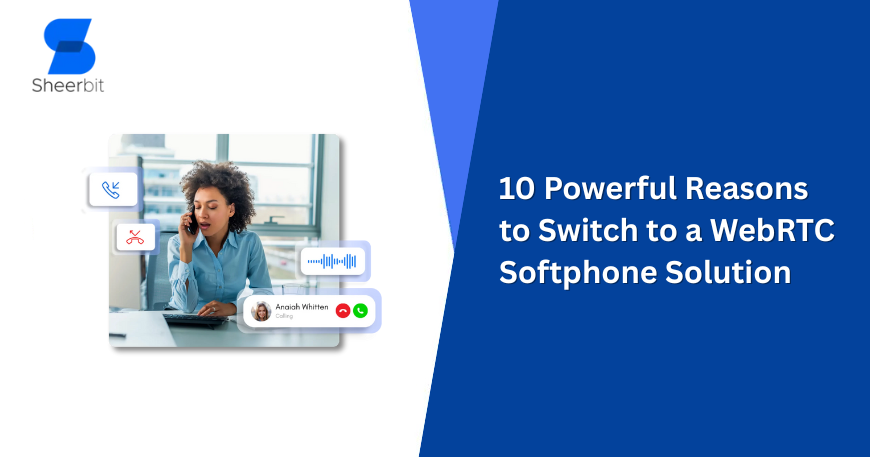
10 Powerful Reasons to Switch to a WebRTC Softphone Solution
Effective communication is crucial to thriving in today’s fast-paced business environment. Teams are more distributed than ever, hybrid and remote work models are common, and businesses must continuously find ways to reduce costs while improving operational efficiency. Despite this, many organizations still rely on outdated PBX hardware, expensive desk phones, or legacy softphone software that cannot keep up with modern work styles. A WebRTC softphone solution offers a transformative approach. It enables real-time voice, video, and chat communications directly from any internet browser or application, with no plug-ins or specialized hardware required. This solution provides businesses with flexibility, scalability, security, and cost-efficiency that legacy systems cannot match. In this detailed blog post, we will explore ten compelling reasons to adopt a WebRTC softphone software. IT leaders, business managers, and decision makers will find practical benefits, technical insights, and best practices. Additionally, we discuss how partnering with a leading WebRTC development company like Sheerbit can maximize your communications investment and accelerate your digital transformation. Ultimate Mobility and Flexibility Modern business operates beyond physical office boundaries. Teams may be spread across cities or continents and still need to communicate seamlessly. A WebRTC softphone solution enables any device with a browser — desktop, laptop, smartphone, or tablet — to become a fully functional business phone. Employees can make and receive voice calls, join video meetings, and send instant messages from anywhere with an internet connection. Support for remote and hybrid work models without additional hardware provisioning. Bring Your Own Device (BYOD) policies are easily implemented, reducing hardware costs and management complexities. Business continuity is ensured by allowing staff to work from alternate locations during network outages or unforeseen events. Because WebRTC softphone software requires only a compatible browser, it lets your workforce stay connected regardless of device type or location. Effortless Deployment and Browser-Based Access Legacy telephony systems are often complicated and expensive to deploy and manage. They require specialized hardware, professional installation, ongoing maintenance, and frequent updates. In contrast, WebRTC softphone software offers: Immediate availability via any modern web browser such as Chrome, Firefox, Safari, or Edge. No plug-ins or additional installations are necessary, eliminating compatibility issues. Cross-platform support for Windows, macOS, Linux, iOS, and Android devices. Rapid onboarding through simple credential distribution, enabling new users to start communicating within minutes. Centralized cloud-based management that reduces IT support tickets and maintenance overhead. The straightforward deployment process results in faster productivity gains and smoother IT operations. Significant Cost Savings Financial efficiency is a top priority for organizations of all sizes. Traditional PBX systems and desk phones typically involve high capital expenditures and ongoing operational costs. WebRTC softphone solutions reduce expenses by: Eliminating the need to purchase and manage expensive hardware like desk phones and PBX equipment. Cutting down on maintenance, repairs, and replacement hardware cycles. Routing calls over the internet reduces or eliminates PSTN charges, especially for international and long-distance calls. Offering subscription-based pricing models, usually per user per month, with predictable costs for easy budgeting. Combining audio, video, messaging, and collaboration into a single integrated platform, reducing overall software costs. These savings free up resources to invest in innovation and other strategic initiatives. Extraordinary Call Quality Consistent high-quality communication is key to business success. Poor audio or video quality, dropped calls, and latency can erode trust, frustrate employees, and reduce customer satisfaction. WebRTC softphone software delivers: HD-quality audio using advanced codecs such as Opus, optimized for clarity and low latency. Clear and smooth video through VP8 or VP9 codecs, enabling lifelike interactions. Intelligent jitter buffering and echo cancellation to minimize disruptions and noise. Adaptive bandwidth management that dynamically adjusts to current network conditions, ensuring stable calls under varied connection speeds. Peer-to-peer media paths that reduce latency and improve call responsiveness. The result is professional-level communication that boosts collaboration and customer confidence. Robust Enterprise-Grade Security Security threats in communication networks are growing in number and sophistication. Protecting conversations and sensitive data is non-negotiable, especially in regulated industries such as healthcare and finance. WebRTC softphone software incorporates comprehensive security features including: End-to-end encryption using Secure Real-time Transport Protocol (SRTP) safeguards all audio, video, and messaging streams. Transport Layer Security (TLS) protects signaling traffic during call setup and management. Strong user authentication and granular access control mechanisms enforce policies and prevent unauthorized usage. Built-in compliance support for regulations such as GDPR and HIPAA helps maintain data privacy obligations. Continuous security updates and patches through cloud delivery ensure protection from emerging threats. This security-first design builds customer trust and protects your organization from costly breaches. Seamless Integration with Business Tools Modern communication platforms must do more than just connect people — they must integrate with the software business users rely on daily. WebRTC softphone solutions easily connect with: Customer Relationship Management (CRM) systems like Salesforce, Zoho, and HubSpot, enabling click-to-call and automatic interaction logging. Helpdesk and support applications such as Zendesk and Freshdesk for quicker issue resolution and informed service. Collaboration platforms including Microsoft Teams, Slack, and Google Workspace, offering unified messaging and teamwork. Custom business applications and databases through open APIs, enabling tailored workflows and data synchronization. These integrations eliminate siloed communications, streamline operations, and improve customer engagement. Effortless Scalability Scaling communication systems traditionally involves costly infrastructure upgrades, lengthy installations, and complex configurations. WebRTC softphone solutions are inherently scalable by design: Cloud-based provisioning allows administrators to add or remove users instantly via an admin panel. No hardware installs or physical expansions are required. Flexible user licenses enable organizations to pay only for what they need and adjust easily to changing demand. New offices, mobile workers, or partner teams can be onboarded globally with zero geographic constraints. This agility benefits businesses experiencing growth, seasonal fluctuations, or fluctuating staffing levels. Intuitive, User-Friendly Design Technology adoption depends heavily on user experience. Many legacy softphones have clunky interfaces which hinder productivity and frustrate users. WebRTC softphone software emphasizes usability: Clean, simple dashboards with clear, consistent navigation. Minimal training required for common tasks such as placing calls, joining meetings, accessing voicemail, and messaging. Responsive designs ensure seamless operation across
Enhance Your Communication with SIP.js and JsSIP WebRTC Softphone Development

The importance of communication is more than ever in the modern digital age. Effective communication is vital to our daily lives, whether for work or personal relationships. With the introduction of WebRTC (Web Real-Time Communication) technology, online communication has undergone a significant evolution. The creation of WebRTC softphones, which may greatly improve your communication abilities, is an intriguing application of WebRTC technology. SIP.js and JsSIP, two well-known libraries, will be our primary focus as we explore the realm of WebRTC softphone creation in this article. Therefore, explore WebRTC Softphone Development and see how they may change your interaction. What is Web RTC Softphone Development? Real-time communication via the Internet is made possible by WebRTC technology when using a WebRTC softphone, which is a software-based phone. By enabling you to conduct audio and video calls, exchange instant messages, and even share files with other users all from within your online application, it effectively transforms your web browser or mobile application into a fully functional phone. The key advantages of Web RTC softphones include: Cross-Platform Compatibility: WebRTC softphones may be used with various platforms, including desktop software, mobile devices, and web browsers. Due to this, various people can utilize them independently of their chosen hardware or operating system. High-Quality Audio and Video: WebRTC technology guarantees high-quality audio and video communication with no latency and delay. Because of this, it is appropriate for private and professional use cases, including online conferences, customer support, and distant collaboration. Security: Strong encryption techniques are used by WebRTC to safeguard communication channels, preventing eavesdropping and unauthorized access to your data. Cost-Efficiency: WebRTC softphones, in contrast to conventional phone systems, use the Internet for communication, doing away with the need for costly phone lines and long-distance fees. SIP.js: The Powerhouse of WebRTC Softphone Development Developers may easily create WebRTC softphones thanks to the JavaScript library [SIP.js](https://sipjs.com/). It was created as an open-source project by the well-known WebRTC company [Jitsi](https://jitsi.org/) and is extensively utilized in the WebRTC community. Key Features of SIP.js SIP Protocol Support The Session Initiation Protocol (SIP), a popular communication protocol for real-time multimedia collaboration, is fully supported by SIP.js. This implies that SIP.js makes starting, managing, and ending voice and video conversations simple. Extensibility SIP.js’ extensibility is one of its best qualities. Developers may use its robust API to customize and increase the functionality of their WebRTC softphones. This makes incorporating extra functions like call recording, call forwarding, and others possible. Codec Support Several audio and video codecs are supported by SIP.js, ensuring interoperability with a range of hardware and network setups. With this versatility, you can be confident that your WebRTC softphone will always provide the best possible performance and quality. Wide Browser Compatibility Major web browsers including Google Chrome, Mozilla Firefox, and Microsoft Edge are all compatible with SIP.js. This broad browser compatibility makes sure that a large audience may use your WebRTC softphone. Integration with WebRTC SIP.js is a great option for WebRTC Softphone Development since it is based on WebRTC technology and smoothly interfaces with WebRTC APIs. With the help of this integration, you may utilize WebRTC’s full potential and have access to SIP.js’s sophisticated capabilities. Getting Started with SIP.js The following steps must be taken to begin developing WebRTC softphones using SIP.js: Set Up a Development Environment Make sure your development environment is ready before starting to code. You’ll need a text editor or integrated development environment (IDE) for your application to run on a web server. Include SIP.js Library You may include the SIP.js library in your project by downloading it from the official website or utilizing package managers like npm or yarn. <script src=”sip.js”></script> Write JavaScript Code Now that your WebRTC softphone has been designed, it’s time to write some JavaScript code. SIP.js configuration, user authentication, and call event management are all required. const configuration = { uri: ‘sip:yourusername@yourdomain.com’, password: ‘yourpassword’, sessionDescriptionHandlerFactoryOptions: { constraints: { audio: true, video: true, }, }, }; const userAgent = new SIP.UA(configuration); userAgent.start(); // Handle incoming calls userAgent.on(‘invite’, (session) => { // Answer the call or handle it as per your application’s logic session.accept(); }); // Make outbound calls function makeCall(target) { const session = userAgent.invite(target); } Style Your WebRTC Softphone To provide a user-friendly experience, design and customize your smartphone’s interface using HTML and CSS. Test and Deploy After extensively checking that your WebRTC softphone performs as intended, you should publish it to your web server so people can access it. JsSIP: A Versatile WebRTC Softphone Library JsSIP is another capable JavaScript library for creating WebRTC softphones (https://jssip.net/). It has various features and advantages, making it an alluring option for developers. Key Features of JsSIP SIP and WebRTC Compatibility JsSIP allows developers to design feature-rich WebRTC softphones while supporting the SIP protocol to the fullest extent possible. Plugin System The plugin mechanism for JsSIP makes it simple to increase its capabilities. You may add customized features and integrations as necessary for your particular use case. Advanced Audio and Video Features The library offers advanced audio and video processing features, including support for several codecs, adaptive bitrate management, and echo cancellation. This guarantees excellent communication experiences. Session Management By managing incoming and outgoing calls, call hold/resume, and call transfer activities, JsSIP makes session administration simpler. This enables the development of softphones with intricate call-handling scenarios to be simpler. Easy Configuration Both expert and inexperienced developers can use JsSIP because of its simple setting procedure. You can rapidly configure your softphone with just a few lines of code. Getting Started with JsSIP Follow these steps to begin developing your WebRTC softphone with JsSIP: Include JsSIP Library Use package managers like npm or yarn to add the JsSIP library to your project after getting it from the official website. <script src=”jssip.js”></script> Configure JsSIP Set up your SIP server settings and user credentials in JsSIP. const configuration = { uri: ‘sip:yourusername@yourdomain.com’, password: ‘yourpassword’, sessionDescriptionHandlerOptions: { constraints: { audio: true, video: true, }, }, }; const ua = new JsSIP.UA(configuration); Implement Softphone Features Write JavaScript code